
Why go
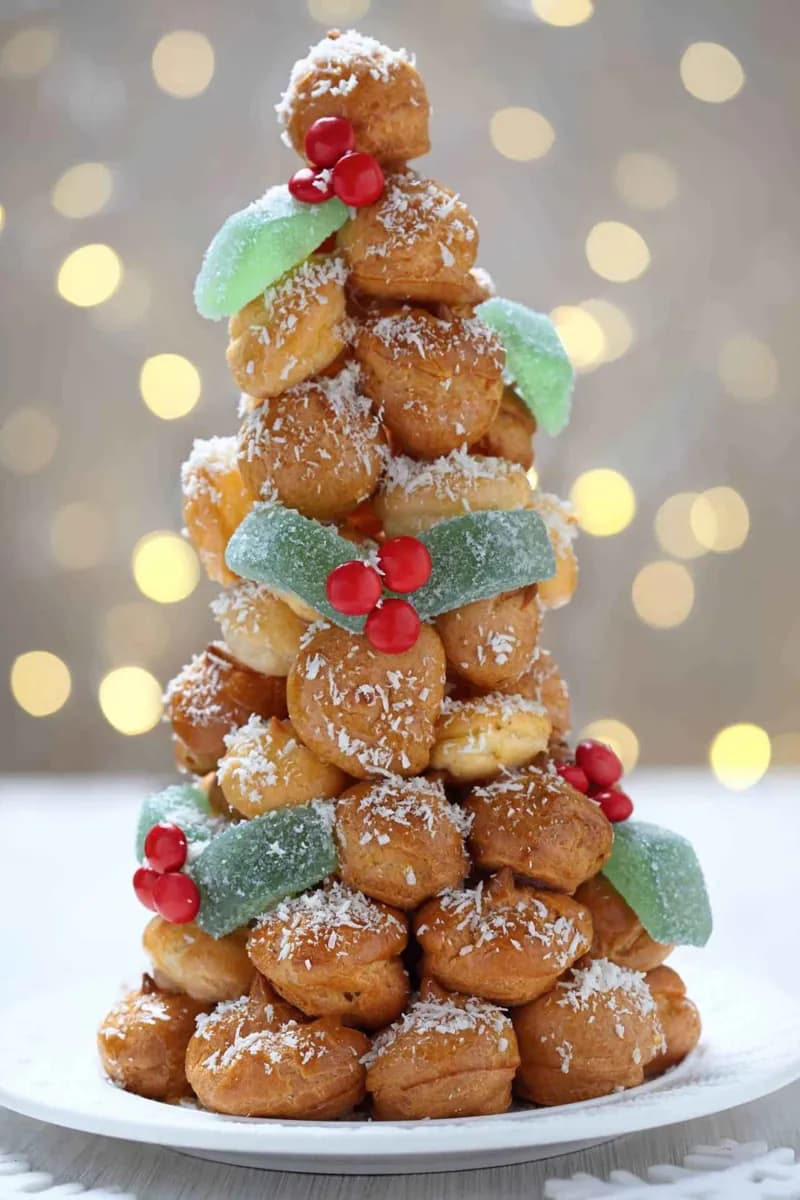
Recognize it for its architecture: profiteroles are piled into a cone and linked with spun caramel, sometimes with sugared almonds, chocolate or flowers. It is traditionally associated in France with weddings, baptisms and first communions. Its size and fragile caramel structure make it a celebratory centrepiece rather than an everyday individual pastry.
The full story
Croquembouche comes from the French phrase croque en bouche, meaning “crunches in the mouth.” The dessert is built from profiteroles, or small choux pastry puffs, arranged in a cone and held together with threads of caramel. It may be decorated with sugared almonds, chocolate, edible flowers, macarons or ganache. In France and Italy, it is often served at weddings, baptisms and first communions, where its height makes it a centrepiece. The invention is frequently attributed to Antonin Carême, who included it in an 1815 cookbook, but the dessert also appears in Alexandre Viard’s culinary encyclopedia of 1806. Early texts placed it among elaborate entremets served between courses at large banquets. Its structure still explains its role at celebrations: it is pastry made to be shared and seen.