
Why go
This period connects the island’s royal past with the Left Bank’s intellectual identity. The rebuilt royal palace on the Île de la Cité and the monastery of Saint-Germain-des-Prés show how political and scholarly institutions helped Paris recover importance before its medieval expansion.
The full story
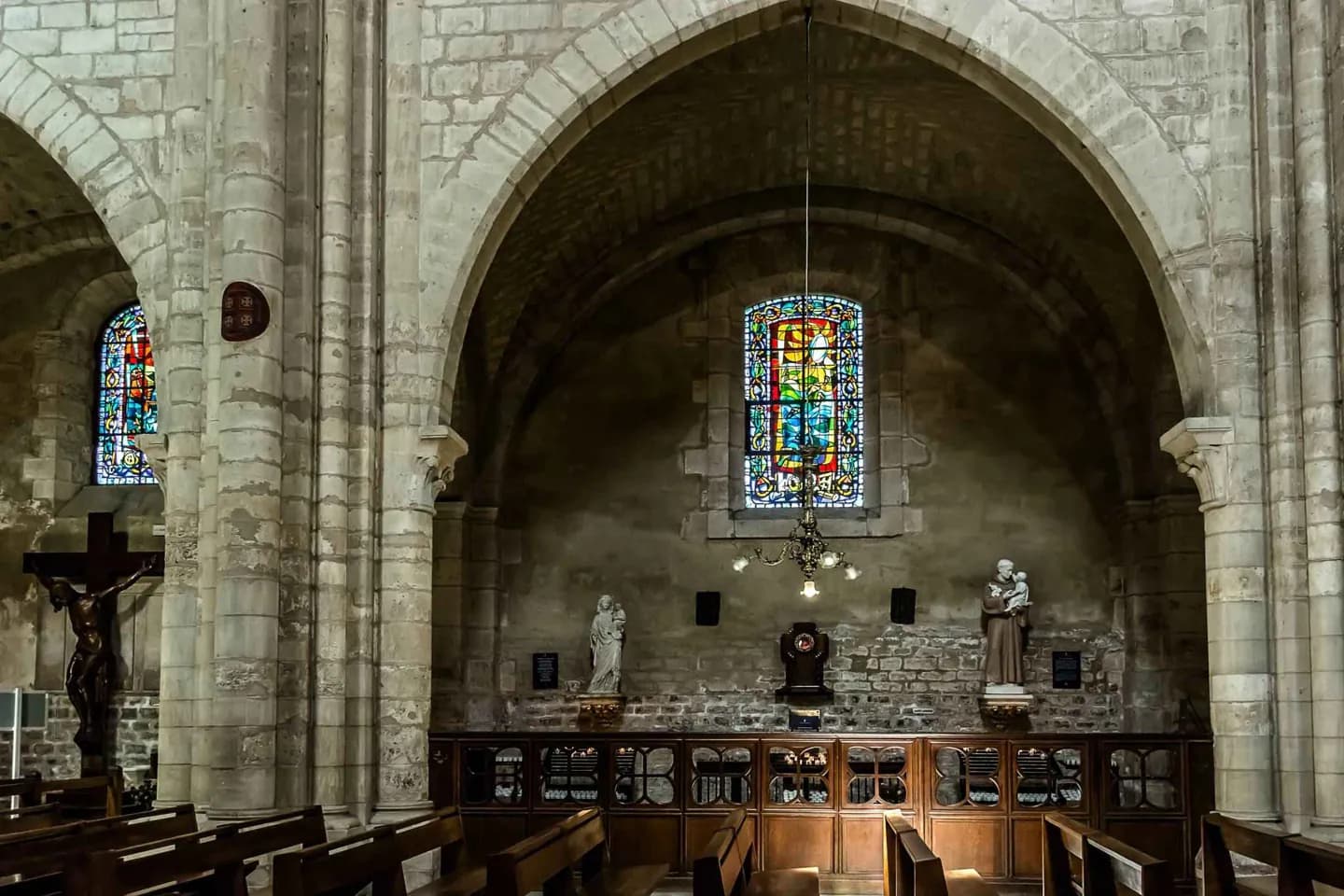
Clovis made Paris a Frankish capital, but later Carolingian rulers focused their power elsewhere, especially at Aachen. Paris did not disappear; Saint-Denis gained an important sanctuary, and the city retained its place in the royal landscape. Its stronger revival came with the Capetian dynasty, founded by Hugh Capet. The Capetians restored the royal palace on the Île de la Cité as prosperity gradually returned. Settlement began to spread on the Right Bank, while the Left Bank acquired a different importance through the Abbey of Saint-Germain-des-Prés. Rebuilt in the eleventh century, its church belonged to a monastery renowned for scholarship and illuminated manuscripts. This is a helpful way to read the early medieval city: the island held royal authority, the growing Right Bank offered room for expansion, and the Left Bank cultivated institutions that would later make Paris a centre of learning.