
Why go
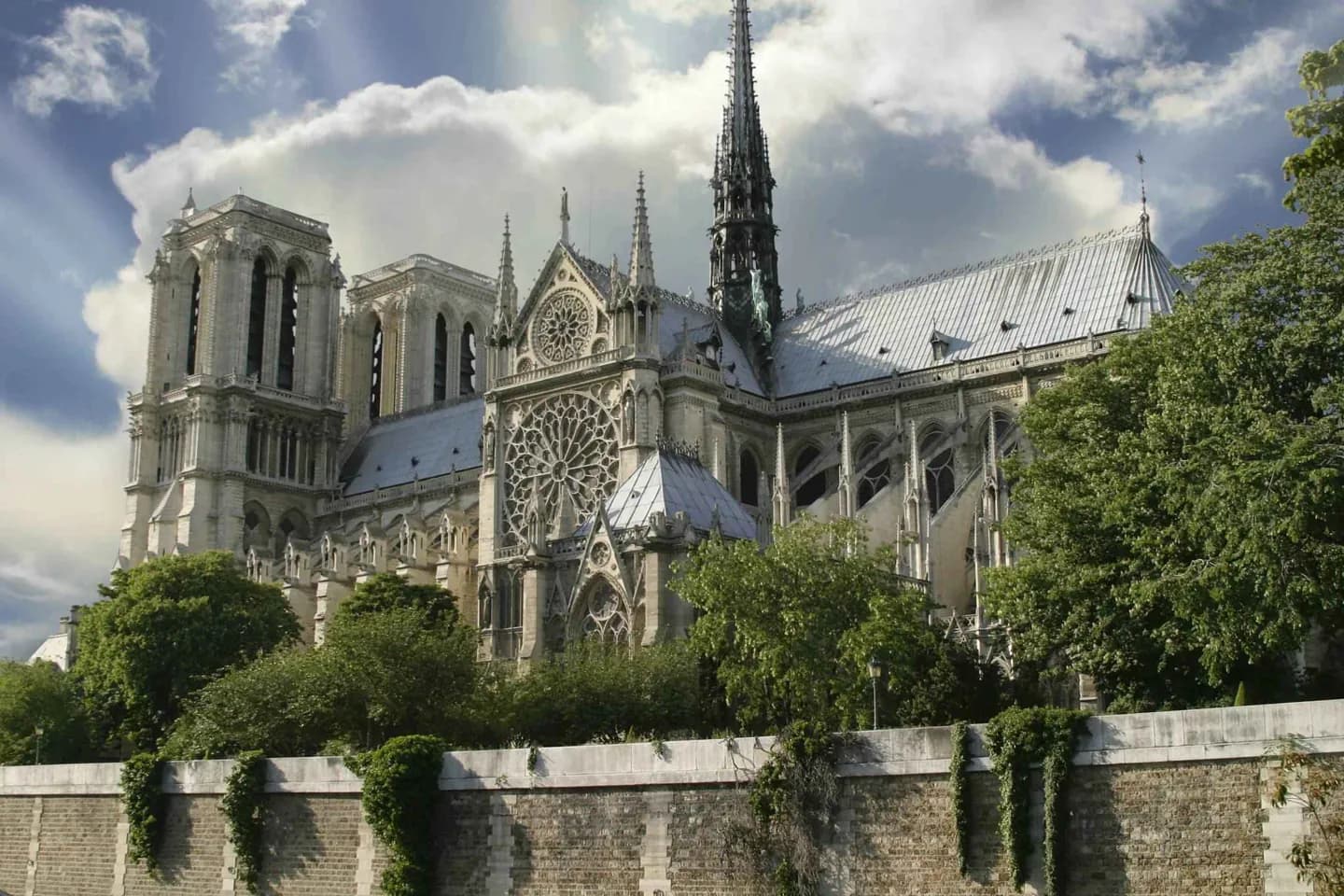
The period is still visible in the city’s geography. The Louvre’s medieval remains recall royal defence, Vincennes extends that story eastward, and the Latin Quarter reflects the university world that formed around Notre-Dame and Saint-Germain-des-Prés. These sites turn a broad era into a walkable map.
The full story
Medieval Paris expanded its defences as well as its intellectual reach. Charles V enclosed the city with new fortifications, built the Bastille to guard the eastern approach and strengthened the Louvre; traces of the wall survive within the Louvre complex beneath the Place du Carrousel. His residence choices also reveal a city with several centres: royal institutions clustered on the Île de la Cité and at the Louvre, while other residences lay elsewhere in the growing capital. Learning transformed the Left Bank. Schools linked to Notre-Dame and the Abbey of Saint-Germain-des-Prés drew students and teachers from across Europe. The University of Paris developed from this world, and Latin became the shared language of its international students, giving the Latin Quarter its name. The Sorbonne began as a college in this scholarly district. Walk the Left Bank with that purpose in mind: its lanes were shaped not only by churches and commerce, but by a dense community of teachers, students and religious houses.