
Why go
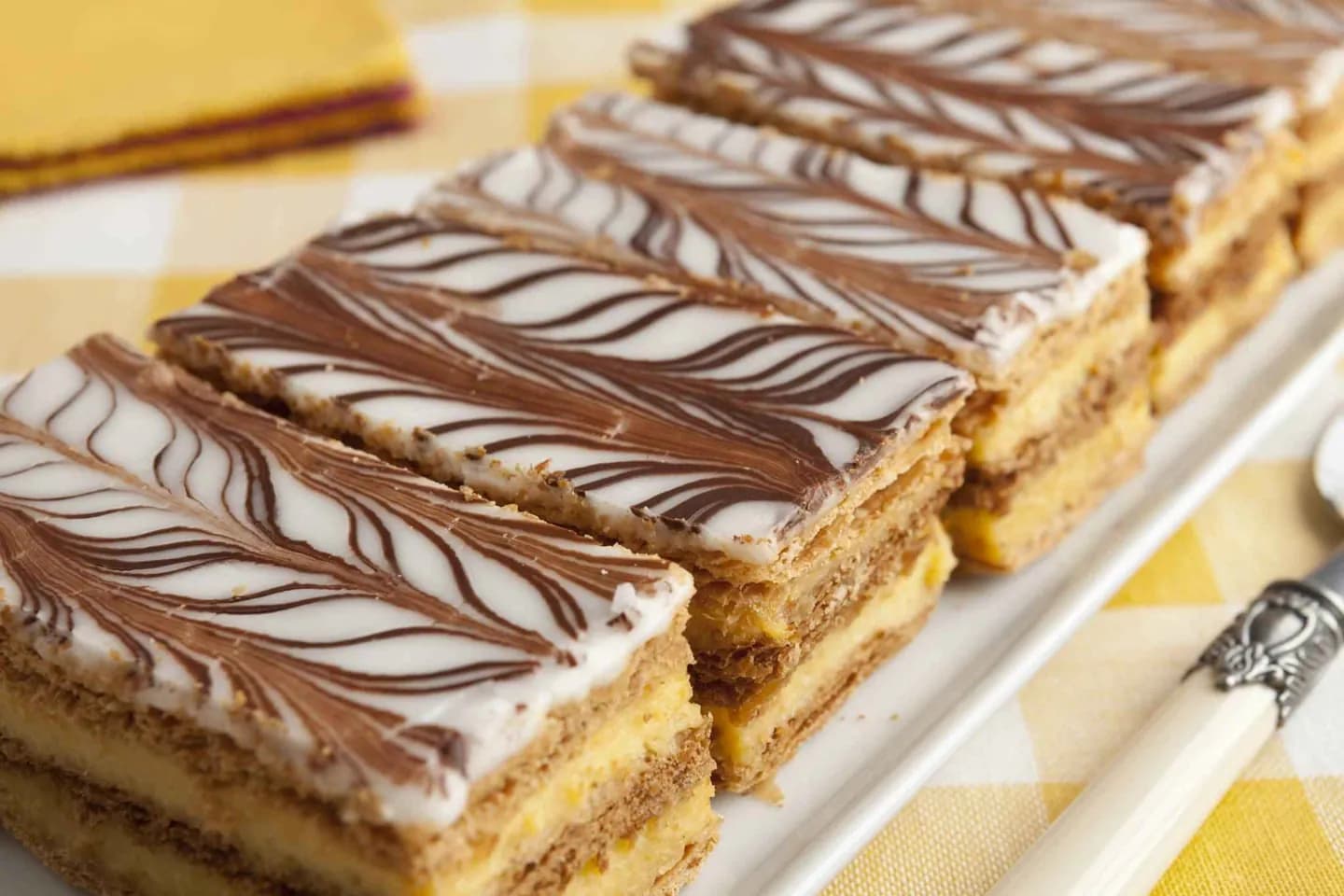
It gives a clear lesson in French pastry structure: three layers of puff pastry alternate with two layers of pastry cream. The top may be dusted with sugar or decorated with the familiar combed white and chocolate icing. Its crisp sheets and soft filling make it a good choice when you want a pastry defined by contrast rather than one uniform texture.
The full story
The name mille-feuille, or “a thousand sheets,” points to the many layers created by puff pastry. A traditional version uses three pastry layers with two layers of crème pâtissière, though whipped cream or jam may replace the cream. Recipes containing the elements appear from at least the sixteenth century, but its exact origin is unknown. The name itself appears in an English-language cookbook by French chef Vincent La Chapelle in 1733, and later in a French cookbook by Menon. Eighteenth-century versions were often filled with jam or marmalade rather than cream. The modern pastry is sometimes called a Napoleon, but that name probably developed from napolitain, referring to Naples, rather than to Emperor Napoleon I. The visible layers are the essential thing to notice.