
Why go
It offers a useful contrast to the baguette. Traditional versions draw on natural leavening or baker’s yeast, and rye can add a distinctive flavour because it ferments more quickly than wheat. Its round miche form also recalls communal village baking.
The full story
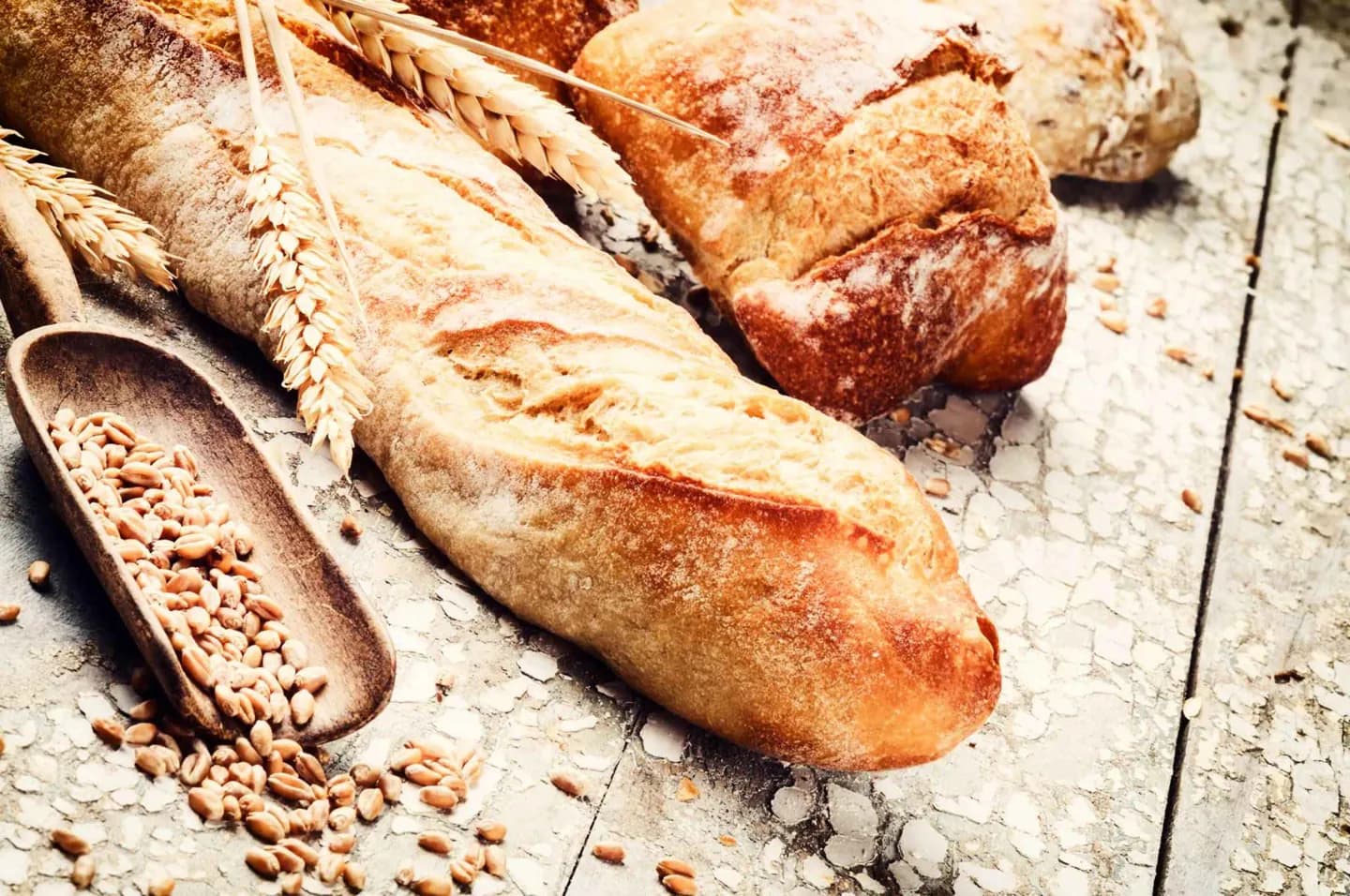
Pain de campagne, sometimes called French sourdough, is traditionally a large round loaf or miche made with white flour combined with whole wheat flour, rye or both. Its name points to country bread, but its history also explains a change in French urban taste. Before roller milling, wheat was stone-ground; sifting produced lighter flour while retaining some bran and germ. Rye often entered the dough because it grew among wheat, and its faster fermentation gave traditional pains de campagne a distinctive flavour. Large village loaves were once baked in communal ovens and designed to feed a family over days or weeks. With commercial yeast, pain de campagne lost ground in French cities as the baguette became more common. Artisan bread revived interest in it from the 1970s onward. Traditional methods allow dough to ferment for hours, then shape it in linen-lined bannetons before baking. The result is a loaf worth choosing when you want a more substantial, grain-led alternative to a crisp, narrow baguette.