
Why go
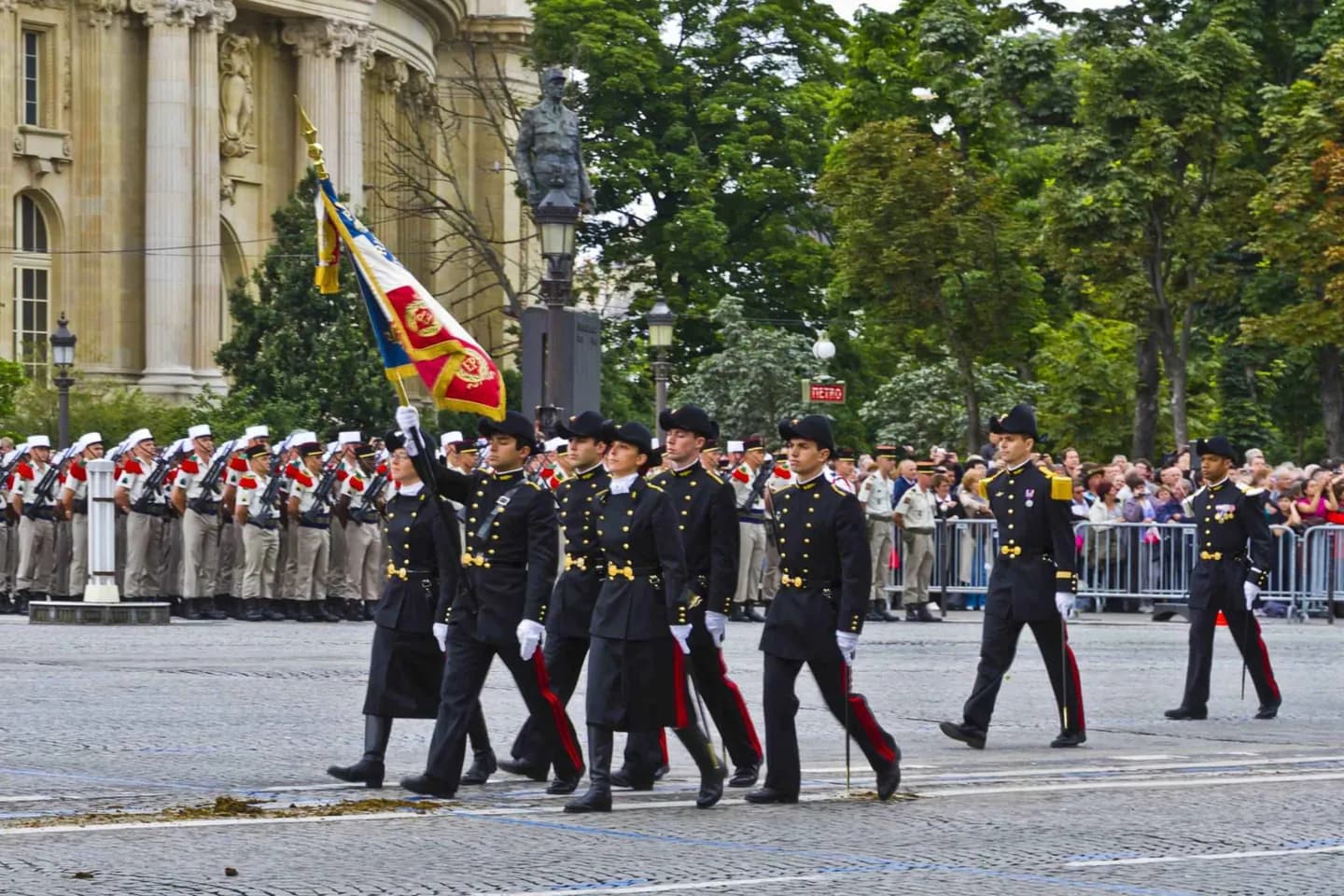
These events explain how Paris uses its shared spaces. Bastille Day takes over the Champs-Élysées, Fête de la Musique brings performances into the streets, and Nuit Blanche makes contemporary art a night-time citywide experience. Their dates and programmes matter, so check official listings before planning around one.
The full story
Public festivals are a useful way to see Paris beyond its permanent monuments. On 14 July, the national celebration connects the Champs-Élysées and the Arc de Triomphe with the French Revolution and the Fête de la Fédération. Fête de la Musique, first held in Paris in 1982, opens a different kind of public space through free performances by amateur and professional musicians. Nuit Blanche began in Paris in 2002 as an overnight contemporary-art trail through the streets, giving galleries, installations and public sites a shared after-dark frame. Paris-Plages transformed parts of the Seine banks and the Bassin de la Villette into summer leisure spaces from 2002, while the Carnaval de Paris preserves a much older tradition of processions and costumed participation. Other recurring names, including the Journées du Patrimoine and Fête des Jardins, show how the calendar can change the access and atmosphere of familiar places. Treat any festival as a reason to focus a day on one area, not as a substitute for checking the current programme.