
Why go
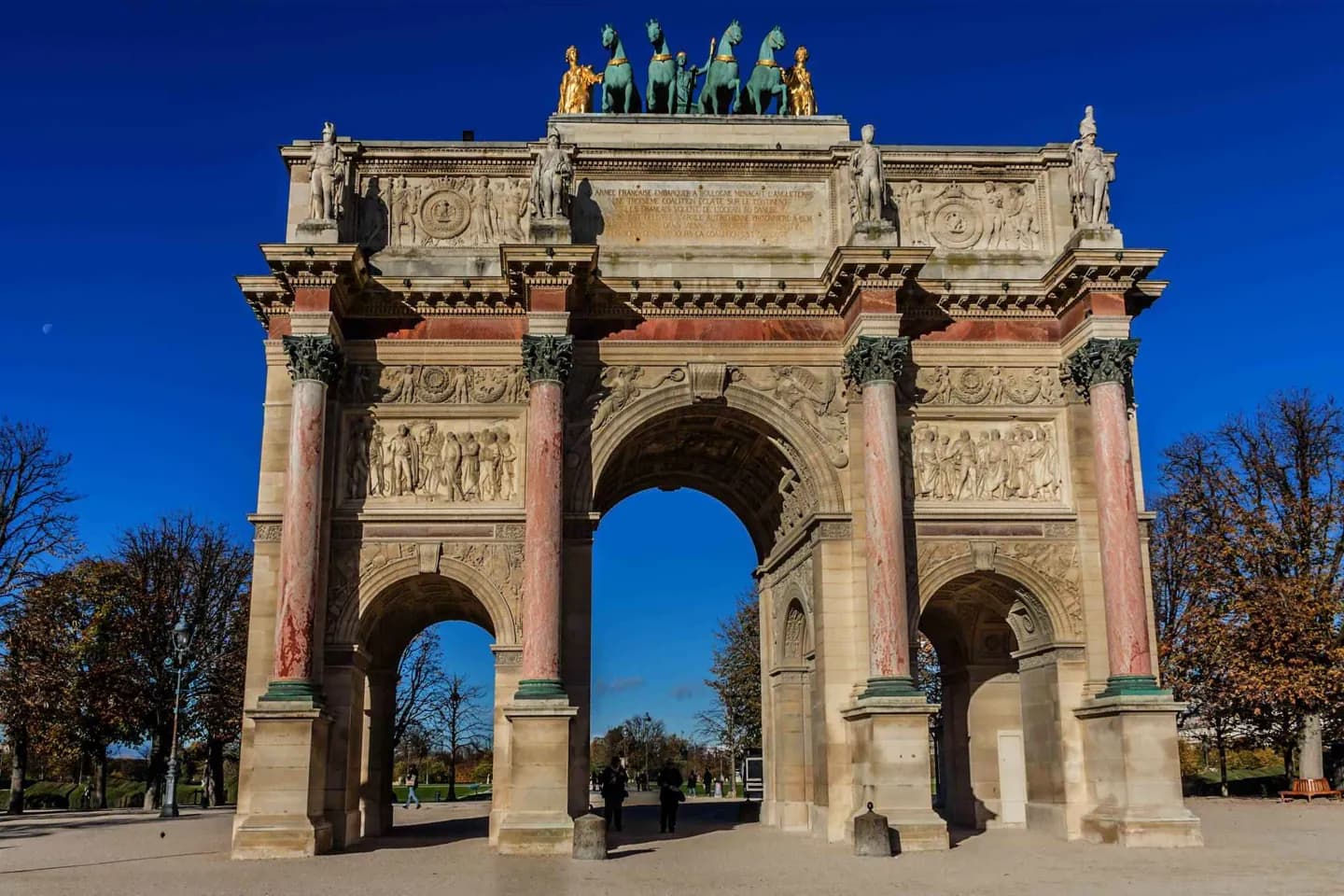
This period links a coherent group of landmarks: Rue de Rivoli, Rue de la Paix, the Arc de Triomphe du Carrousel, the Vendôme Column, the Arc de Triomphe and La Madeleine. Their Roman references and triumphal imagery reveal how Napoleon used the city to project imperial power.
The full story
After becoming emperor, Napoleon I set out to give Paris an imperial image comparable to ancient Rome. Street building helped create that image: Rue de Rivoli began from Place de la Concorde toward Place des Pyramides, while a new connection between Place Vendôme and the Grands Boulevards became Rue de la Paix. Bridges across the Seine, including the Pont des Arts, Pont d’Austerlitz and Pont d’Iéna, carried names and ambitions associated with the regime. Monuments supplied the clearest political message. The Arc de Triomphe du Carrousel was designed in a Roman model and aligned with the Tuileries; the Vendôme Column also drew on Roman precedent. The Arc de Triomphe began as the largest of these memorials, though it was completed later. La Madeleine was redirected from an unfinished church into a military shrine before returning to religious use. Walk this axis from the Tuileries toward the west to see how avenues, arches and columns were assembled into an imperial landscape.