
Why go
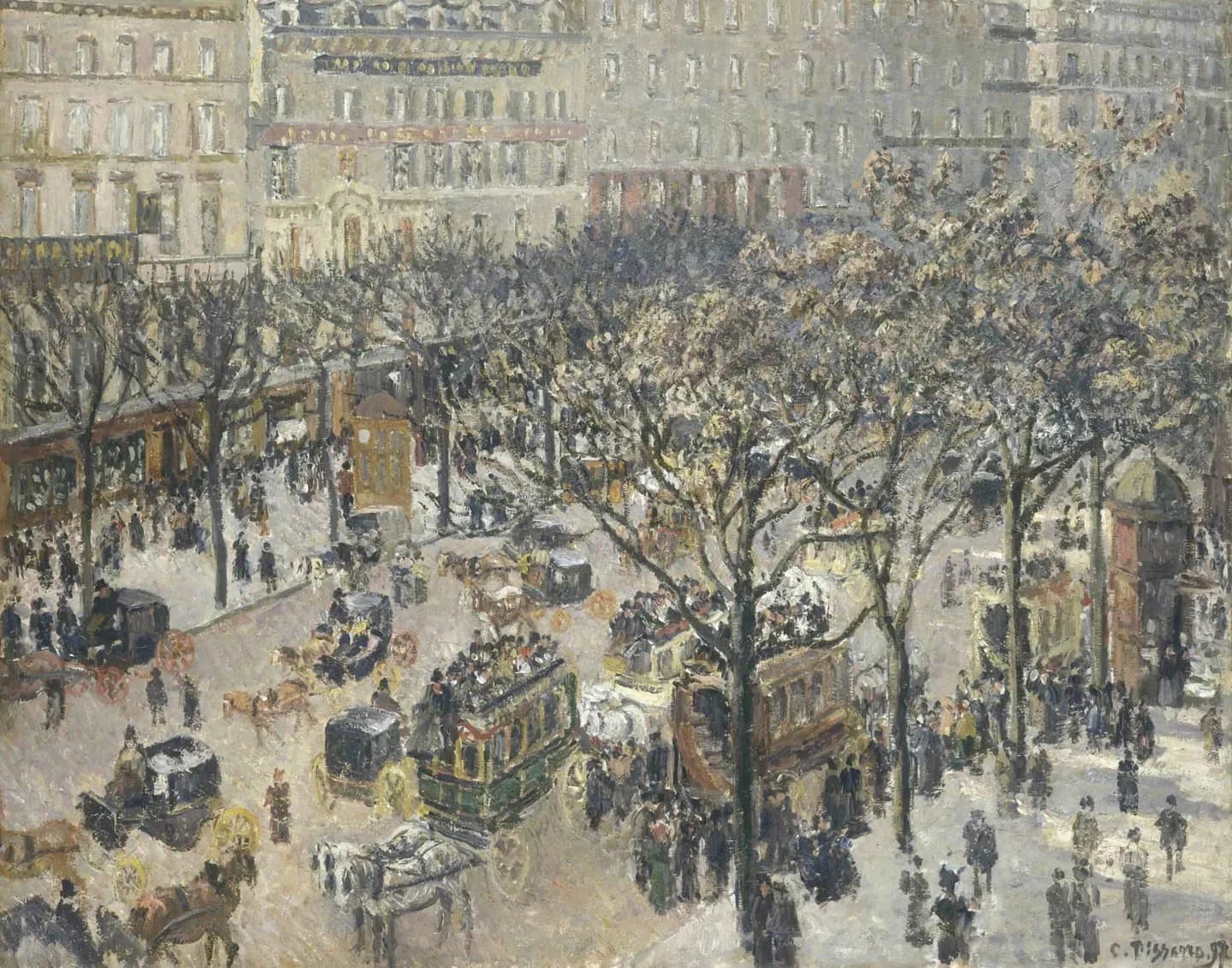
This is the key to reading modern central Paris. The new boulevards connected stations and neighbourhoods, opened views around monuments and imposed consistent building standards. Compare them with surviving older streets around the Île de la Cité to understand both the practical and political force of the transformation.
The full story
Louis-Napoleon became emperor as Napoleon III after the upheavals of the Second Republic. Facing a crowded city with poor sanitary conditions, he launched a major public-works programme under Georges-Eugène Haussmann. Paris was enlarged from twelve to twenty arrondissements, bringing surrounding towns within its limits and creating the municipal outline familiar today. The remodelling changed both circulation and appearance. Older quarters on the Île de la Cité were largely cleared for new judicial, police and hospital buildings, while Rue de Rivoli was extended and wide boulevards connected railway stations and neighbourhoods. These routes improved movement and created open space around monuments, but also made barricades more difficult in districts with a history of uprising. Haussmann imposed shared heights, basic designs and pale stone façades along the new streets, producing the visual unity now associated with central Paris. His methods and disruption drew criticism, and he was dismissed before the work was complete, but the boulevard programme continued for decades.