
Why go
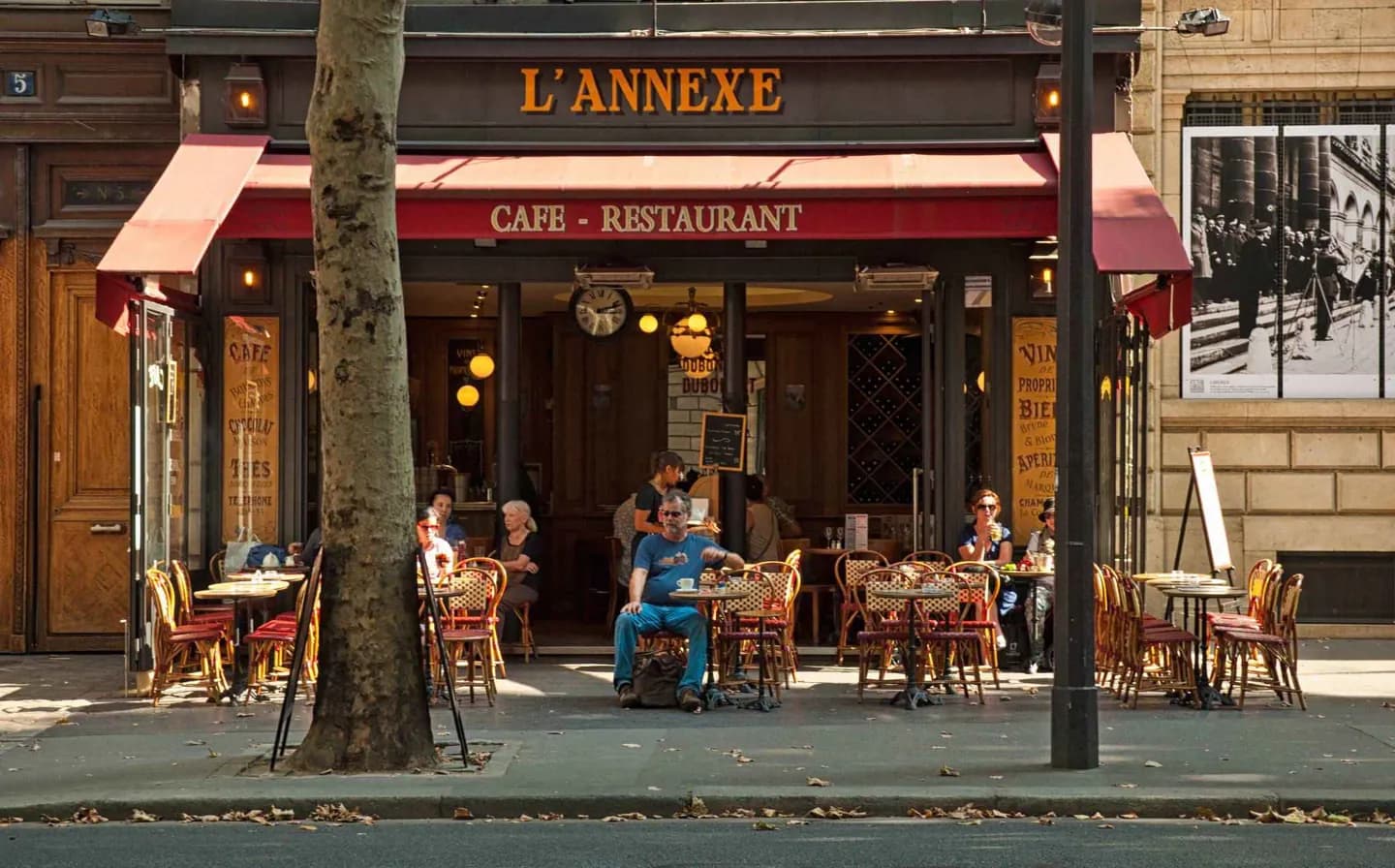
Cafés offer a slow, street-facing way to experience daily Paris. They range from neighbourhood meeting places to historic names such as Café Procope, Café de la Paix and Café de Flore, and a table can be more useful for watching a district than for a hurried drink.
The full story
Paris cafés have been part of the city’s social and culinary life since the 17th century. They work as meeting places, neighbourhood hubs and places to sit over a conversation or watch the pavement. That role explains why they differ from a modern coffee shop: a typical café may have a kitchen, a bar and a wine list as well as coffee. The drinks vocabulary also carries the tradition. A grande crème is coffee with milk, an espresso is a small black coffee, and pastis is an anise-flavoured spirit. Café Procope on rue de l’Ancienne Comédie is associated with the long history of the Paris café, while Café de la Paix faces the Opéra and Café de Flore belongs to Saint-Germain-des-Prés. The value of any one café is often its relationship to its street, rather than a famous name alone.
Useful to know
- Use a café when you want a pause with a view of street life, not simply a takeaway coffee.
- Read the menu as a full food-and-drink offer; many cafés serve meals as well as coffee.
- At a busy address, choose a table for the setting and allow time to stay rather than treating it as a quick stop.