
Why go
Versailles explains the scale and ceremony of French absolute monarchy more clearly than a quick palace stop can. Louis XIV made it the seat of government in 1682, and its architecture, gardens and Hall of Mirrors show how court life was staged. Allowing a day lets the journey, palace and grounds work as one experience.
The full story
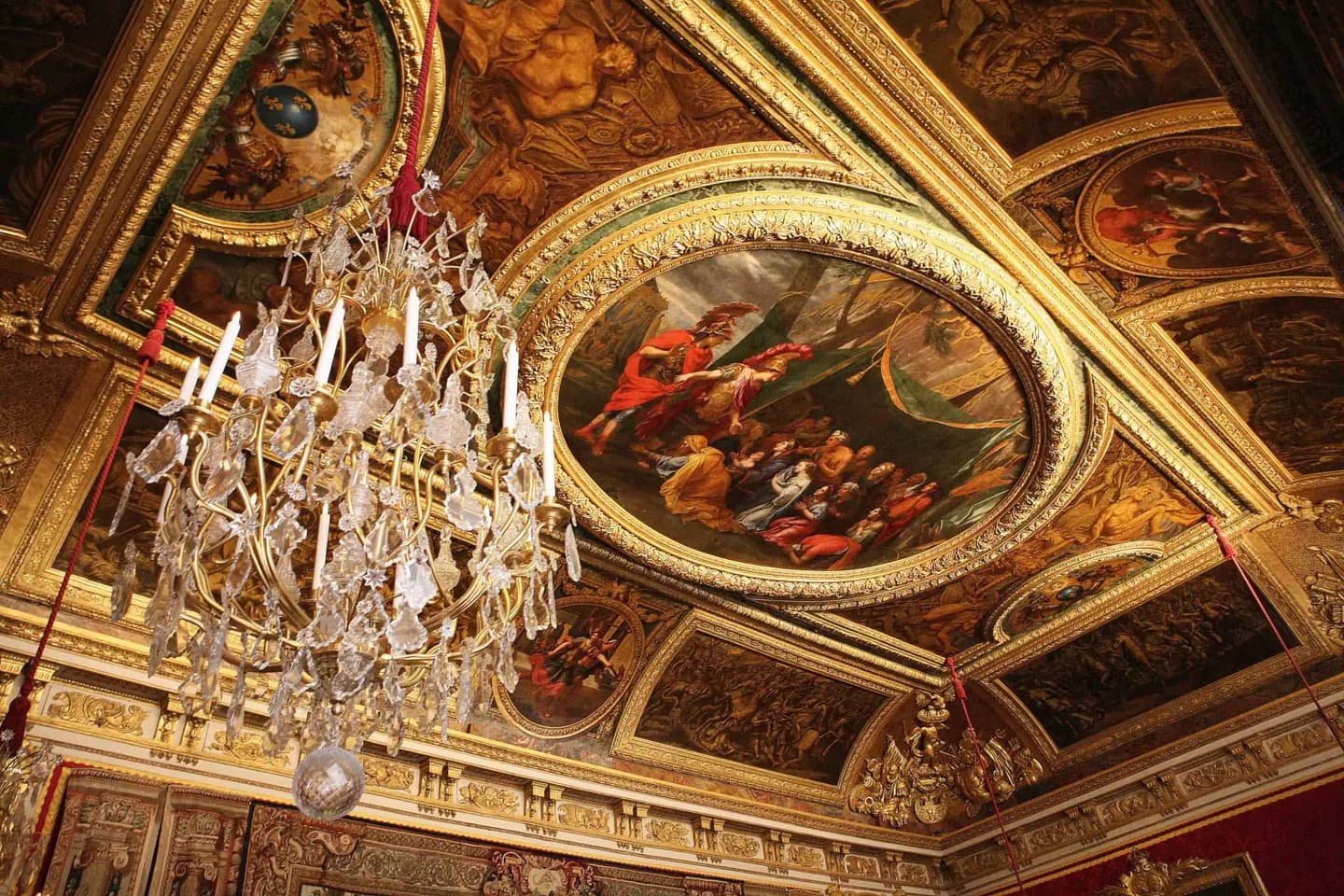
Versailles began as Louis XIII’s brick-and-stone hunting lodge in 1623 and was enlarged by Louis XIV into the royal palace of a centralized monarchy. Louis Le Vau designed the first major expansion, Charles Le Brun directed the elaborate decoration, and André Le Nôtre shaped the formal gardens and fountains. Jules Hardouin-Mansart later added the great north and south wings and replaced a garden-facing terrace with the Hall of Mirrors. In 1682 Louis XIV made Versailles his principal residence and the seat of government, drawing court life and political power away from Paris. The royal family returned to the capital in October 1789, shortly after the Revolution began. That history makes the site more than a grand building: the palace, gardens and ceremonial rooms were tools for displaying authority. A day trip gives their scale room to register.
Useful to know
- Set aside a full day and decide in advance whether the palace interiors, gardens or both are the priority.
- Travel from Paris is a separate rail leg; check the official route guidance and the palace timetable before departure.
- The gardens are extensive and exposed, so pace the outdoor part around weather and walking comfort.