
Why go
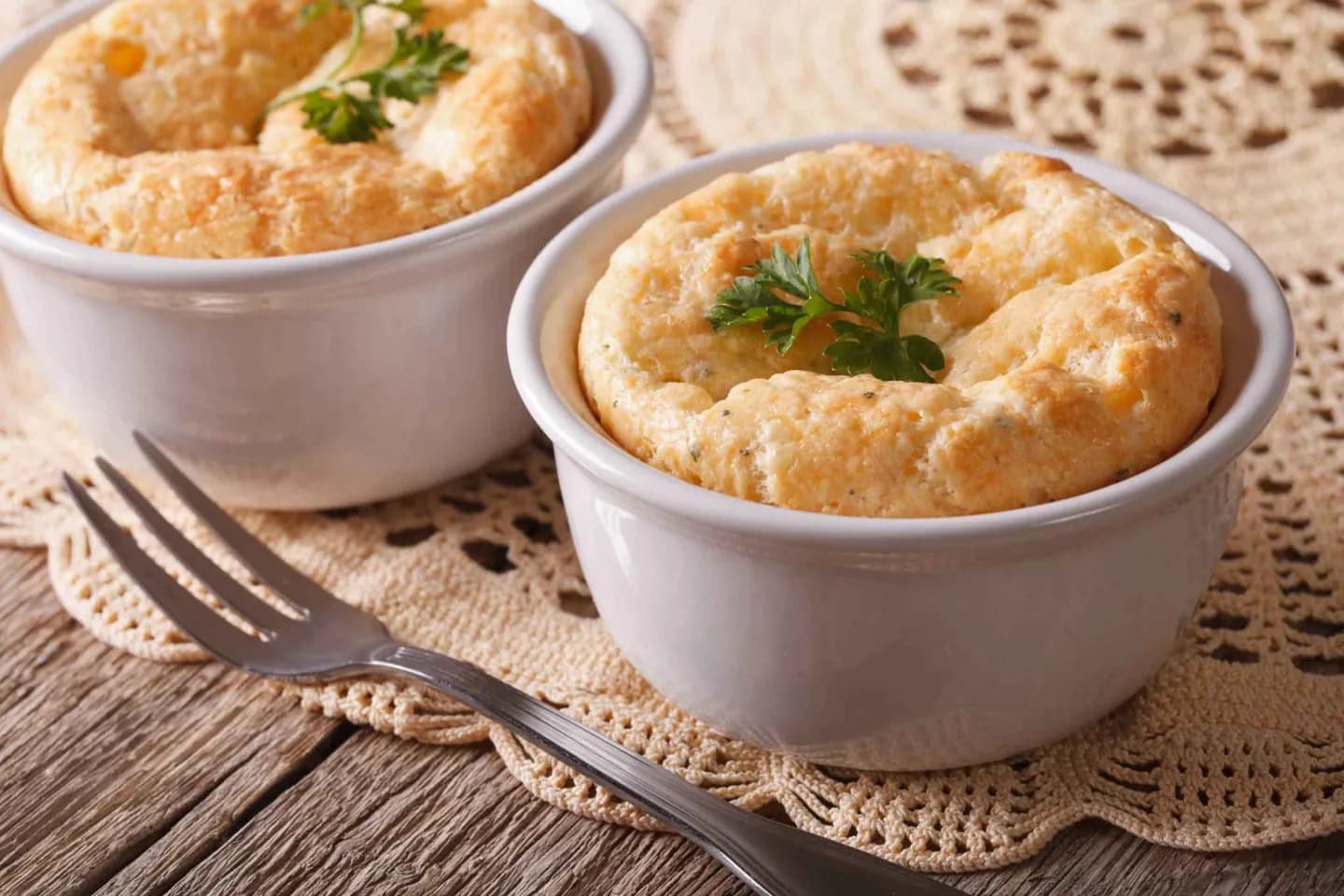
Order one for the contrast between a flavoured base and beaten egg whites that lift it in the oven. It can be savoury or sweet, but its most distinctive feature is temporary: the risen, fluffy form begins to fall soon after cooking.
The full story
The soufflé emerged in France in the early eighteenth century, with early mention attributed to the cook Vincent de la Chapelle. Its wider development is usually linked to Marie-Antoine Carême in the nineteenth century. The method combines two parts: a flavoured base, such as crème pâtissière, béchamel, cream sauce or purée, and egg whites beaten to soft peaks. The base determines whether the dish is savoury or sweet; cheese, herbs and vegetables work as readily as chocolate, fruit or jam. The whites create the lift, which explains both the height and the fragility. Once cooked, a soufflé is puffed and fluffy but generally starts to sink within five to ten minutes. That changing form is the point of the dish, not a flaw.