
Why go
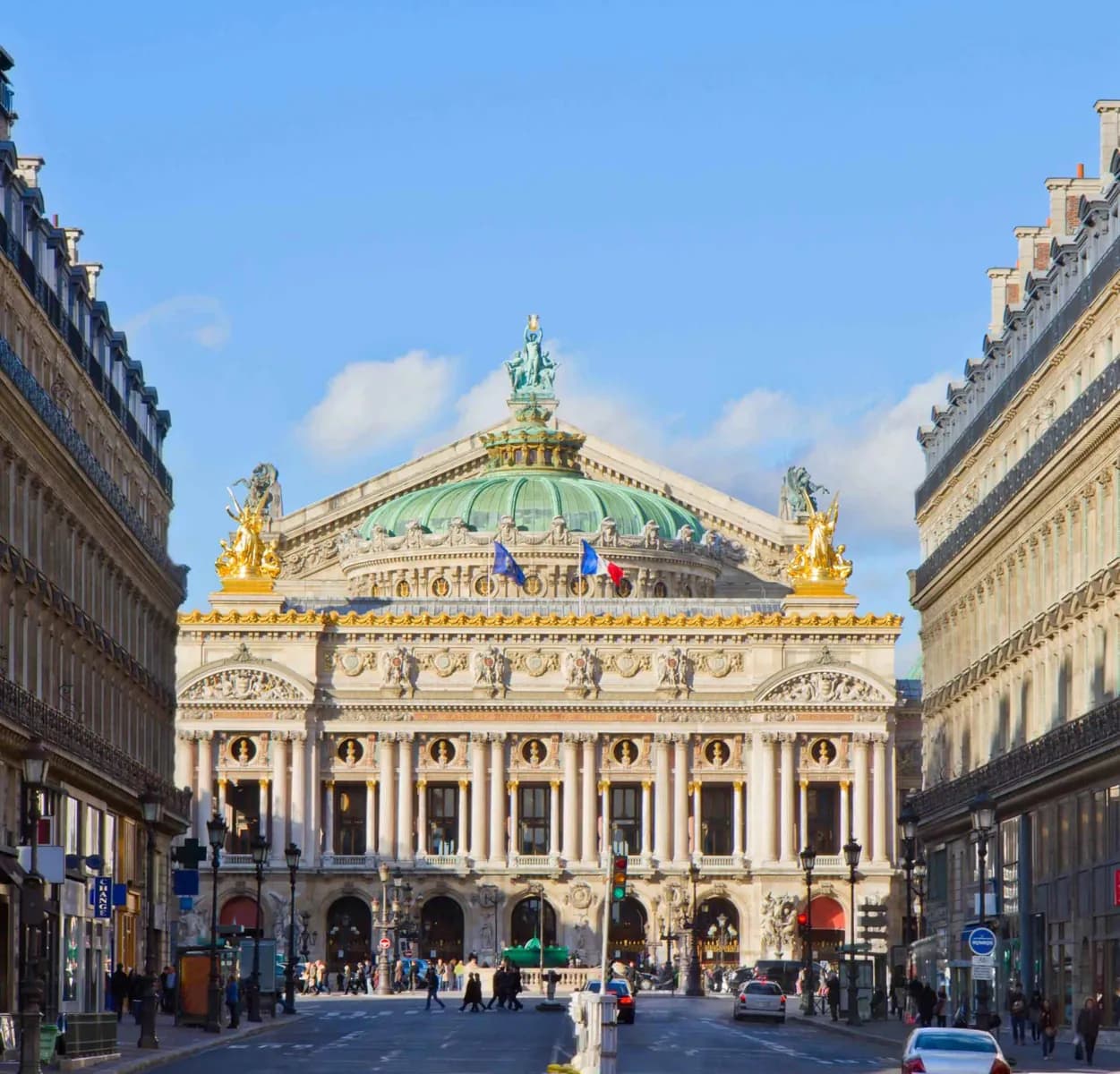
The contrast is part of the experience: Opéra Garnier represents 19th-century opera, Opéra Bastille has a broader modern-and-classic programme, and the Comédie-Française connects a performance to the long history of French classical theatre. These landmarks make an evening out a way to read Parisian cultural life.
The full story
Paris has long made performance part of its public culture. Opéra Garnier and Opéra Bastille offer two very different frames for opera and ballet: one is a 19th-century monument, while the other was built for a modern era. The Comédie-Française, founded in 1680, is another useful landmark, performing French classics from the Salle Richelieu in the Palais-Royal near the Louvre. The nearby Odéon-Théâtre de l’Europe adds a second state-theatre anchor beside the Luxembourg Gardens. Music history also has clear addresses. Diaghilev’s Ballets Russes made their Paris debut at the Théâtre du Châtelet in May 1909; their 1913 season was presented at the Théâtre des Champs-Élysées. The Philharmonie de Paris brought a major symphonic hall to the city in 2015. Parisian music halls belong to the same wider story: the Moulin Rouge’s red windmill and French Cancan, and Olympia’s association with performers from Édith Piaf to Miles Davis, show how popular entertainment became part of the city’s imagery. Check each venue’s programme before choosing a performance.