
Why go
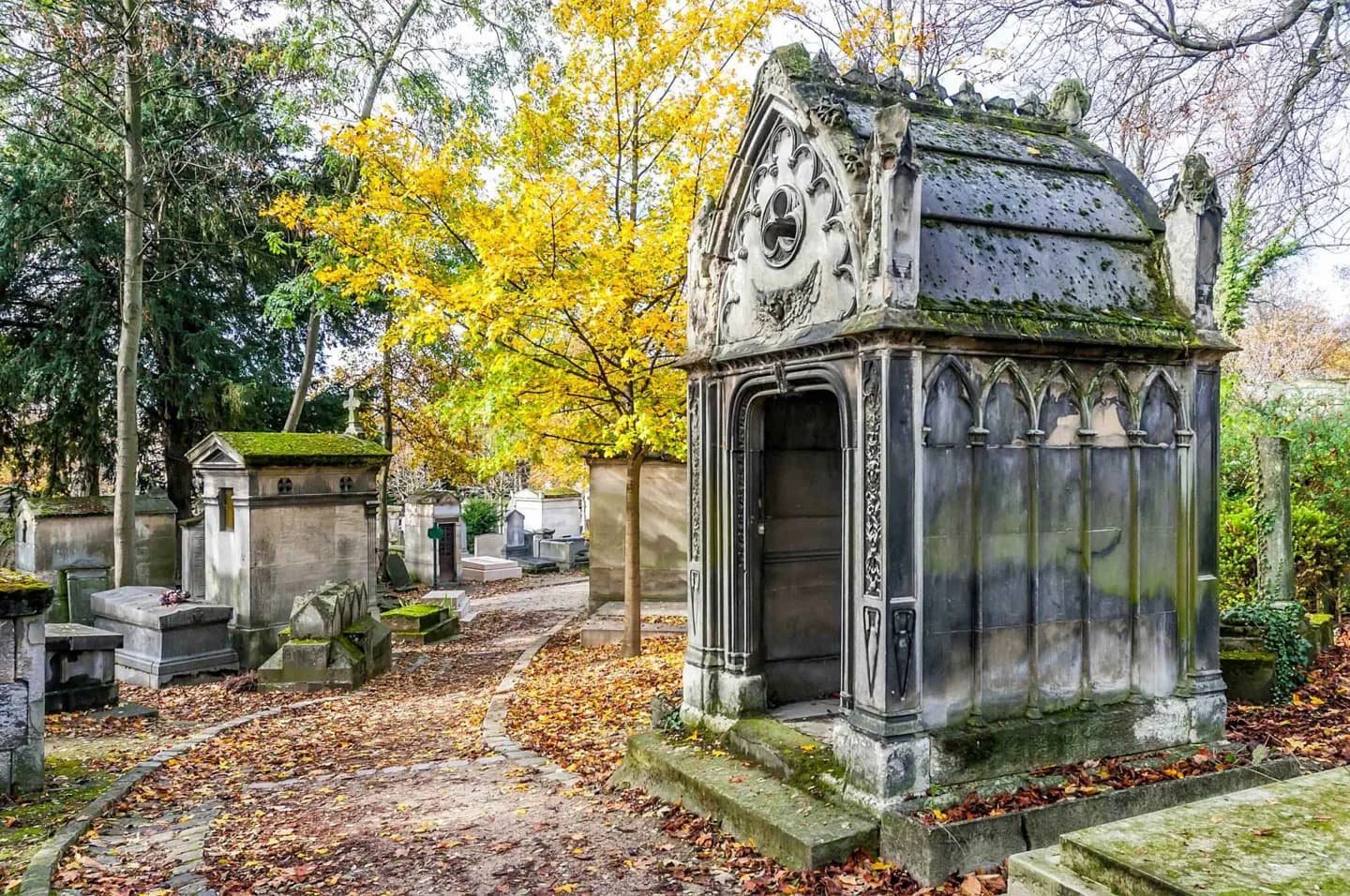
Père Lachaise works best as a slow history walk, not a checklist of famous graves. Created in 1804 on a hillside east of the centre, it began with very few burials before transfers of celebrated figures changed its appeal. Its paths, tombs, columbarium and memorial sites show how Paris turned a practical new cemetery into a cultural landscape.
What to look for
- Graves and family monuments line the cemetery’s landscaped paths.
- The columbarium and crematorium form a distinctive architectural stop within the grounds.
- The Communards’ Wall is a memorial site at the cemetery’s edge.
The full story
Père Lachaise began as a response to overcrowded Paris burial grounds. The city acquired the hillside site in 1804, and Alexandre-Théodore Brongniart laid out the new cemetery. At first it seemed too remote and attracted few funerals. The administrators then transferred the remains of Molière and La Fontaine, using celebrated names to change public perception; the later transfer of Abélard and Héloïse added another powerful story. The strategy worked, and the cemetery expanded repeatedly during the nineteenth century. Its name comes from Père François de la Chaise, confessor to Louis XIV, whose Jesuit house stood on the property. As you walk, the mix of graves, family monuments, the columbarium and the Communards' Wall explains why the cemetery reads as a record of Parisian civic and private memory rather than only a burial ground.
Useful to know
- Plan a walk rather than a quick stop; the cemetery's scale rewards a loose route.
- Use the Métro as part of the approach: Père Lachaise station serves lines 2 and 3.
Your next visit
Estimated · Declared scenario and planning estimates; no live opening, weather, queue or booking service.
Outdoor visit · 30–45 min
World planning estimate; admission, opening, visit duration and access need checking.