
Why go
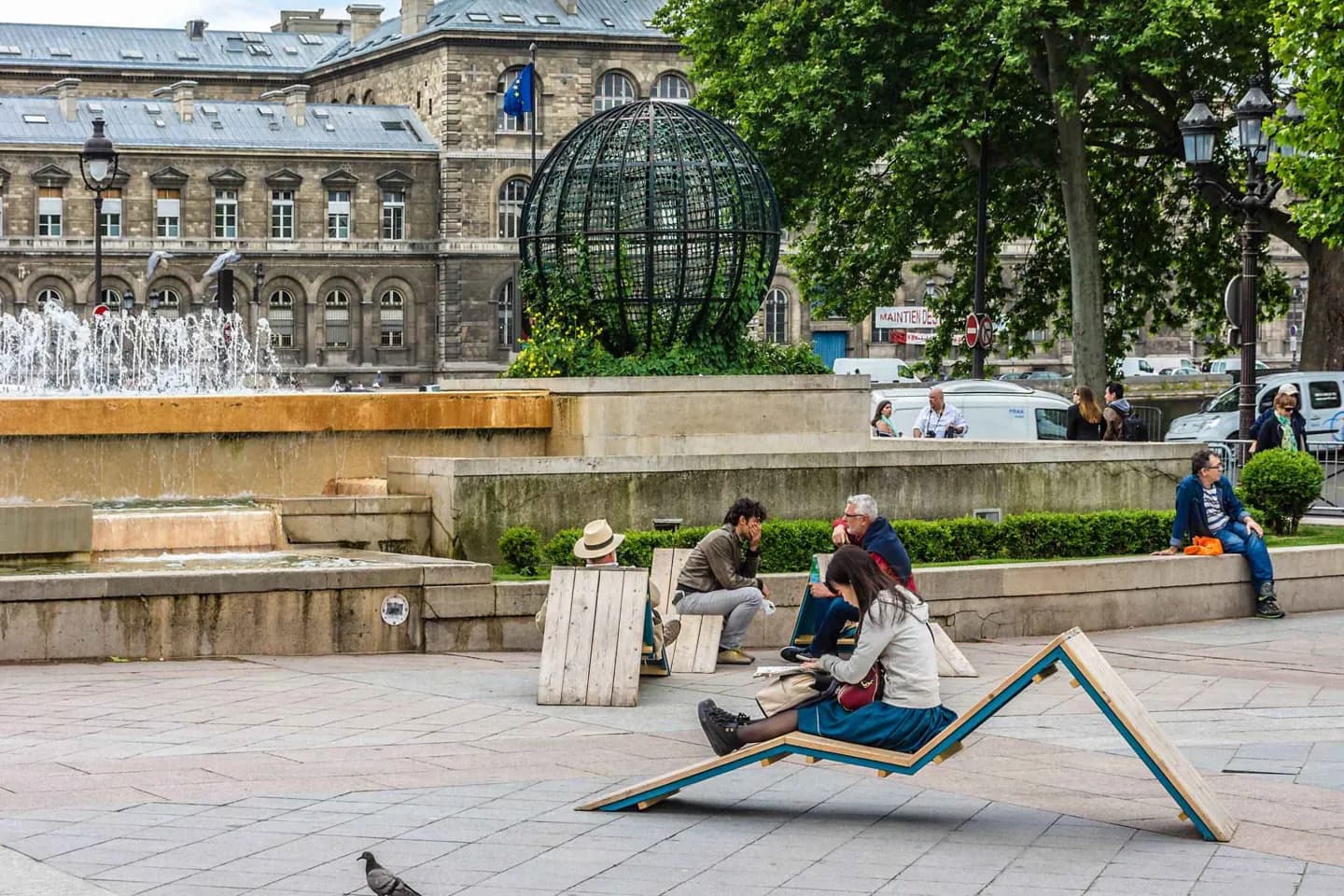
Come for the façade and the public history concentrated on this site. Paris's administration has stood here since 1357, and the building's Renaissance appearance conceals a nineteenth-century reconstruction after the Paris Commune fire. The square works well as an outdoor pause when moving between the Louvre–Rivoli corridor and Le Marais, rather than as a long standalone visit.
What to look for
- A Renaissance-style City Hall rebuilt within the surviving stone shell after 1871.
- The statue of Étienne Marcel on the south garden wall.
- A civic square facing the seat of Paris's municipal government since 1357.
The full story
Paris's municipal government has occupied this site since 1357, when Étienne Marcel acquired the Maison aux Piliers beside the former river landing at Place de Grève. Francis I later commissioned a larger City Hall, and its construction was completed under Louis XIII. The building became a stage for revolutionary and national events, including the proclamation of the Third Republic in 1870. During the Paris Commune, fire left only its stone shell. The reconstruction, completed between 1873 and 1892, restored a sixteenth-century French Renaissance exterior while creating richly decorated nineteenth-century ceremonial rooms inside. That split is the key to reading the façade: it looks older than much of the building's interior. The exterior sculpture also carries civic memory, notably the statue of Marcel, whose office of provost of merchants preceded that of mayor.
Useful to know
- Treat this as an exterior stop and continue into Le Marais or toward the Seine.
- Look for the Étienne Marcel statue on the south garden wall before leaving.
- Allow extra time only when civic events change how the square is used.
Your next visit
Estimated · Declared scenario and planning estimates; no live opening, weather, queue or booking service.
Outdoor visit · 30–45 min
World planning estimate; admission, opening, visit duration and access need checking.