
Why go
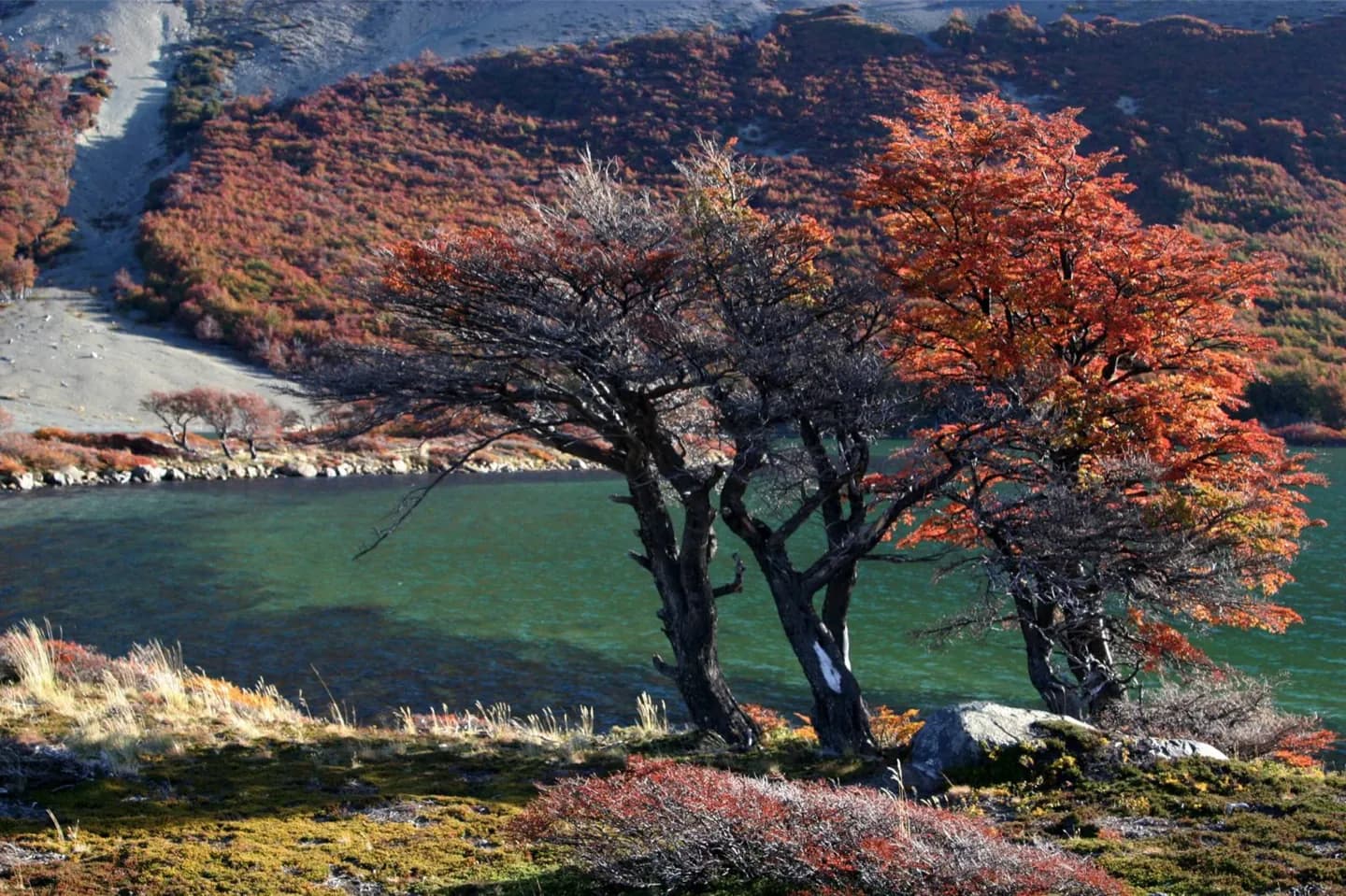
The park's ecology makes the lake district more legible. Lenga, coihue and ñire are characteristic trees, while the shift toward drier eastern vegetation shows how moisture changes across the mountains. Birds and mammals add interest, but the landscape pattern is the dependable observation.
The full story
Nahuel Huapi contains more than one ecological setting. Toward the wetter west, temperate forest includes southern beech species such as lenga, coihue and ñire, along with ferns and bamboo-like caña colihue in some areas. Farther east, drier vegetation begins to replace the lush forest. That change reflects differences in rainfall and elevation across the park, and it can be easier to notice than any particular animal. Foxes, cougars, guanacos, deer, otters and many birds have been reported in the wider park. Some are elusive or tied to specific habitat; their inclusion is not a promise of a sighting. Even the llao llao fungus, which grows in irregular masses on trees, can prompt a closer look at a forest rather than a checklist of rarities. For a visit from Bariloche or Villa La Angostura, choose an actual shore or path and use the vegetation as a clue to where you are within this large protected landscape.