
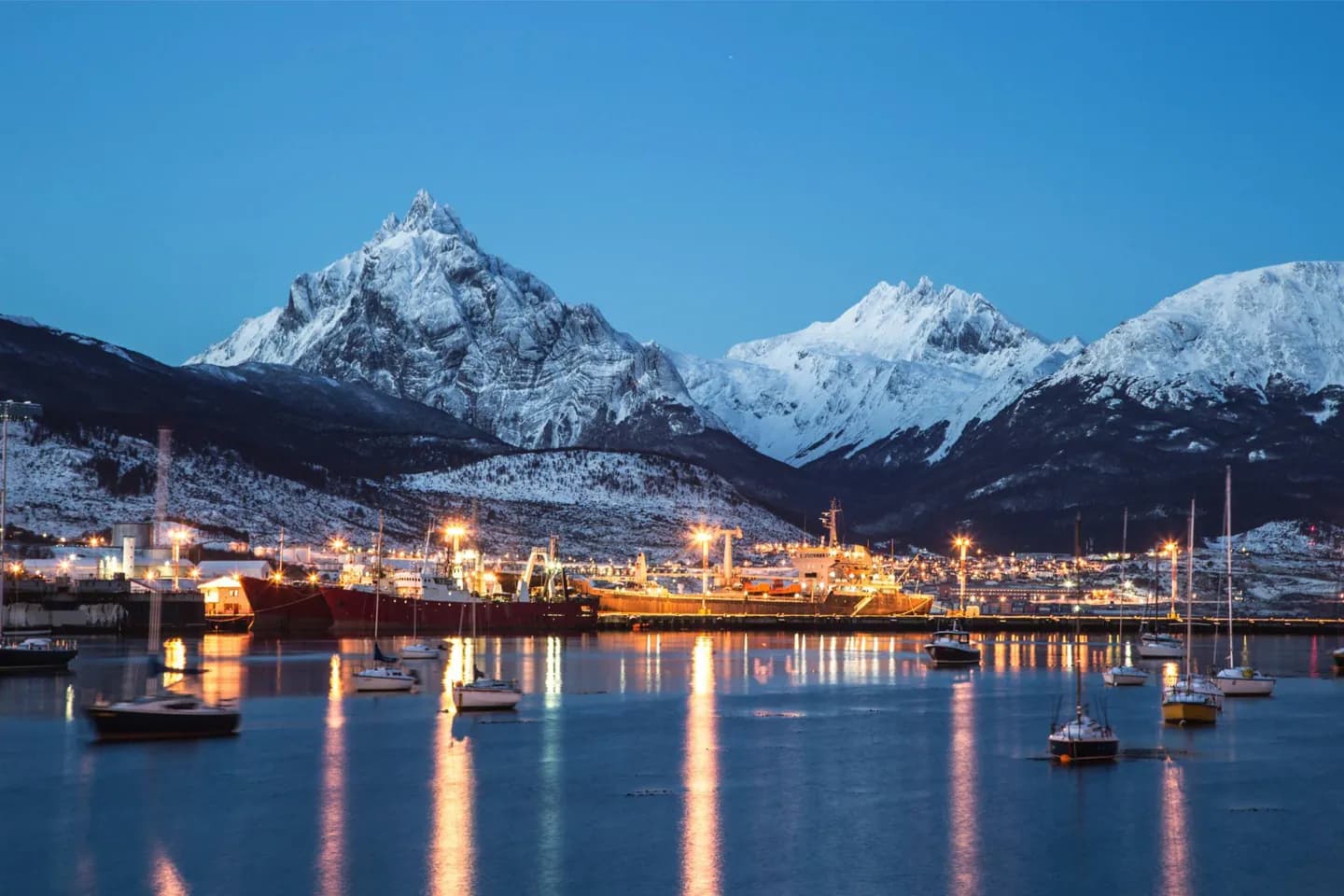
Why go
The city is often introduced by its southern latitude, but its history offers a richer way in. British missionaries used the Indigenous place name, Argentine authorities established a permanent presence in the 1880s, and a prison later shaped the town. The former prison building is a concrete place to connect those eras.
The full story
The area around today's Ushuaia was part of the Yaghan world before Europeans settled on the channel. British missionaries adopted the Indigenous name Ushuaia and established a small settlement in the nineteenth century. Waite Hockin Stirling lived among Yaghan people in 1869, and Thomas Bridges became closely associated with the mission that followed. This history should be read alongside the profound disruption that colonization brought to Indigenous communities. In 1884, an Argentine naval expedition under Augusto Lasserre formally established a state presence in Ushuaia. The settlement later became the territorial capital. The prison, opened in the early twentieth century, helped drive the town's growth in its isolated setting. It closed in 1947; the building later served naval purposes before becoming part of the Museo Marítimo de Ushuaia. A visit to the former prison gives physical scale to a chapter that otherwise risks sounding like a list of dates. The harbour outside connects the town's history to the channel that brought missionaries, officials and supplies.
Useful to know
- Visit the former prison museum to connect the town's history with a surviving building.