
Why go
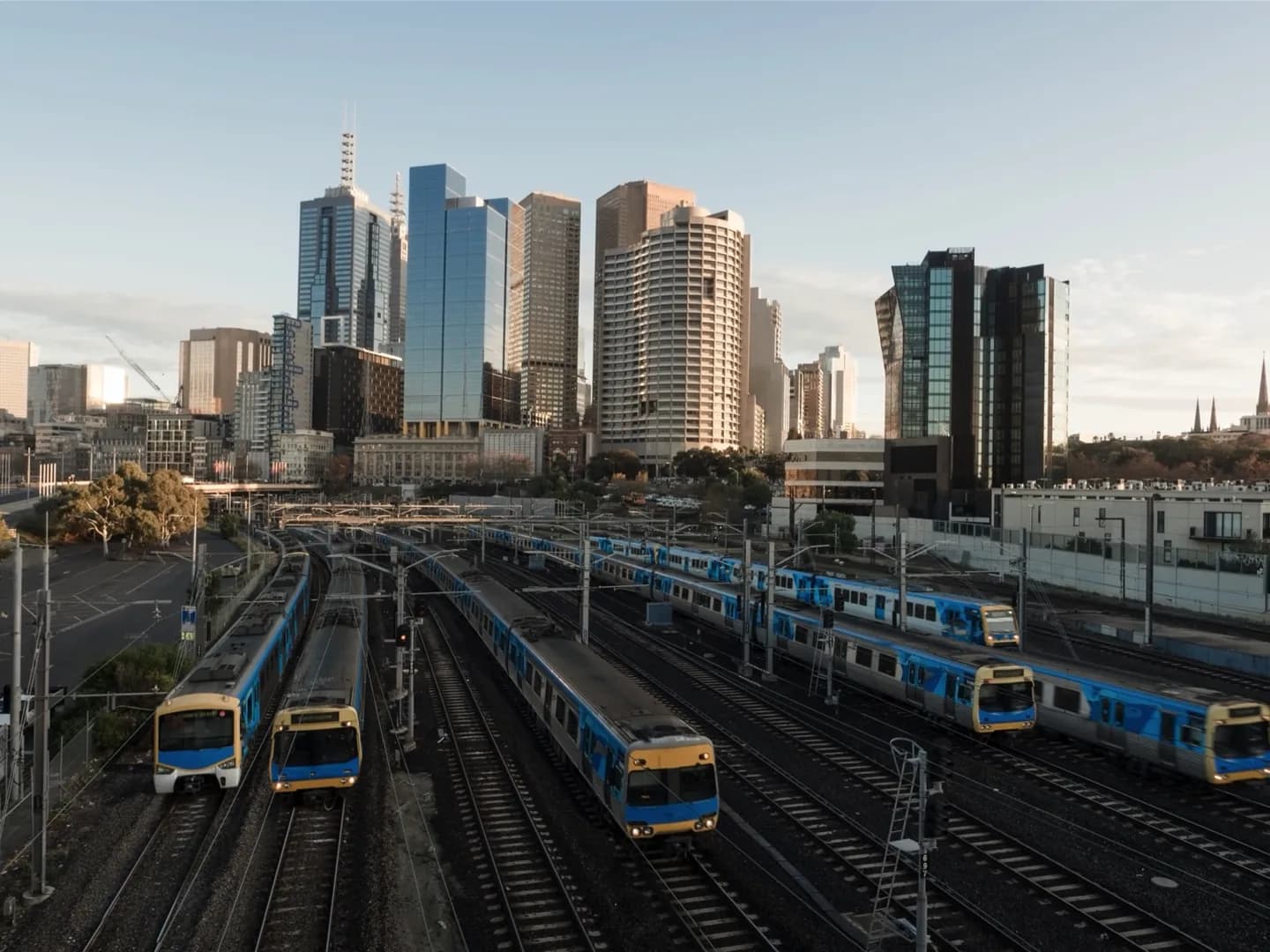
Use this overview to set expectations before linking far-apart stops. Road travel matters greatly across sparsely populated areas; rail is extensive in some cities but has fewer intercity and interstate passenger routes. Sydney, Melbourne, Brisbane, Perth and Adelaide have commuter rail networks, while named long-distance trains show that rail can also be a journey in its own right.
The full story
Australia's transport system reflects its size and the low population density of many inland areas. Roads carry much everyday and long-distance travel, while rail is especially important for moving minerals to export ports. Passenger rail serves a different pattern: Sydney, Melbourne, Brisbane, Perth and Adelaide have commuter networks, but intercity and interstate services are more limited. Melbourne also retained trams after many other Australian cities lost theirs; Adelaide kept a line between its centre and Glenelg. Long-distance trains provide a way to understand the scale of the mainland. The Indian Pacific links the east and west through Adelaide, while The Ghan crosses between Adelaide and Darwin via Alice Springs. Those named routes are geographic anchors, not a promise about today's schedules. For a trip that crosses several states, treat each transport leg as its own planning decision. A local urban network, a cross-country train and a long road journey solve very different problems.
Useful to know
- Compare road, rail and air for each long leg; a city rail network does not imply a frequent train between cities.
- Check current routes and timetables before building a day around an interstate or long-distance train.
- Allow the scale of inland road travel to shape the number of stops in a route.