
Why go
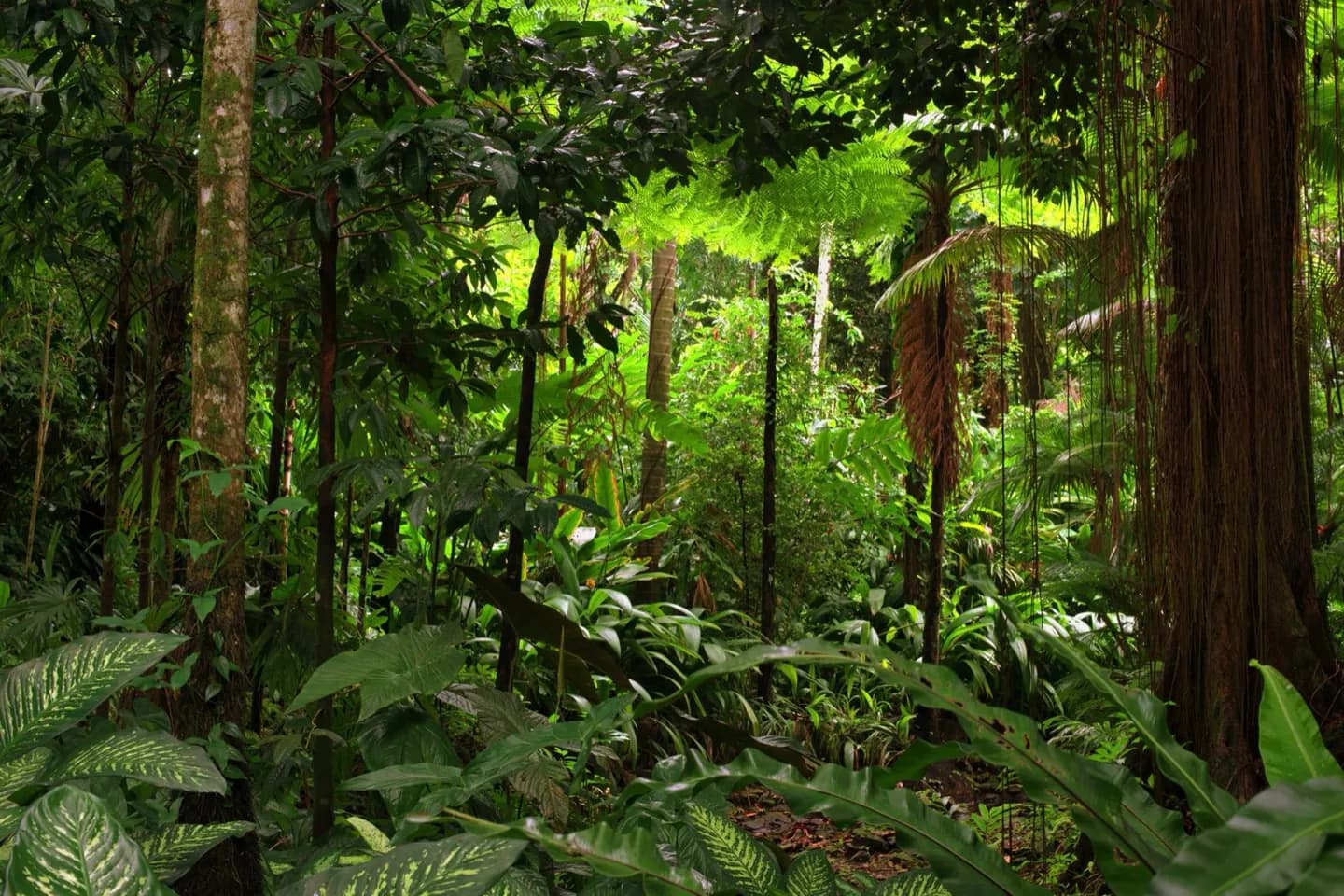
Notice how vegetation changes with rainfall, soils and fire. Ferns favour damp bushland and rainforest, while chenopod and samphire shrubs occupy arid or salty areas, especially in South and Western Australia. Eucalypts, wattles and banksias show different responses to dry conditions and fire, so the plants can explain the country around a stop.
The full story
Australia's plants carry the marks of a long period of isolation and a changing climate. Some lineages reach back to Gondwana, when Australia was joined to other southern lands. As the continent became drier, open forest and grassland spread. Eucalypts, wattles, banksias and related plants became prominent across many landscapes. Adaptations to aridity and fire help explain features such as hard leaves and seeds that are released after heat. Other habitats tell a different story. Ferns are most abundant where moisture is reliable, including bushland and rainforest; some grow on other plants and others form large tree ferns. In arid and semi-arid places, and near estuaries, chenopod and samphire communities tolerate drought and salt. Vegetation has also been shaped by Aboriginal fire practices and, later, by clearing for agriculture and towns. Read the plants in their local setting rather than treating one familiar tree as a stand-in for the whole continent.
Useful to know
- Compare damp fern habitat with open eucalypt country if a route crosses both; the change makes rainfall differences visible.
- In dry or near-estuarine country, look for low salt-tolerant shrubs rather than expecting a continuous forest.