
Why go
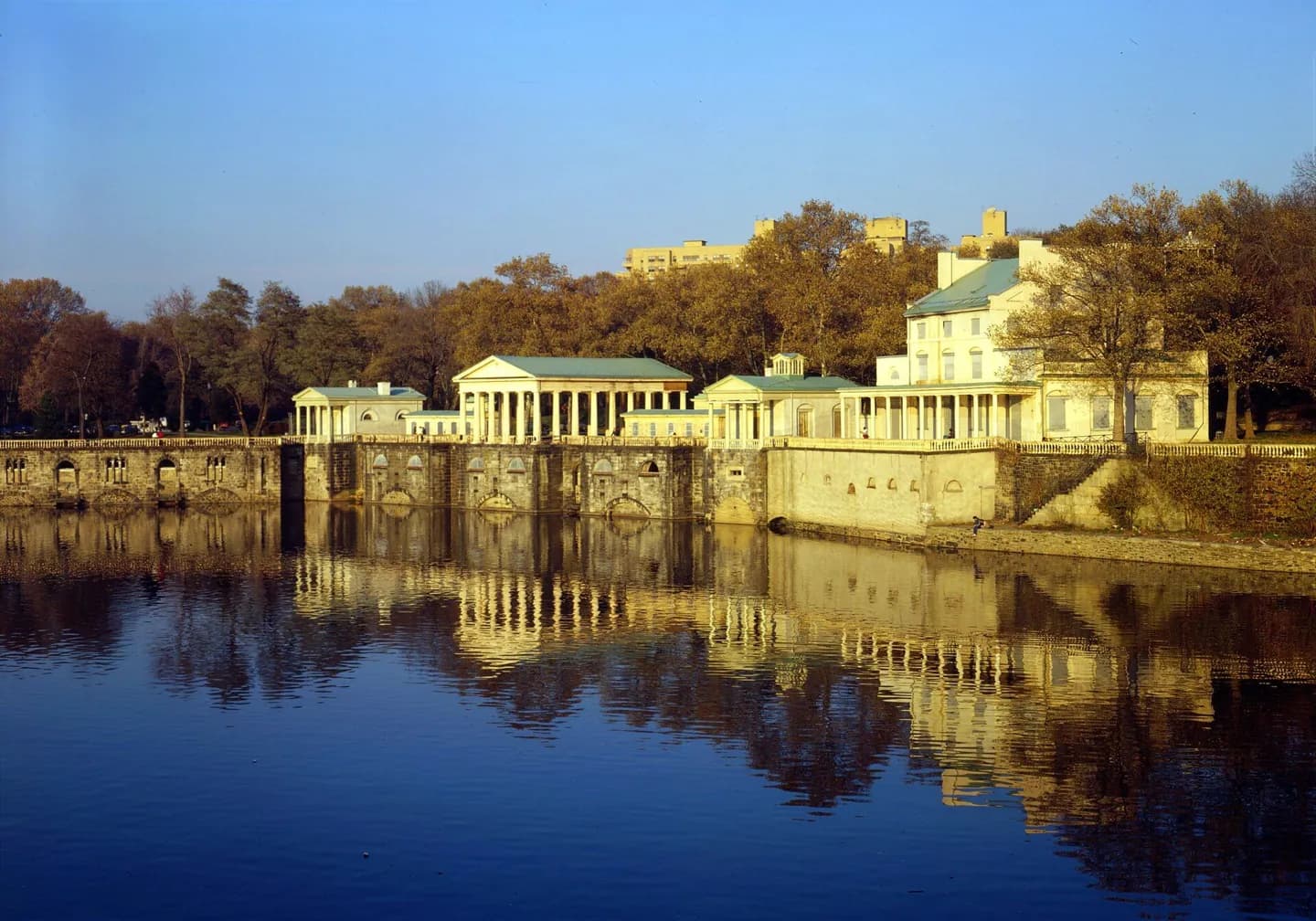
Fairmount Water Works earns time because it offers engineering history paired with one of the city's clearest river landscapes. Its central thread is neoclassical waterworks buildings between the Schuylkill, Fairmount and the art museum. Classical pavilions conceal the scale of the former pumping complex. The river terrace looks toward Boathouse Row and the Fairmount Dam.
What to look for
- Classical pavilions conceal the scale of the former pumping complex.
- The river terrace looks toward Boathouse Row and the Fairmount Dam.
The full story
The strongest way to read this place begins with neoclassical waterworks buildings between the Schuylkill, Fairmount and the art museum. Fairmount Water Works is worth time for engineering history paired with one of the city's clearest river landscapes. Classical pavilions conceal the scale of the former pumping complex. The river terrace looks toward Boathouse Row and the Fairmount Dam. The first detail establishes the subject, while the second changes how the building, landscape or collection reads as a whole. Combine the exterior grounds with the art museum steps or Schuylkill trail. Check interpretive-center access separately from the always-visible riverside buildings. That sequence keeps the larger Philadelphia setting visible while leaving enough time for the details that distinguish this stop. A slower circuit also reveals how Fairmount Water Works relates to movement, public space and the scale of the surrounding city.
Useful to know
- Combine the exterior grounds with the art museum steps or Schuylkill trail.
- Check interpretive-center access separately from the always-visible riverside buildings.
Your next visit
Estimated · Declared scenario and planning estimates; no live opening, weather, queue or booking service.
Outdoor visit · 30–75 min
World planning estimate; admission, opening, visit duration and access need checking.