
Why go
The dish names reveal the same migration and trading history visible in Old Phuket Town. Hokkien noodles, tamarind prawns, soy-braised pork, oyster dishes, and layered cakes provide a more specific route into Phuket's culture than a generic Thai menu found elsewhere.
The full story
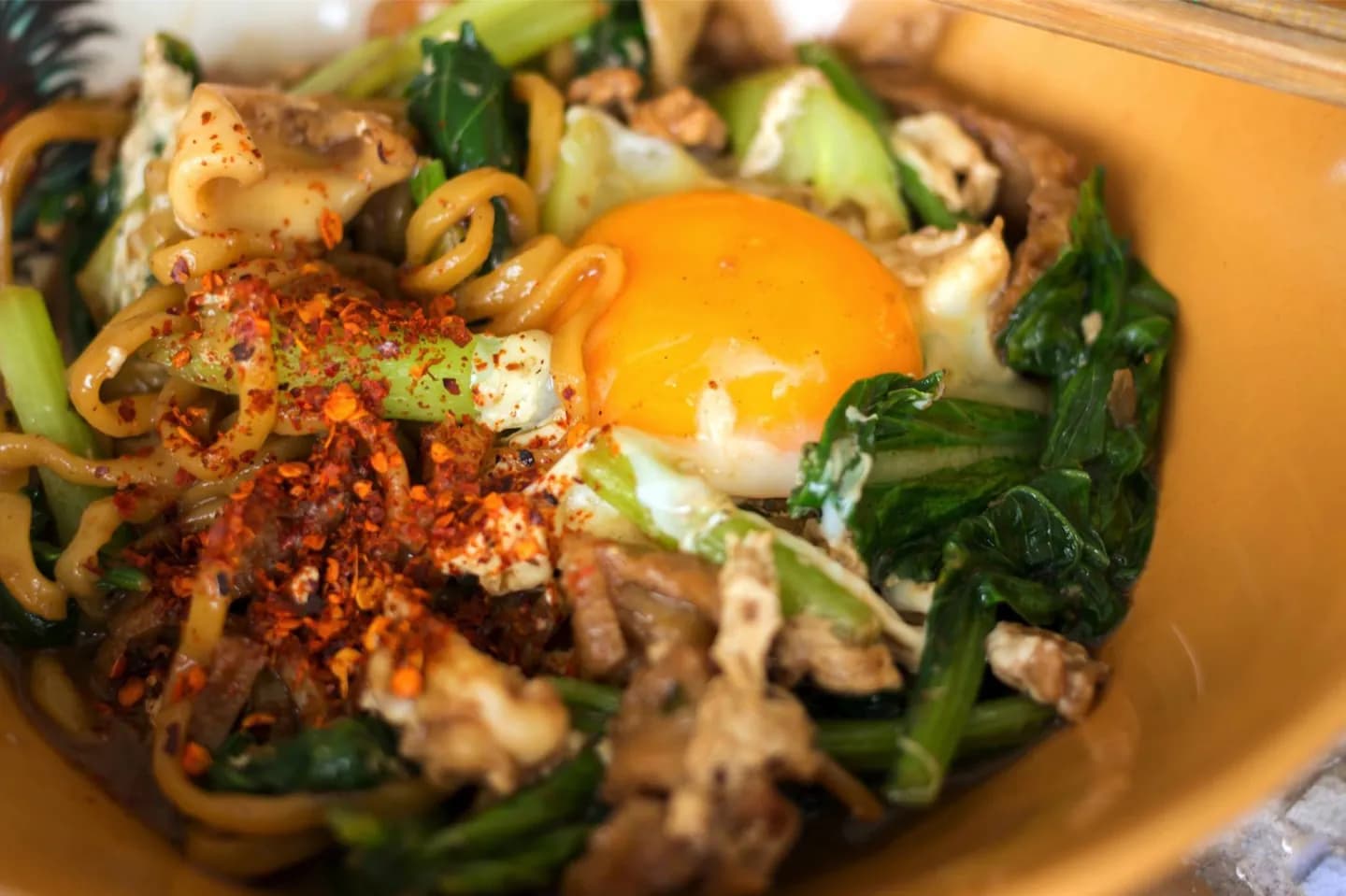
Phuket's local cooking carries strong Chinese, Peranakan, and Malay influences. Mee Hokkien is the clearest starting point: Hokkien noodles connect the island's food with the Chinese community shaped by migration and the tin trade. Hong bak and tau-ui bak are pork dishes, while asam hae uses tamarind with prawns and sambal hae brings prawns together with sambal. Other savory dishes broaden the picture. Jiu hu eng chai combines squid with morning glory. Loo bak is a fried pork preparation, ui p'ng is fried sticky rice, and bee hun bak kut pairs rice vermicelli with a pork-bone broth. Oo dao is an oyster-and-taro dish, while bo piah refers to spring rolls. The sweets often use rice, coconut, egg, or layered batters. Ang ku kue is a red tortoise-shaped sticky rice cake; jubi kaya pairs sticky rice with egg custard; pak tong ko is a white sugar sponge cake. Kao zan kue is a layered cake, and kue ape is a Malay-style pancake. Spellings can vary between menus, so the ingredients are often the most reliable clue.