
Why go
Go to understand the urban story behind Phuket's beaches: tin wealth, migration and mixed cultural influences remain legible in the façades, shrines, museums and food shops. The district is dense enough to explore on foot, with worthwhile details spread across several connected streets rather than one landmark.
What to look for
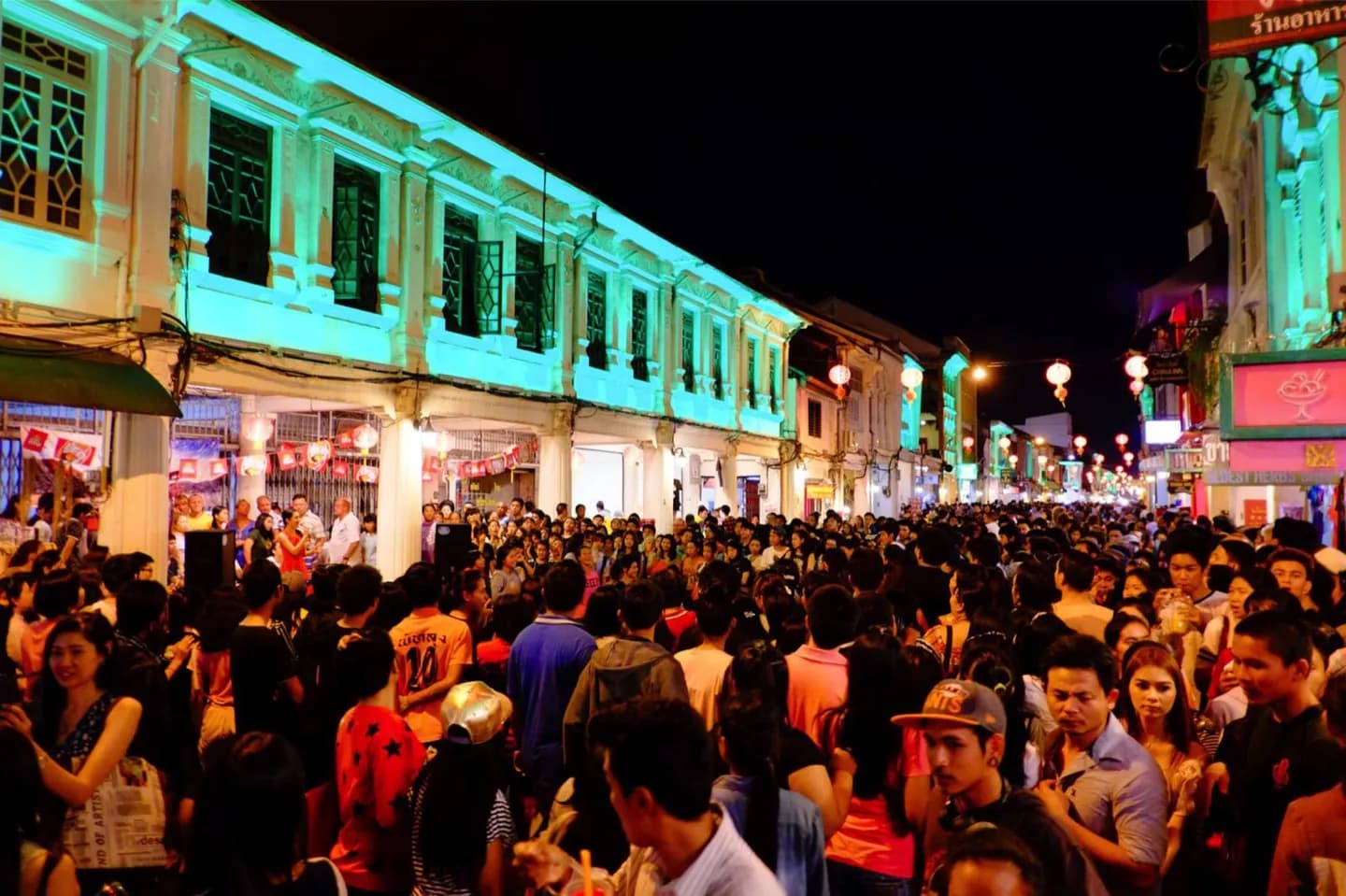
- Arcaded Sino-European shophouses along Thalang and Dibuk roads
- Soi Romanee's narrow row of restored pastel façades
- Chinese shrines and museums embedded among working shops
The full story
Phuket Town expanded during the island's tin-mining boom, when Chinese, Thai, European, Indian and Muslim communities traded and settled here. Prosperous families built long terraced houses and detached mansions whose plans answered both climate and custom: narrow fronts, deep rooms, internal courtyards and decorative façades. The result is often called Sino-Portuguese locally and Sino-European in official tourism material. Walking the old streets reveals that this was never a single-style museum quarter. Chinese shrines, schools, markets, food traditions and civic buildings sit close together, showing how a commercial town became a distinctive Peranakan cultural center. Look past individual restored façades and the underlying system emerges: homes, schools, worship spaces and businesses were all parts of the same urban community, not isolated attractions created for visitors.
Useful to know
- Walk in the early morning for cooler streets and active breakfast shops.
- Combine Krabi Road's Thai Hua Museum and Chinpracha House in one loop.
- Treat the Sunday market as a timed event, not the district's general availability.