
Why go
Phuket makes sense as more than a beach base. Its west-coast sands, mountainous interior, old trading connections, and bridge to Phang Nga explain why the island supports very different days, from coastal time to streets and landmarks linked to its mining past.
The full story
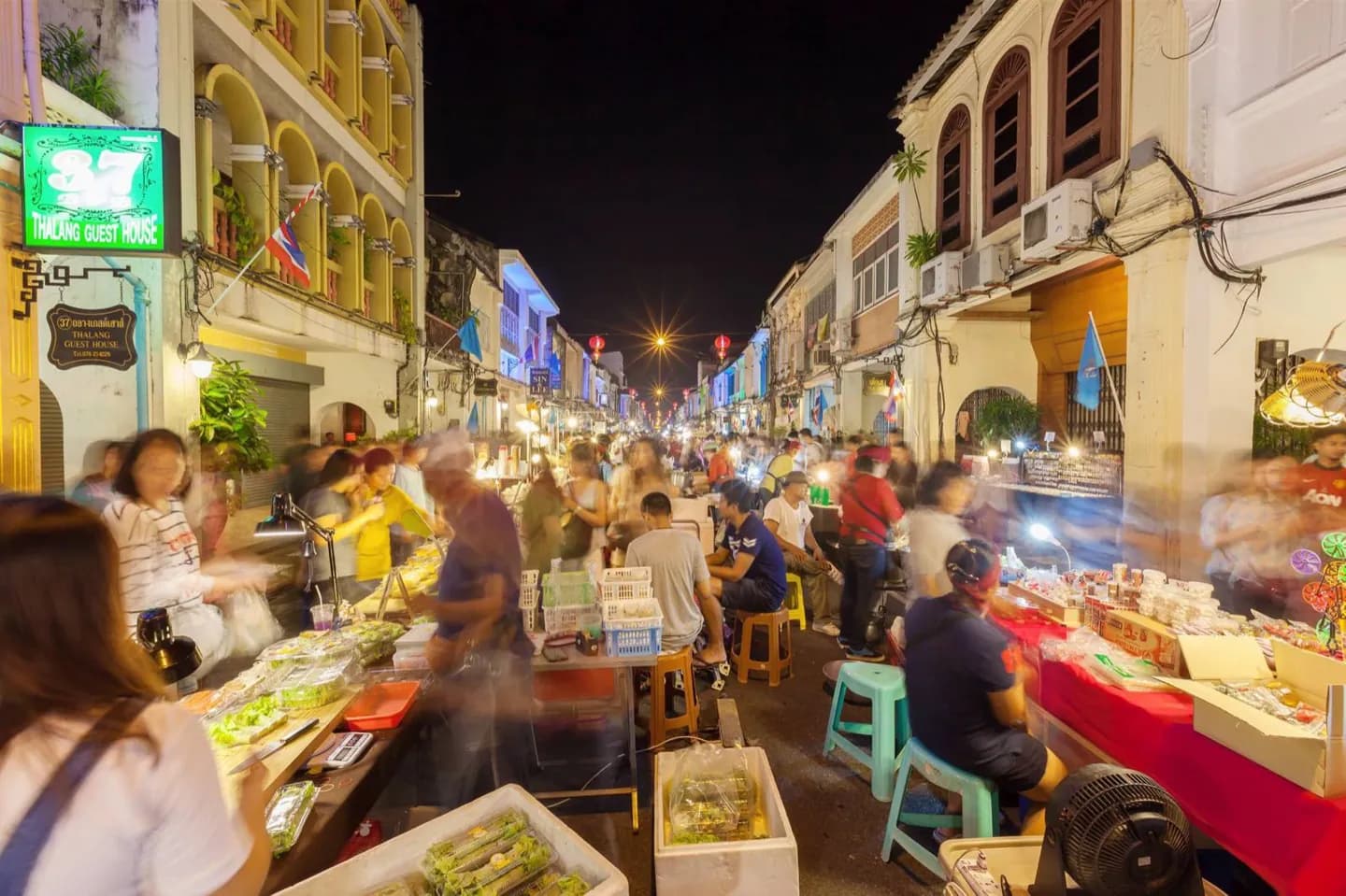
Phuket is both an island and a southern Thai province in the Andaman Sea. A bridge connects its northern end to Phang Nga Province, while Krabi lies to the east across Phang Nga Bay. The island is the country's largest, yet the province is among Thailand's smallest by area. That compact geography contains several distinct strands of Phuket's identity. Tin once drew overseas traders and helped produce the wealth visible in old town buildings. Rubber later became another important industry. Ships traveling between India and China also placed Phuket on a wider commercial route, and Portuguese, French, Dutch, and English records referred to the island. For a visitor, this background helps separate the island's experiences. The developed west coast is associated with sandy beaches such as Patong and Karon, while Phuket Town preserves architecture tied to the tin era. Inland ridges and the eastern shore add another landscape beyond the resort coast.