
Why go
Reading the landscape helps with trip planning. The west coast holds the best-known sandy beaches, the central and eastern areas are flatter, and the forested north protects part of the island's mountainous interior rather than offering another resort strip along the same coast.
The full story
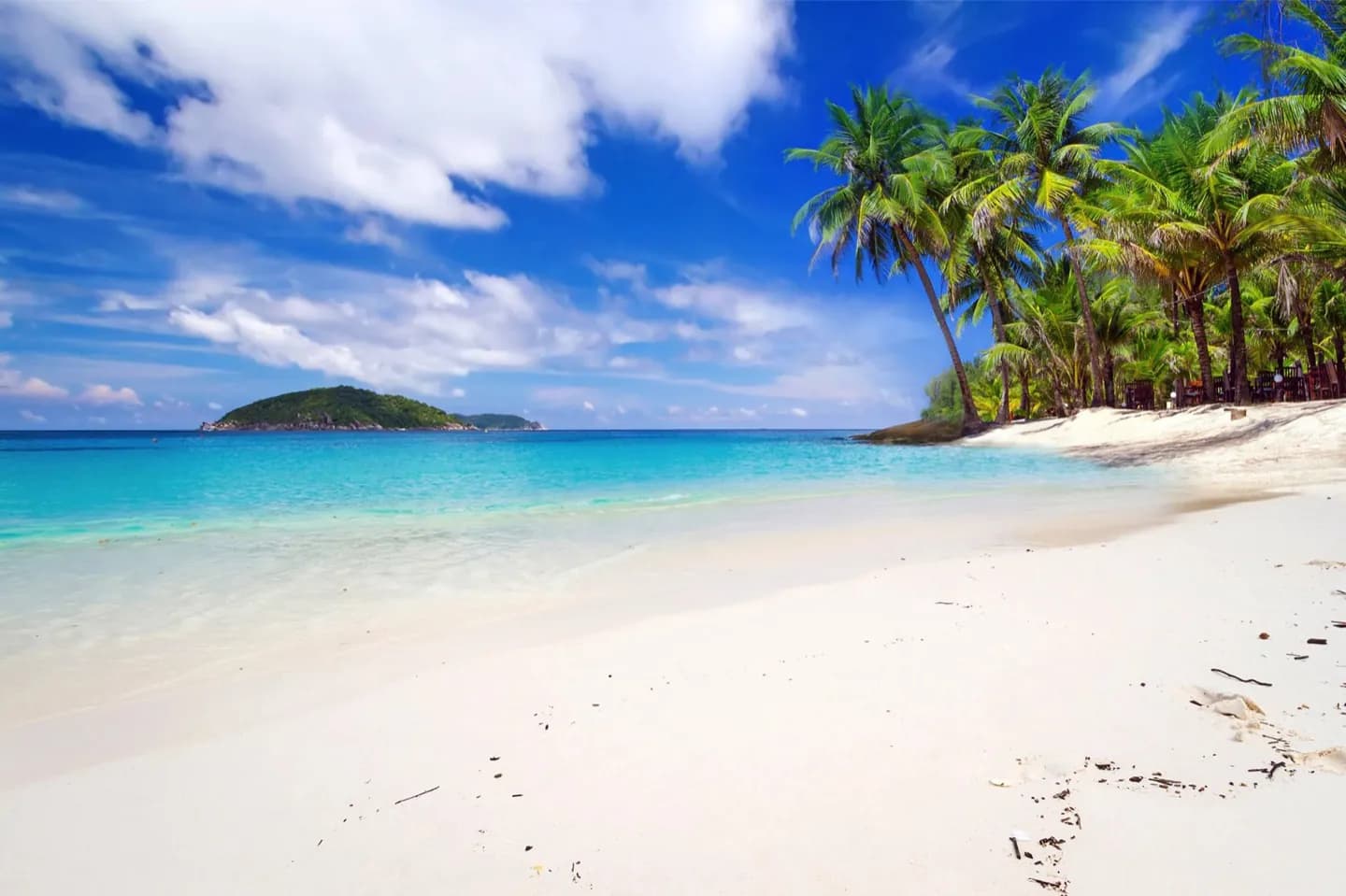
Phuket lies in the Andaman Sea and stretches roughly 48 kilometers from north to south and 21 kilometers across at its widest. Mountains run along much of the island from north to south, forming the southern end of a longer range extending from the Kra Isthmus. The central and eastern parts contain most of the flatter land, and the island has small brooks and creeks rather than major rivers. The two coasts differ visibly. Several sandy beaches line the west, including the developed bay at Patong. Beaches on the east are more often muddy, so that shore offers a different coastal character. At the southern tip, Laem Phromthep forms a headland long recognizable to seafarers. The mountainous north contains the Khao Phra Thaeo protected forest, while Sirinat National Park occupies part of the northwest coast and adjoining marine area. Smaller islands around Phuket include Ko Sire, Ko Racha Yai, Ko Racha Noi, Ko Maprao, Ko Lone, and Ko Naka Yai.