
Why go
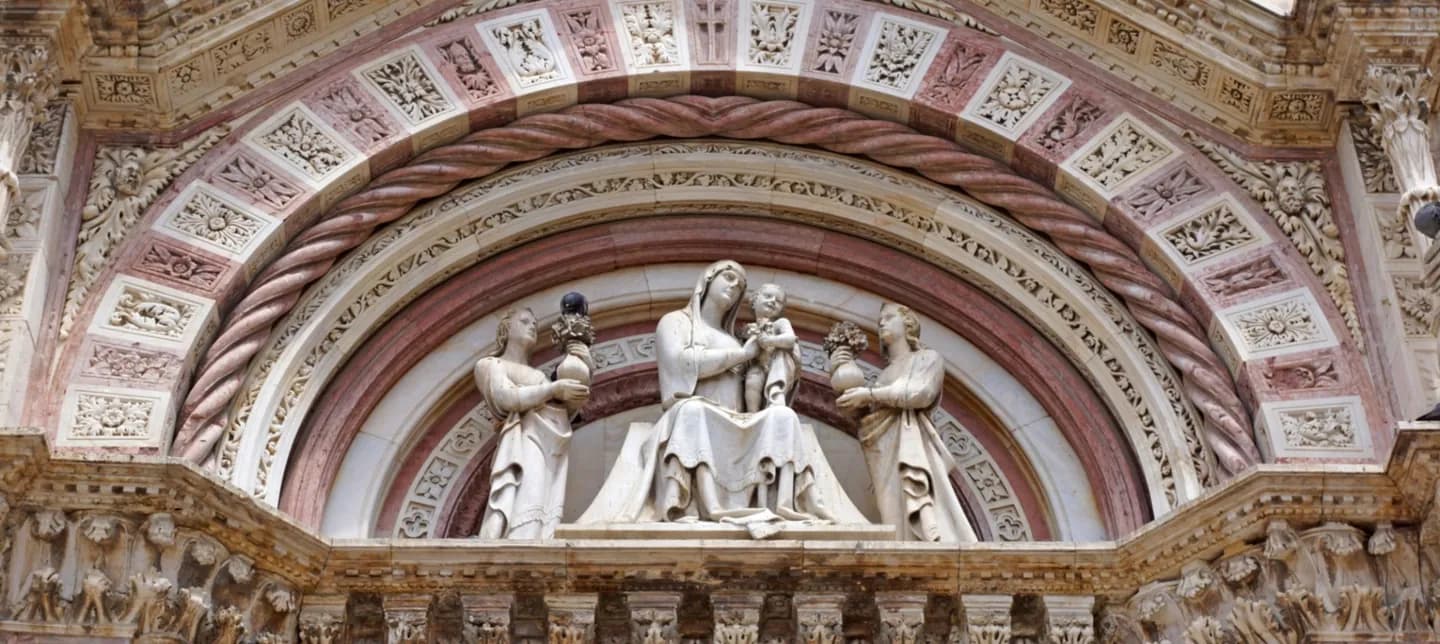
The city walls make Grosseto unusually legible on foot, while the pink-and-white cathedral façade gives the main square a strong focal point. Its rise followed the decline of ancient Rusellae, making the modern city and nearby archaeological site a useful pair.
What to look for
- Fortified walls and bastions ring the historic centre.
- The Cathedral of San Lorenzo faces Piazza Dante in pink and white marble.
- Corso Carducci runs through the centre toward Porta Nuova.
The full story
Grosseto became the Maremma’s principal centre as older Rusellae declined. The bishopric moved here from Roselle in the twelfth century, a shift that helps explain why the cathedral anchors the present city. Grosseto then lived through long contests among the Aldobrandeschi, Siena and other powers. The fortified circuit visible today reflects that strategic role, with walls and bastions enclosing a centre that is still easy to read on foot. Enter the historic core and Piazza Dante brings the story to a civic scale. The Cathedral of San Lorenzo stands out through its striped pink and white marble façade, while Corso Carducci links the square with one of the old gates. If you also visit the archaeological site at Roselle, the two places tell a longer story of how the Maremma’s urban centre moved across the landscape.
Useful to know
- Walk a section of the walls before entering Piazza Dante.
- Combine Grosseto with Roselle only if you have time for a separate archaeological-site visit.
Your next visit
Estimated · Declared scenario and planning estimates; no live opening, weather, queue or booking service.
Outdoor visit · 30–45 min
World planning estimate; admission, opening, visit duration and access need checking.