
Why go
The city's Renaissance art is easier to understand alongside its sounds. Civic musicians marked public occasions, lay confraternities sang laude, and later humanists explored music's power to move listeners. The Florentine Camerata's experiments with staged musical drama make Florence a key stop for opera-minded travelers.
The full story
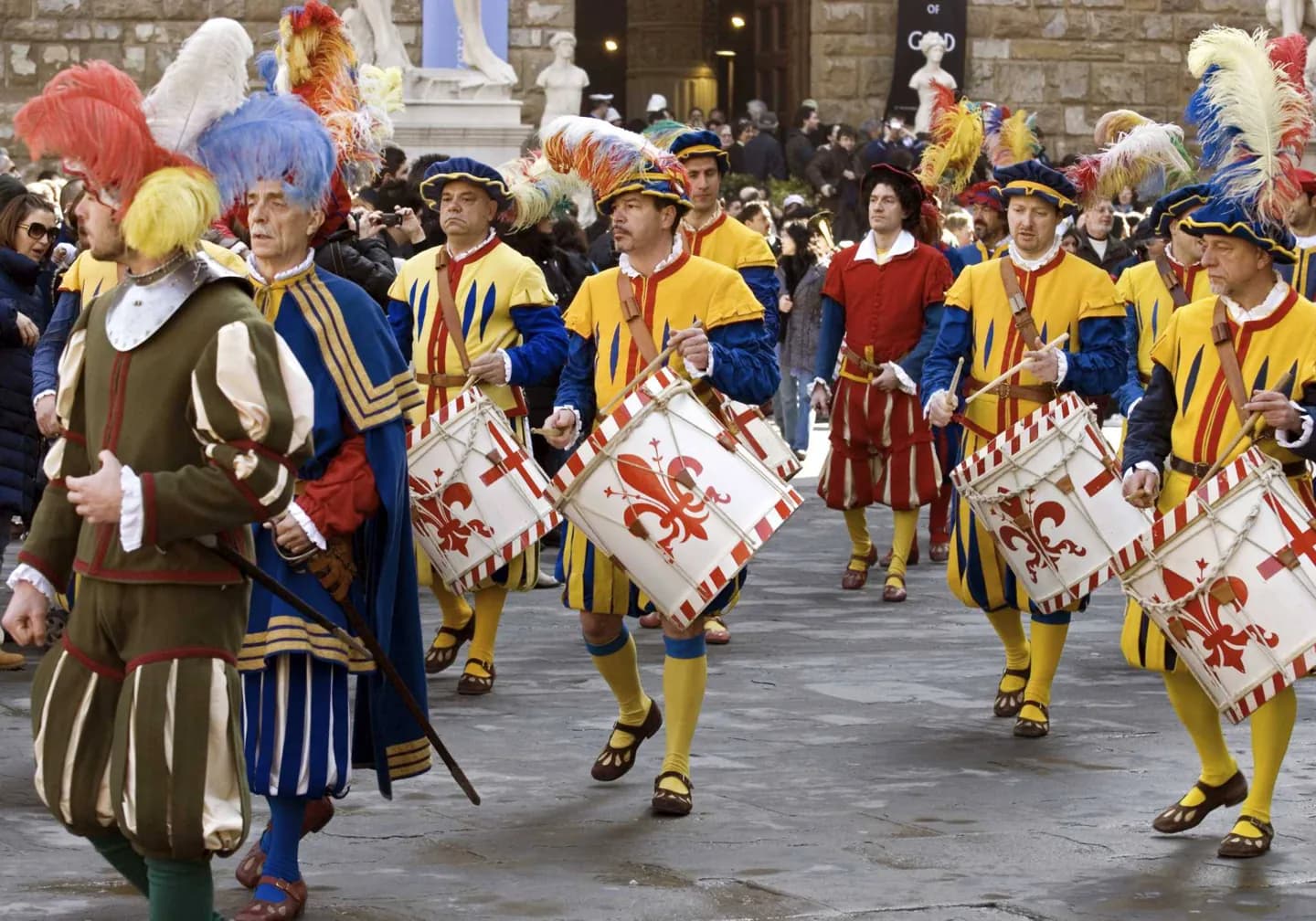
Medieval and Renaissance Florence did not keep music only inside churches. The city employed wind players for civic occasions, and records distinguish groups of shawms and trumpets. Their music helped make public ceremony audible. At the same time, lay religious confraternities gathered to sing laude, devotional songs often addressed to the Virgin Mary. As the practice developed, some groups hired singers and instrumentalists, moving from single melodic lines toward music in several parts. Florentine humanists also studied ancient ideas about harmony and music's effect on emotion. By the late Renaissance, the Florentine Camerata experimented with setting dramatic stories to music in ways that helped shape early opera. These strands belong to different settings: street and civic palace, religious gathering, learned discussion and theatre. Remembering them helps explain why Florence's cultural legacy reaches beyond the paintings and buildings most visitors come to see.