
Why go
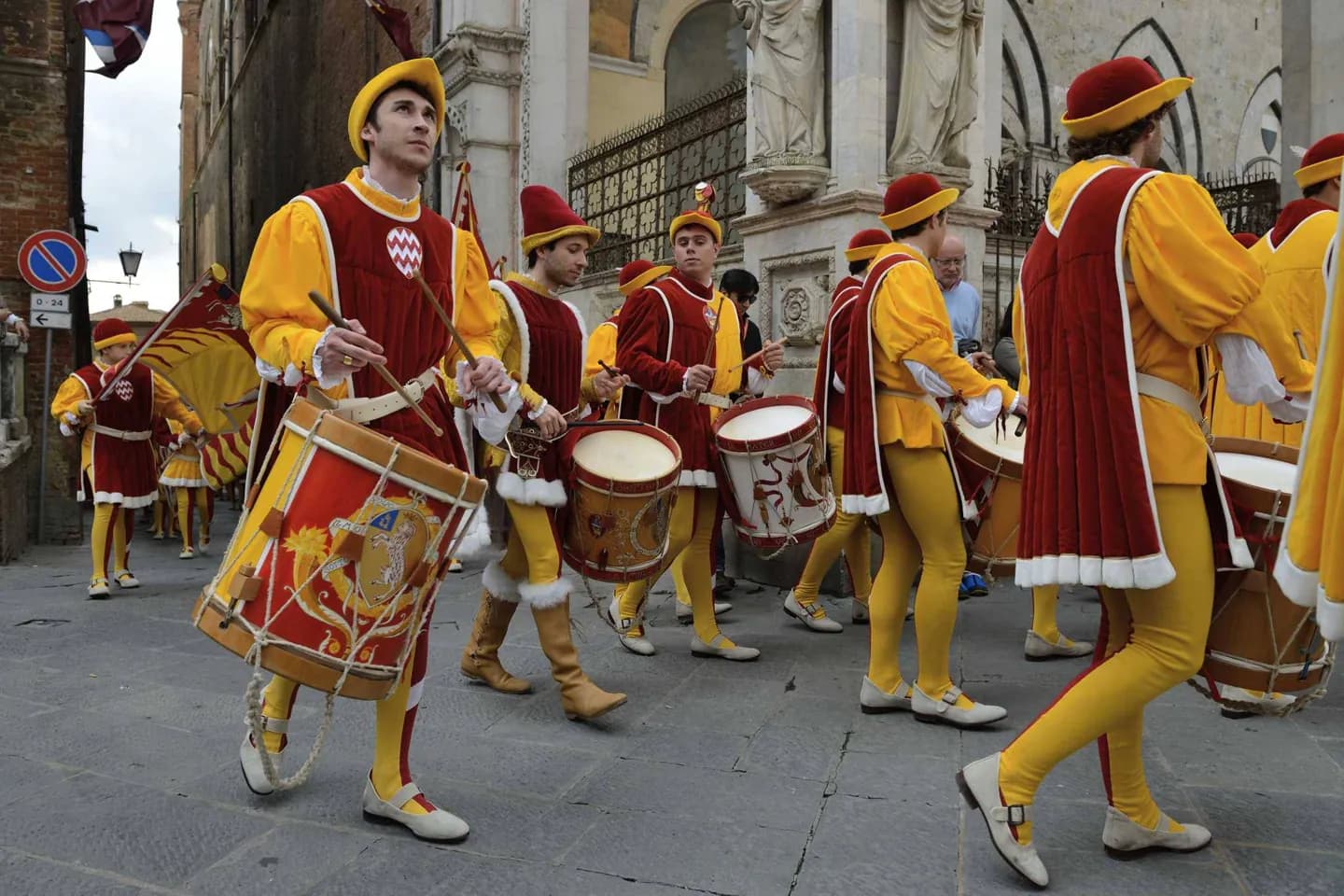
Recognizing the contrade changes how you read the streets. Animal emblems, colors and ward boundaries make Siena feel like a network of local communities rather than one uniform old town. The Palio brings these ties into the Campo, while contrada museums and Sienese painting give quieter ways to explore them.
The full story
Siena is divided into 17 contrade, or wards, each with a name, symbol and defined territory. Their identities are visible in flags, lamps and animal emblems across the city. The Palio horse race turns rivalry between these communities into a public spectacle in Piazza del Campo, but the contrade also have social and ceremonial roles beyond race day. Some preserve their history and winning banners in local museums. For each Palio, ten contrade take part. The race is short, yet the preparations and procession carry much of its meaning. Horses and riders appear in contrada colors, and the painted banner awarded to the winner is itself an object of local pride. During the festival period, streets and squares become intensely busy; the calendar deserves a check if a quieter art visit is your priority. Siena's culture also lives in its art. The Pinacoteca brings together Sienese painting, while the Palazzo Pubblico holds civic frescoes. Looking at those works alongside the ward symbols gives two scales of identity: the ambitions of the medieval republic and the loyalties of its neighborhoods.
Useful to know
- Watch for contrada symbols as you move between the Campo and cathedral.
- Check the official Palio calendar if festival crowds would change your plans.