
Why go
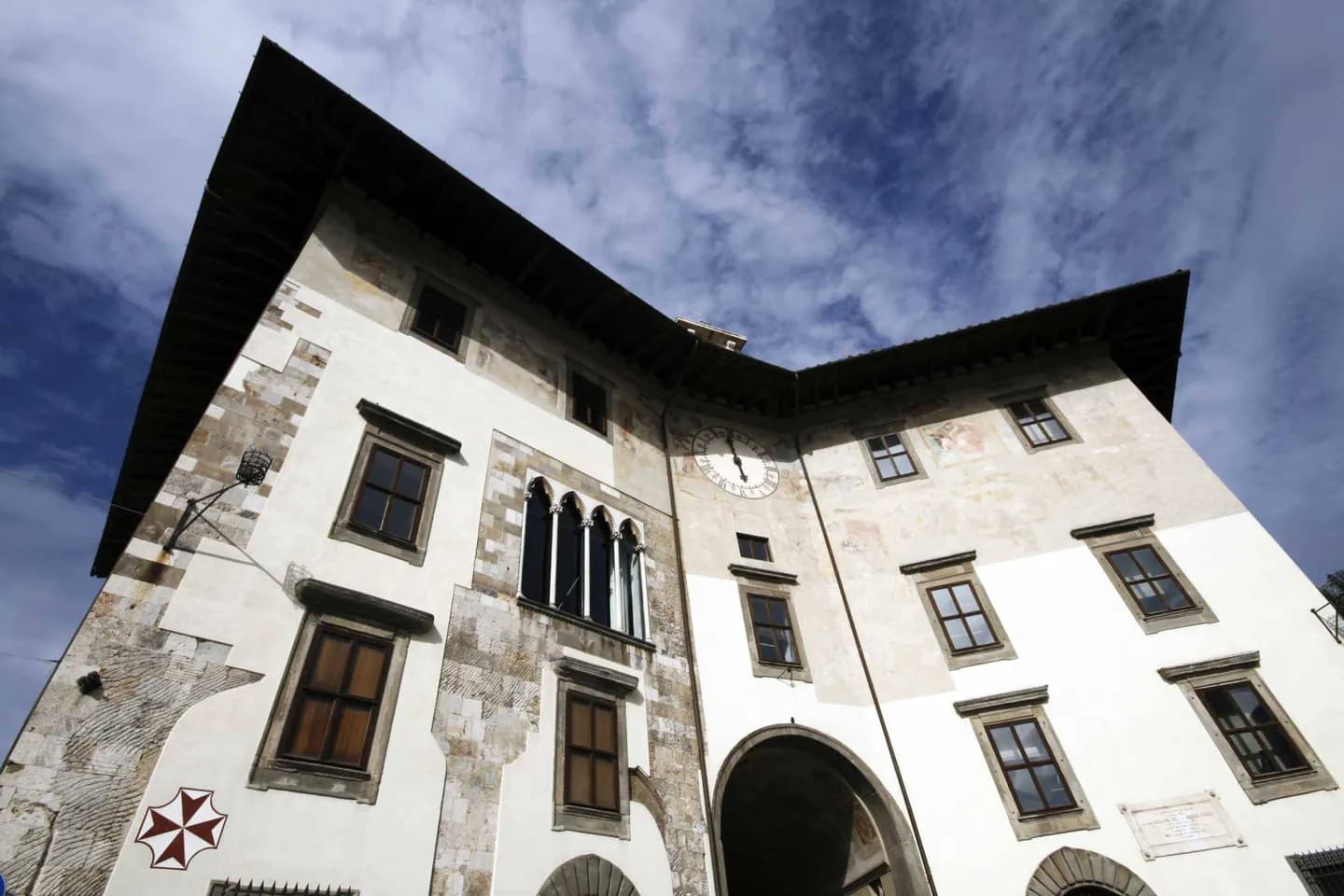
The Gualandi family's tower is remembered as the prison where Ugolino della Gherardesca and his descendants starved. Dante's Divine Comedy made the episode famous as the Tower of Famine. Looking at the Clock Palace with that history in mind helps explain why this façade is more than a later architectural screen.
What to look for
- The tower is incorporated into the north-side Palazzo dell'Orologio.
- Its Tower of Famine identity connects the building with Dante's account of Ugolino.
The full story
The Torre dei Gualandi belonged to a Pisan family and was absorbed into what is now Palazzo dell'Orologio on the north side of Piazza dei Cavalieri. Its older name, Torre della Muda, became bound to the imprisonment of Count Ugolino della Gherardesca with members of his family in the late thirteenth century. Dante recounted Ugolino's death by starvation in the Divine Comedy, fixing the image of the Tower of Famine in Italian literature. The present square gives little sense of a solitary medieval prison tower because later architecture incorporated its remains. That is precisely why the story is useful on site: it asks you to look through the Clock Palace's later façade for a much older structure. The contrast also complicates the polished Renaissance appearance of the square, whose medieval politics could be violent.
Useful to know
- Find the tower within the Clock Palace rather than looking for a freestanding structure.
- Check the official guided-tour calendar if you want access beyond the exterior.
Your next visit
Estimated · Declared scenario and planning estimates; no live opening, weather, queue or booking service.
Outdoor visit · 30–45 min
World planning estimate; admission, opening, visit duration and access need checking.