
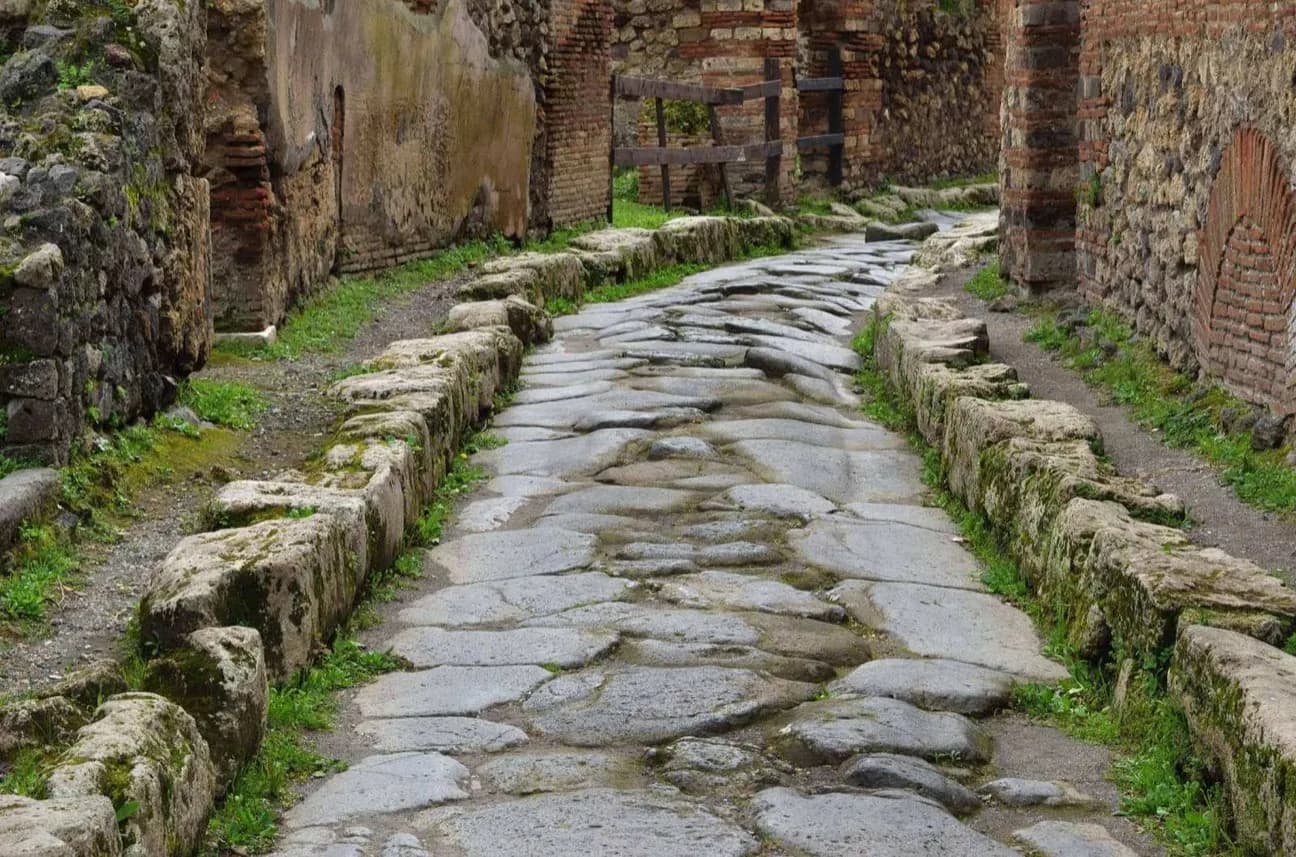
Why go
The major earthquake and the unfinished repairs that were still reshaping homes and civic buildings before the eruption change how the excavated city makes sense. A severe earthquake struck the region in AD 62 or 63, damaging public buildings, temples, streets, and private houses.
The full story
A severe earthquake struck the region in AD 62 or 63, damaging public buildings, temples, streets, and private houses. Repairs continued for years and were still incomplete when Vesuvius erupted in AD 79. Some owners restored rooms lavishly; others divided property, changed decoration, or converted space to commercial use. Scaffolding evidence, unfinished plaster, stored building materials, and altered façades make this recovery visible. The city therefore was not perfectly intact on the final day. It was a construction landscape marked by disruption, investment, and unequal resources. When a monument appears incomplete, avoid assuming that every missing element resulted from the eruption or later excavation. Some spaces were already being rebuilt, abandoned, repurposed, or waiting for work, which gives the final phase of Pompeii a provisional character.