
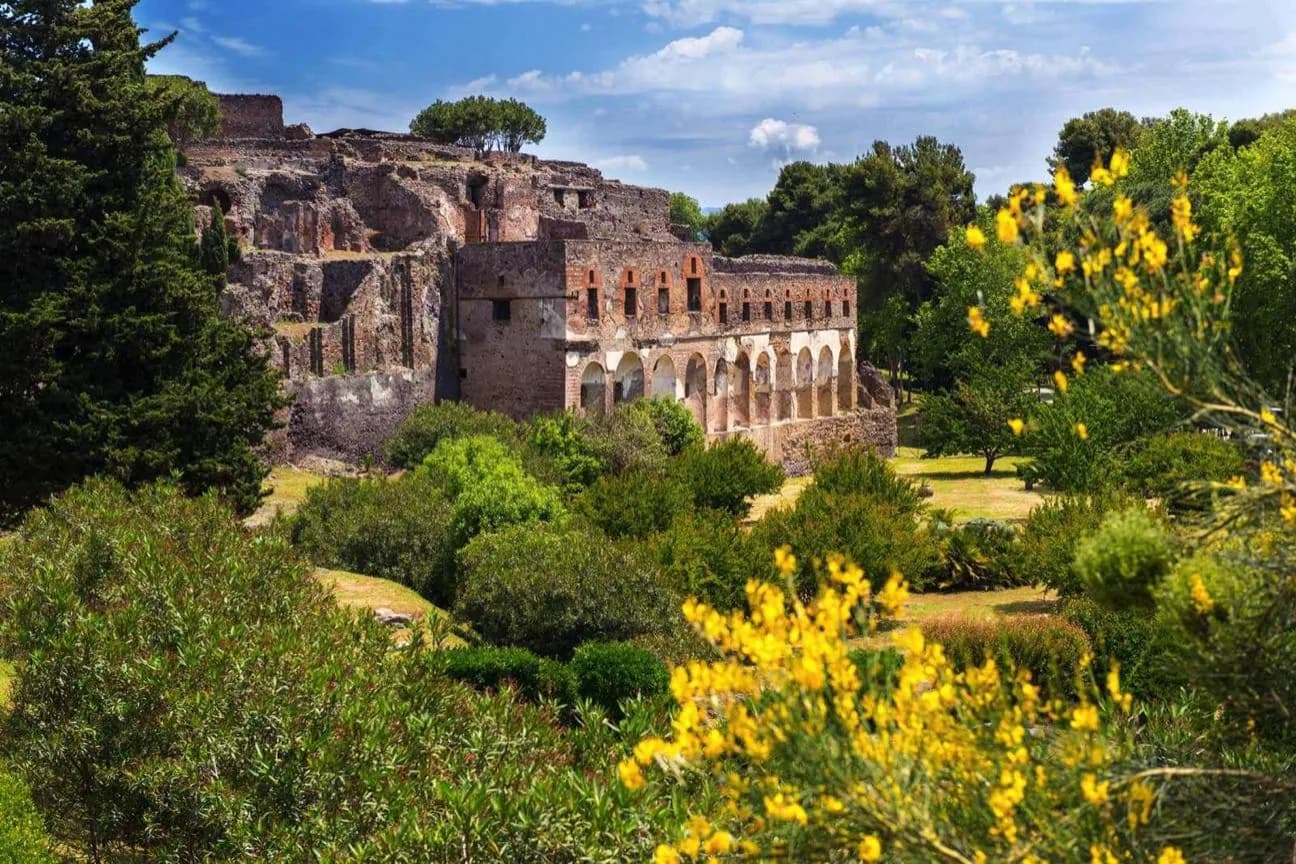
Why go
How an ordinary Roman city, its streets, public buildings, workshops, houses, and surrounding farms form one connected archaeological landscape change how the excavated city makes sense. Pompeii is not a single monument. Its value comes from the relationship between paved streets, stepping stones, fountains, shops, workshops, temples, theatres, baths, tombs, gardens, and private rooms.
The full story
Pompeii is not a single monument. Its value comes from the relationship between paved streets, stepping stones, fountains, shops, workshops, temples, theatres, baths, tombs, gardens, and private rooms. The eruption fixed many of those relationships in place, but the city had already changed repeatedly before AD 79. Public buildings frame civic life around the Forum, while houses range from compact dwellings to estates with decorated reception rooms and planted courts. Commercial counters open directly onto streets, and production spaces sit beside elegant interiors. Read the site at several scales: first as a street network, then as neighborhoods, and finally as individual rooms. That approach makes the ruins easier to understand than treating each famous house as an isolated attraction. This context rewards patient comparison on site.