
Why go
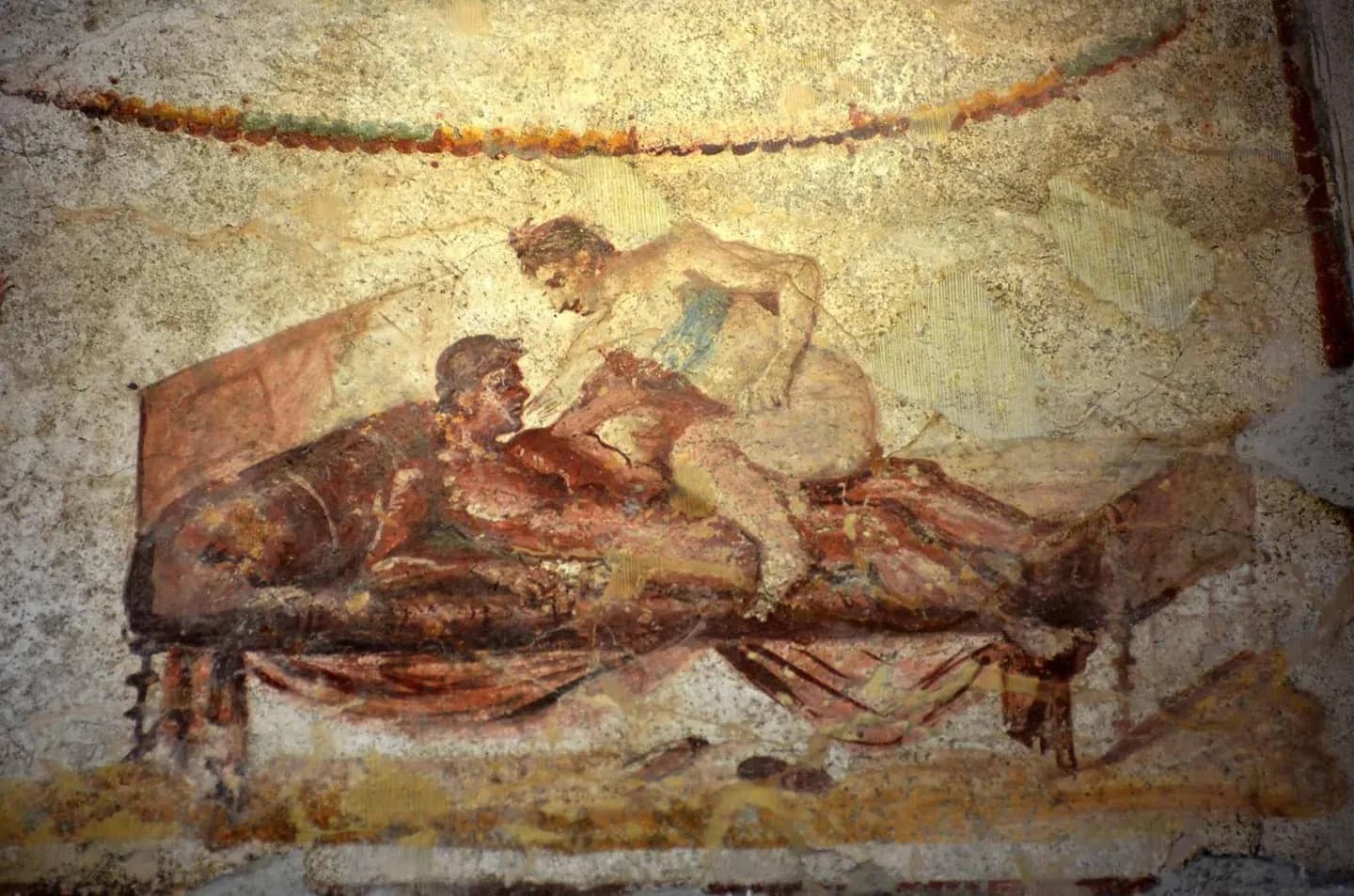
The domestic, religious, commercial, and humorous settings that give Pompeii's sexual imagery meanings beyond modern assumptions change how the excavated city makes sense. Erotic imagery at Pompeii appeared in varied settings, including bedrooms, gardens, dining rooms, baths, street façades, shrines, and the Lupanar.
The full story
Erotic imagery at Pompeii appeared in varied settings, including bedrooms, gardens, dining rooms, baths, street façades, shrines, and the Lupanar. Modern viewers often isolate these images from their architectural and social context. Ancient meanings could involve humor, fertility, protection, status, myth, desire, or commercial signaling, and one explanation does not fit every object. Phallic motifs, for example, could carry apotropaic force as well as sexual meaning. Museum collecting and censorship later shaped how the material was presented, especially when objects were separated into restricted collections. On site, pay attention to placement, audience, and neighboring decoration. A small image above a doorway functioned differently from a mythological painting in a reception room. Context makes the subject historically informative rather than merely sensational.