
Why go
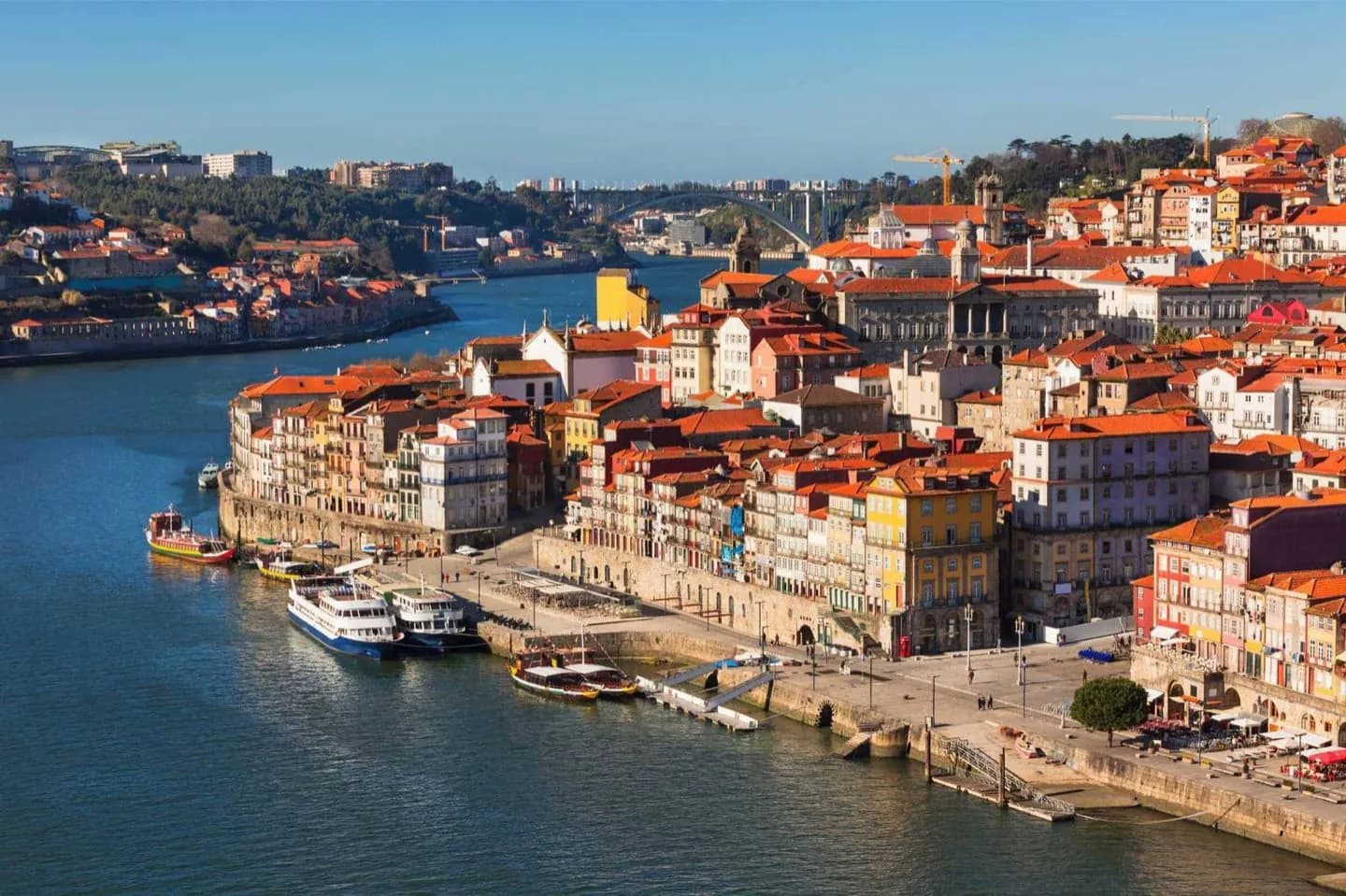
The city makes most sense as a pair of connected riverbanks: Porto's old centre rises above the Douro, while Vila Nova de Gaia faces it from the opposite bank. That geography explains the bridges, river views and the wine lodges that define many first impressions.
The full story
Porto stands at the mouth of the Douro in northern Portugal. Its historic centre was inscribed as a UNESCO World Heritage Site in 1996, and its tight streets and river-facing slopes remain the best way to read the city. Walk down toward the Douro to see how the older fabric gathers around the water, then look across to Vila Nova de Gaia. Port wine is made from grapes of the Douro Valley, but Gaia became the place where it was stored and shipped. The city's older name, Portus Cale, is linked to the name Portugal; Oporto is the recognized English alternative, though Porto is the usual published name. The paired banks make commerce and topography visible in one compact urban view.