
Why go
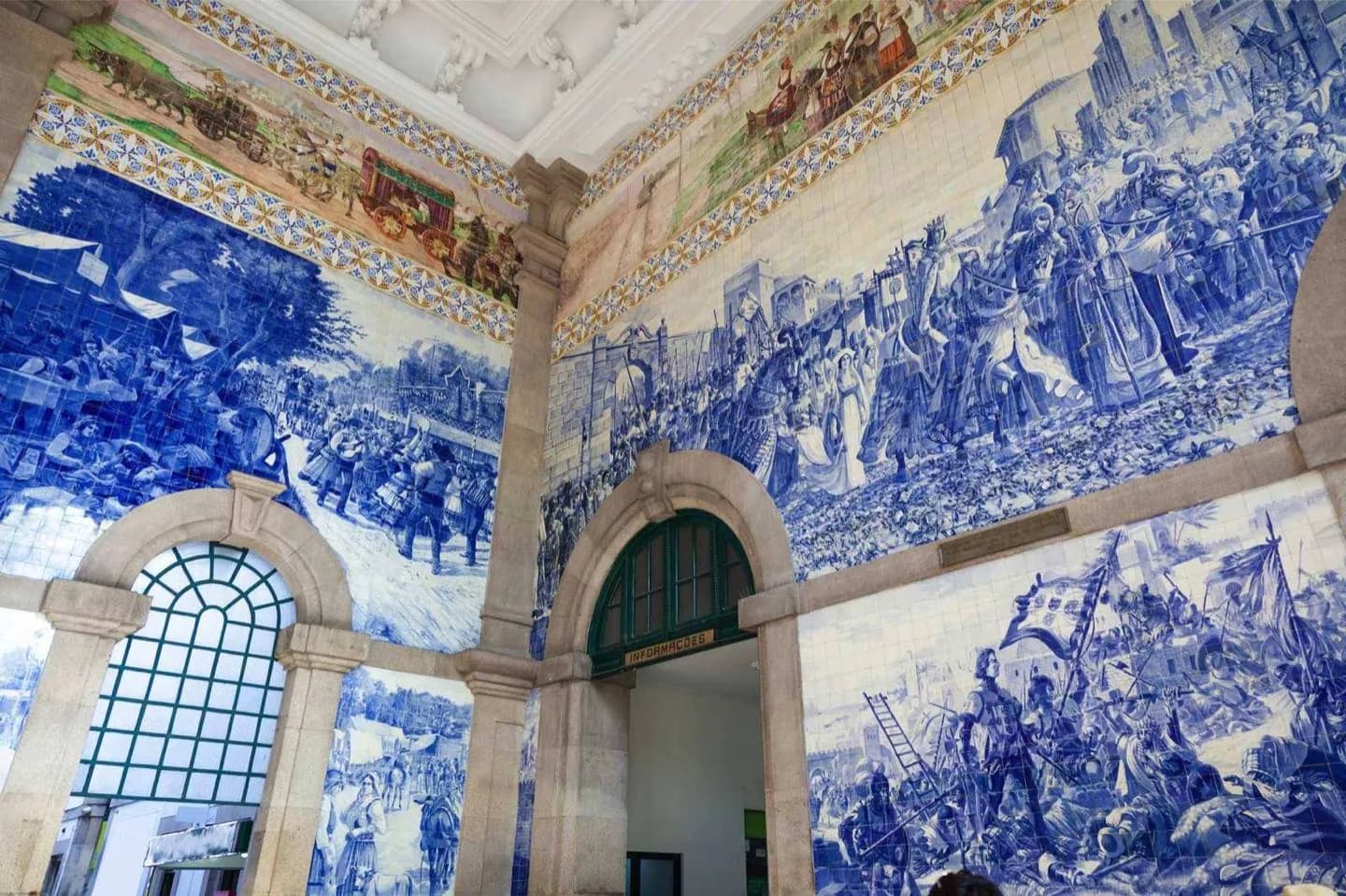
Few transport buildings offer such an immediate work of public art. Jorge Colaço's blue-and-white panels wrap the vestibule in landscapes, everyday scenes and major historical episodes, rewarding close looking even if you are not catching a train through central Porto.
What to look for
- Jorge Colaço's vast azulejo panels were made between 1905 and 1916.
- Historical scenes include the 1387 arrival of João I and Philippa of Lancaster in Porto.
- Smaller panels of landscapes and daily life balance the grand military and royal episodes.
The full story
São Bento opened in 1916 in the center of Porto, but its identity rests as much on art as on rail travel. Jorge Colaço designed the great blue-and-white tile cycle that covers the station vestibule walls. The tiles were produced from 1905 through the years leading up to the station's inauguration. Rather than forming one continuous narrative, the panels move between Portuguese history, regional landscapes and ethnographic scenes. Episodes include Egas Moniz before Alfonso VII of León, the arrival of João I and Philippa of Lancaster in Porto, and the conquest of Ceuta. Seen together, the scenes turn an everyday point of arrival into a compressed visual history, one that passengers cross before meeting the streets of the old city.
Useful to know
- Pause in the entrance hall before heading to the platforms; the main artwork is concentrated there.
- Visit between train arrivals when possible, as the hall is also a busy circulation space.
Your next visit
Estimated · Declared scenario and planning estimates; no live opening, weather, queue or booking service.
Outdoor visit · 10–15 min
Public-space walk and exterior observation only; no interior, garden, tower or ticketed admission included. Durations and walking are estimates. Check temporary restrictions and park or market opening times.
Outdoor visit · 30–45 min
World planning estimate; admission, opening, visit duration and access need checking.