
Why go
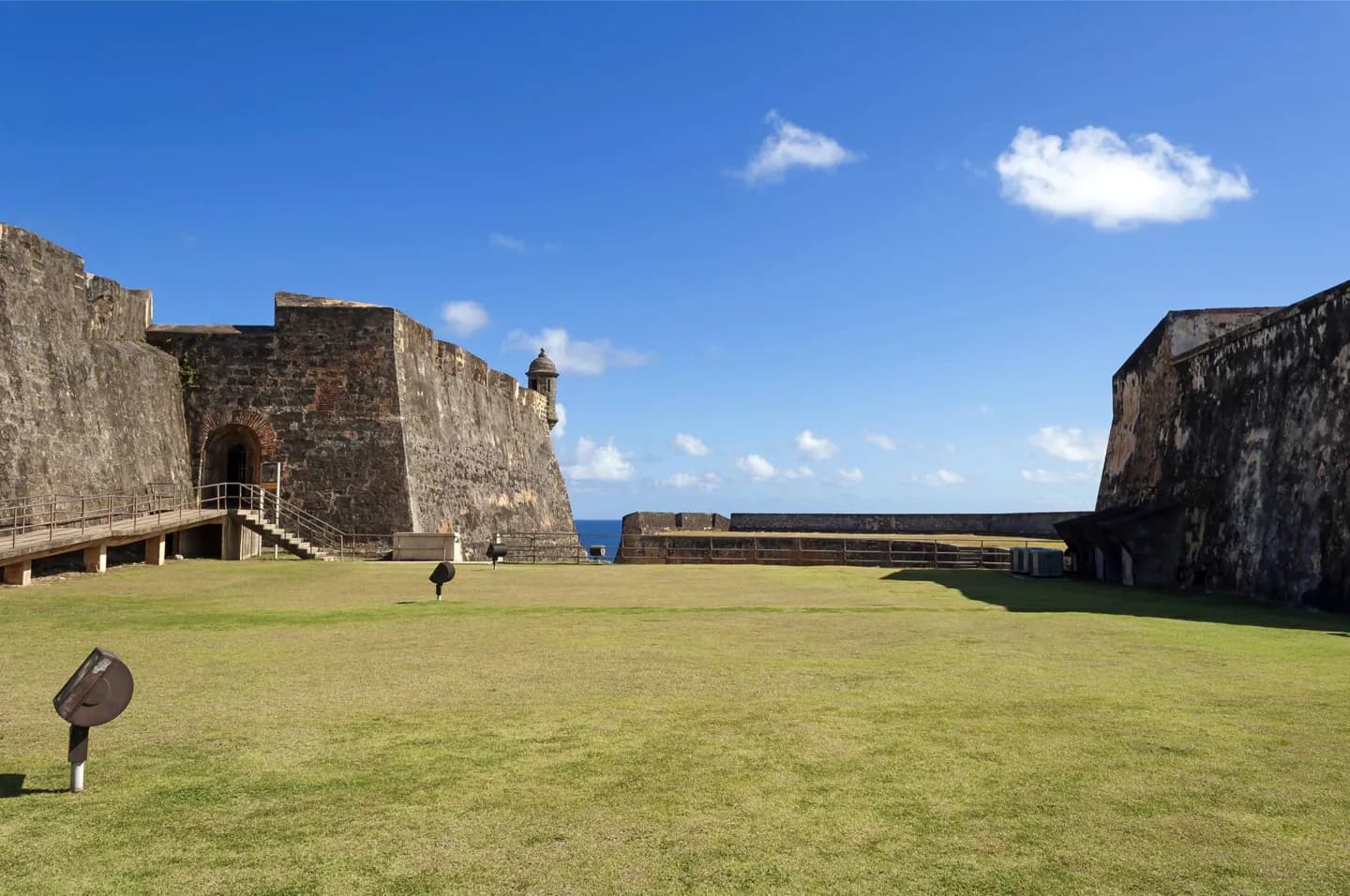
San Cristóbal explains a different problem from El Morro: an enemy approaching across land rather than entering the harbor. Walk its successive defenses to see how the Spanish protected the eastern side of the walled city. Its scale also reveals Old San Juan's geography.
What to look for
- The fort's successive walls and defensive positions face the landward approach to Old San Juan.
- The elevated site reveals how far the old city's defenses once extended.
- The surviving structure reflects the major building campaign of 1765–1783.
The full story
San Juan's earliest Spanish defenses concentrated on the harbor entrance, where El Morro and La Fortaleza guarded approaching ships. Attacks also showed that the city could be threatened from land. A small redoubt appeared on San Cristóbal hill in the seventeenth century; the extensive fort visible today took shape mainly between 1765 and 1783 under military engineers Tomás O'Daly and Juan Mestre. Rather than a single wall, it formed a sequence of defenses across the eastern approach. In 1797, this system helped stop a British invasion commanded by Sir Ralph Abercromby before it reached the city. Part of the larger fortification was later removed to ease movement into and out of the walled city. As you move through the remaining levels, the changing sightlines make that older defensive footprint easier to imagine.
Useful to know
- Allow time to walk between defensive levels; this is a substantial fort rather than a single viewpoint.
- Pair it with El Morro to compare landward and harbor defenses, but budget for two separate visits.
- Much of the visit is exposed to sun and rain, so plan the outdoor sections around the weather.