
Why go
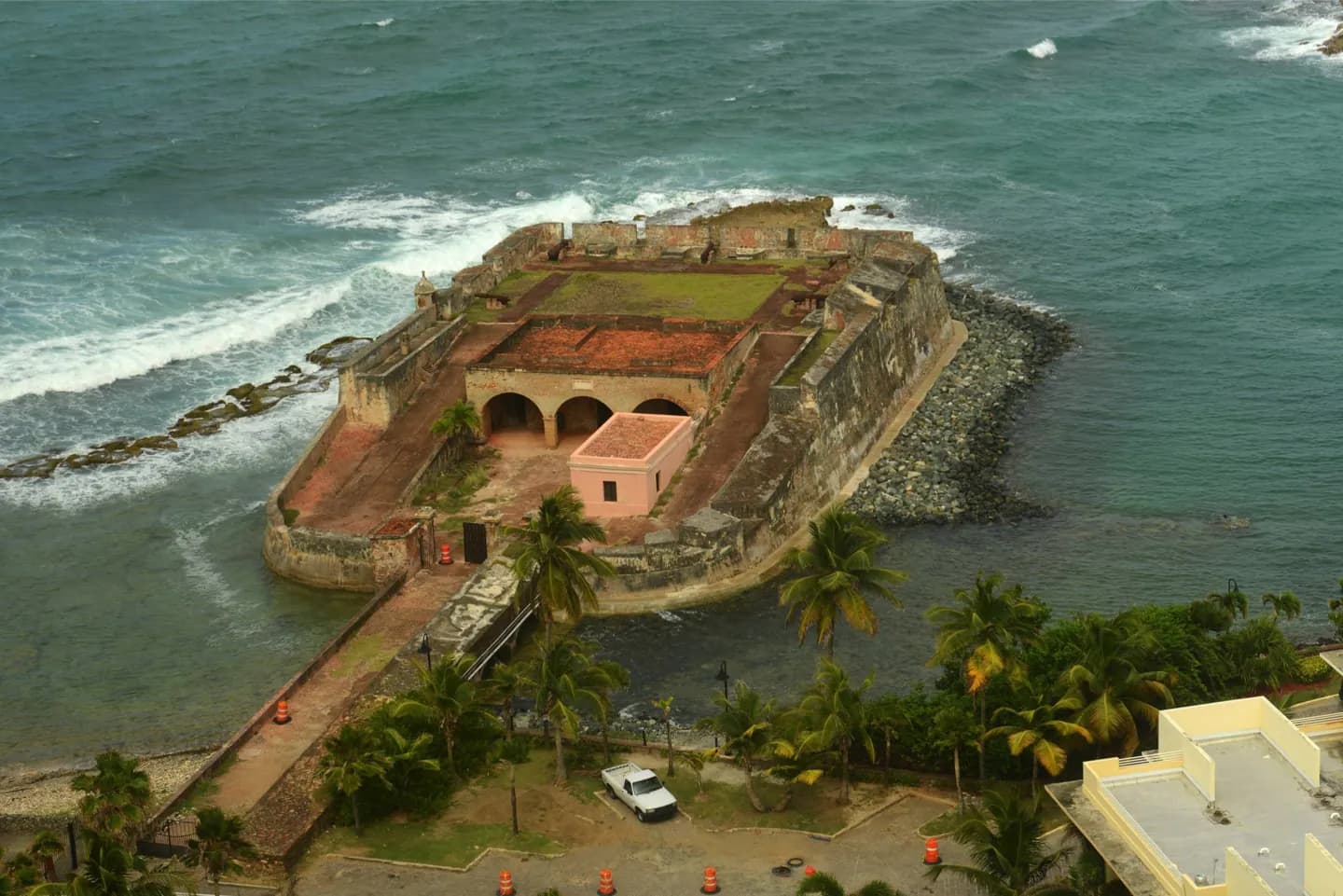
Standing beside El Cañuelo shows the logic of San Juan's harbor defenses more clearly than viewing El Morro alone. The two forts faced one another across the entrance to the bay, creating opposing lines of fire. The short exterior visit also offers a contrasting view back toward Old San Juan from the western shore.
What to look for
- The squat square fort and its thick sandstone walls sit close to the water.
- Across the bay entrance, El Morro marks the other side of the defensive crossing.
- From Isla de Cabras, the outlook opens toward San Juan Bay and Boca Vieja Cove.
The full story
The Spanish first built a wooden fort here in the late sixteenth century. It burned during a Dutch attack in 1625 and was replaced by stone. Across the harbor mouth from Castillo San Felipe del Morro, it helped guard ships entering San Juan Bay and the nearby mouth of the Bayamón River. The fort was bombarded by the United States Navy in 1898, although Spanish records list no guns or troops there at the time. Today the compact building is best understood from outside, where its square footprint and surviving sentry box are visible. Look across the water toward El Morro, then back at El Cañuelo's walls; those views explain why a small fort mattered in a larger defense system.
Useful to know
- Plan an exterior walk around the walls; do not count on entering the fort.
- Reach Isla de Cabras by the causeway and treat El Cañuelo as a short stop, not a full fortress tour.
- The shoreline setting is exposed, so bring sun or rain protection as conditions require.