
Why go
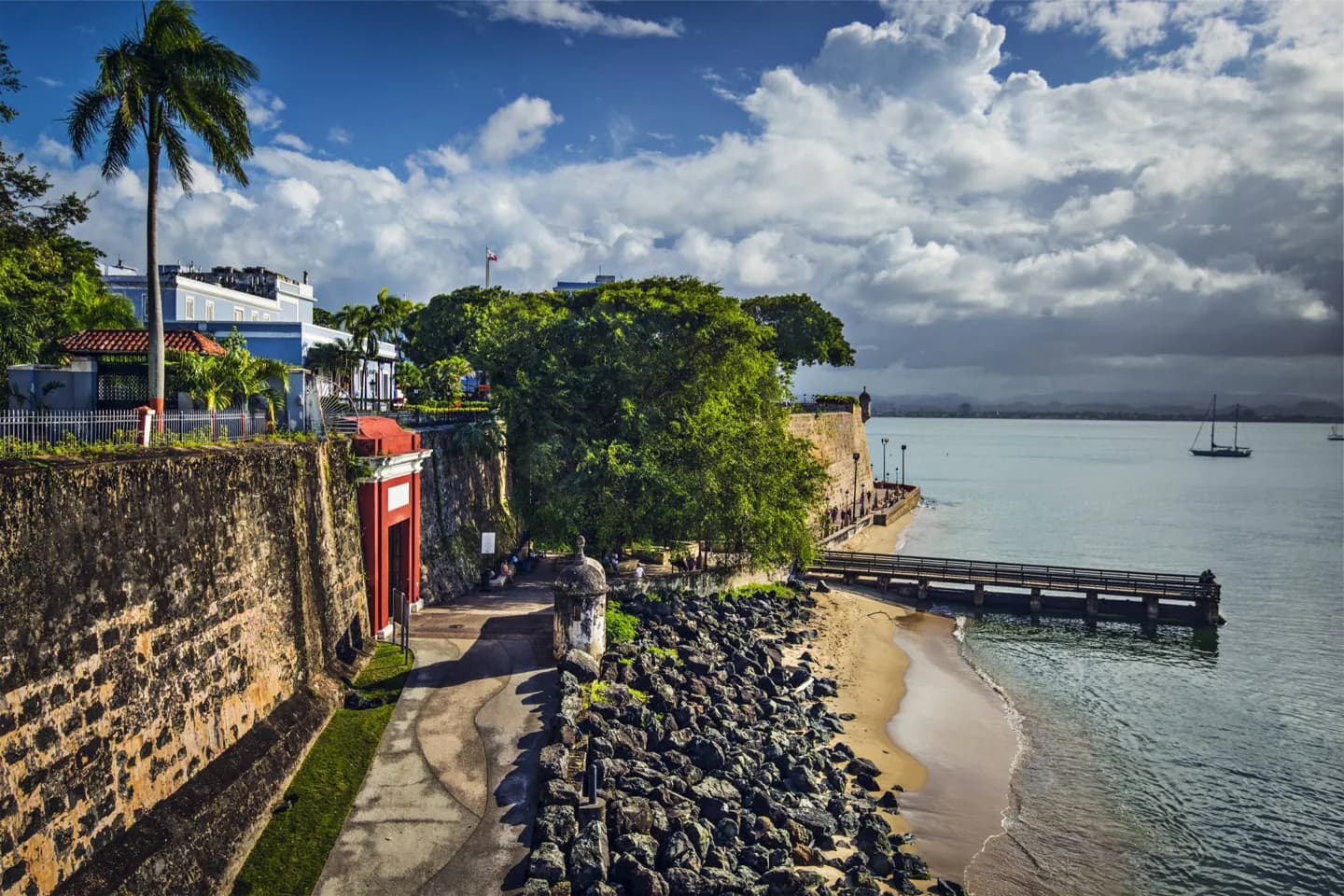
In Old San Juan, follow the walls toward San Juan Gate and the harbor to understand the fortified city. In Ponce, look for the wood-and-masonry homes associated with Ponce Creole architecture, developed for the hot, dry southern coast. The contrast makes both places more legible.
The full story
Old San Juan’s walls, forts and religious buildings grew from its role as a defended Spanish port. The Cathedral of San Juan Bautista and the city’s plazas belong to the lived town inside those defenses, while the harbor-facing gate makes the relationship between city and water plain. Ponce developed a different architectural response. Its late nineteenth- and early twentieth-century Ponce Creole houses combine wood and masonry with borrowed decorative forms. Their design also addresses the southern climate by making use of shade and breezes. These are not simply two versions of colonial architecture. Walking both cities shows how defense, civic life and heat shaped buildings in different places. Give the details time: walls read best along the harbor, while the houses in Ponce reward a slower street-level look.