
Why go
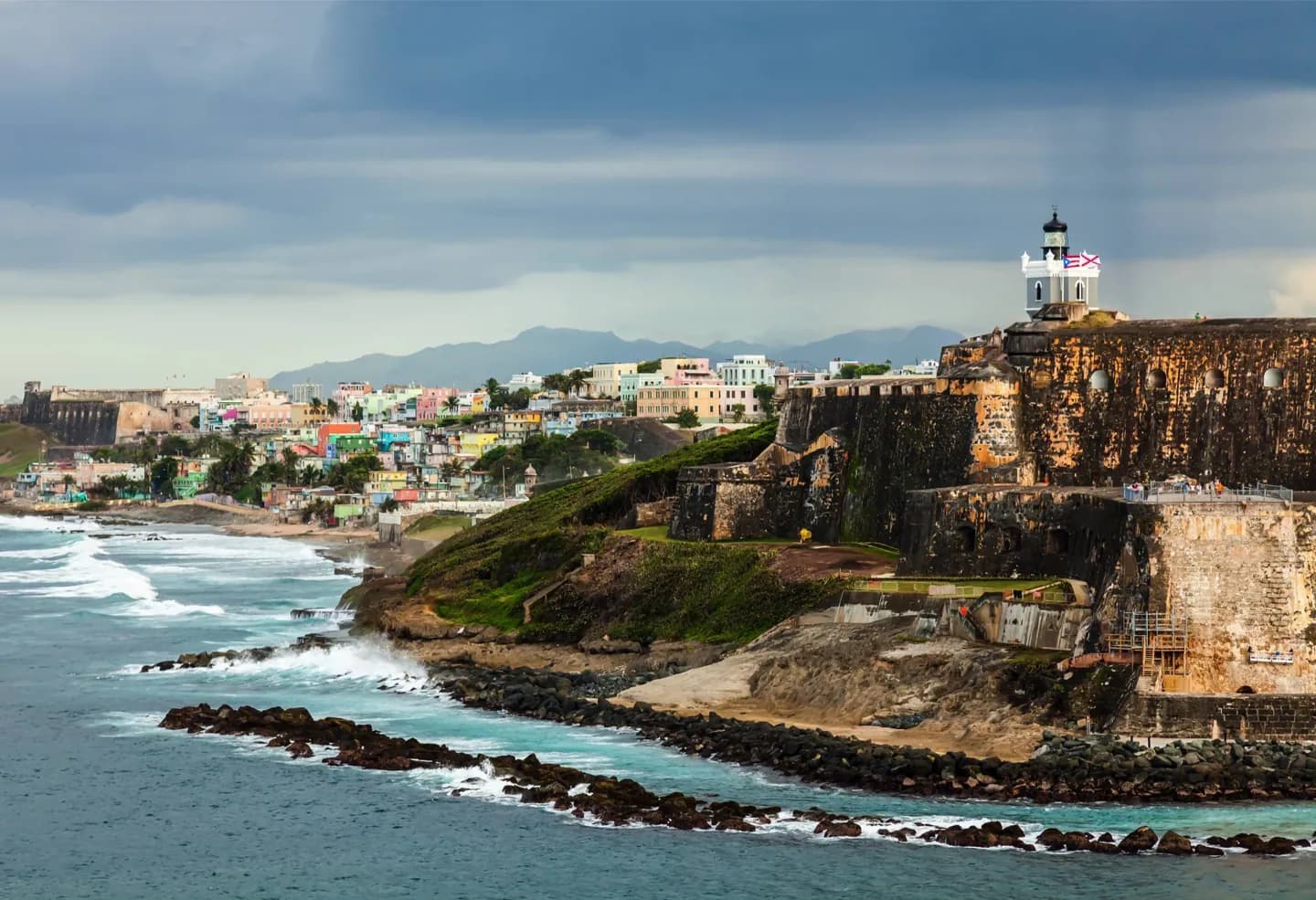
The building belongs to San Juan's earliest defensive system, alongside the forts that later guarded other approaches. Its later palace-like facade tells a different story from El Morro's military walls. The contrast is especially clear when viewing both as parts of Old San Juan's fortified landscape.
What to look for
- La Fortaleza stands near the old city walls above San Juan Bay.
- Its palatial appearance reflects a later change from its original defensive role.
The full story
Built in the sixteenth century to defend San Juan's harbor, La Fortaleza was the city's first major fortification. Later forts, including El Morro and San Cristóbal, extended the defensive system. La Fortaleza itself changed course. It became the governor's residence, and nineteenth-century reconstruction softened its military appearance into a more palatial facade. The structure is also called Palacio de Santa Catalina, a name linked to the chapel incorporated into the building during an earlier reconstruction. Its long use as a government residence explains why the building is both a historic landmark and a working civic place. It shares a UNESCO World Heritage designation with San Juan National Historic Site. From outside, its position near the high walls above the bay still points to its first purpose. Compare that setting with El Morro at the harbor entrance: both began as defenses, but La Fortaleza's continuing civic role changed how it looks and how visitors encounter it.
Useful to know
- Treat the exterior as the reliable landmark; check official visitor information before planning any interior visit.
- Combine the stop with a walk along Old San Juan's bay-facing streets and walls.