
Why go
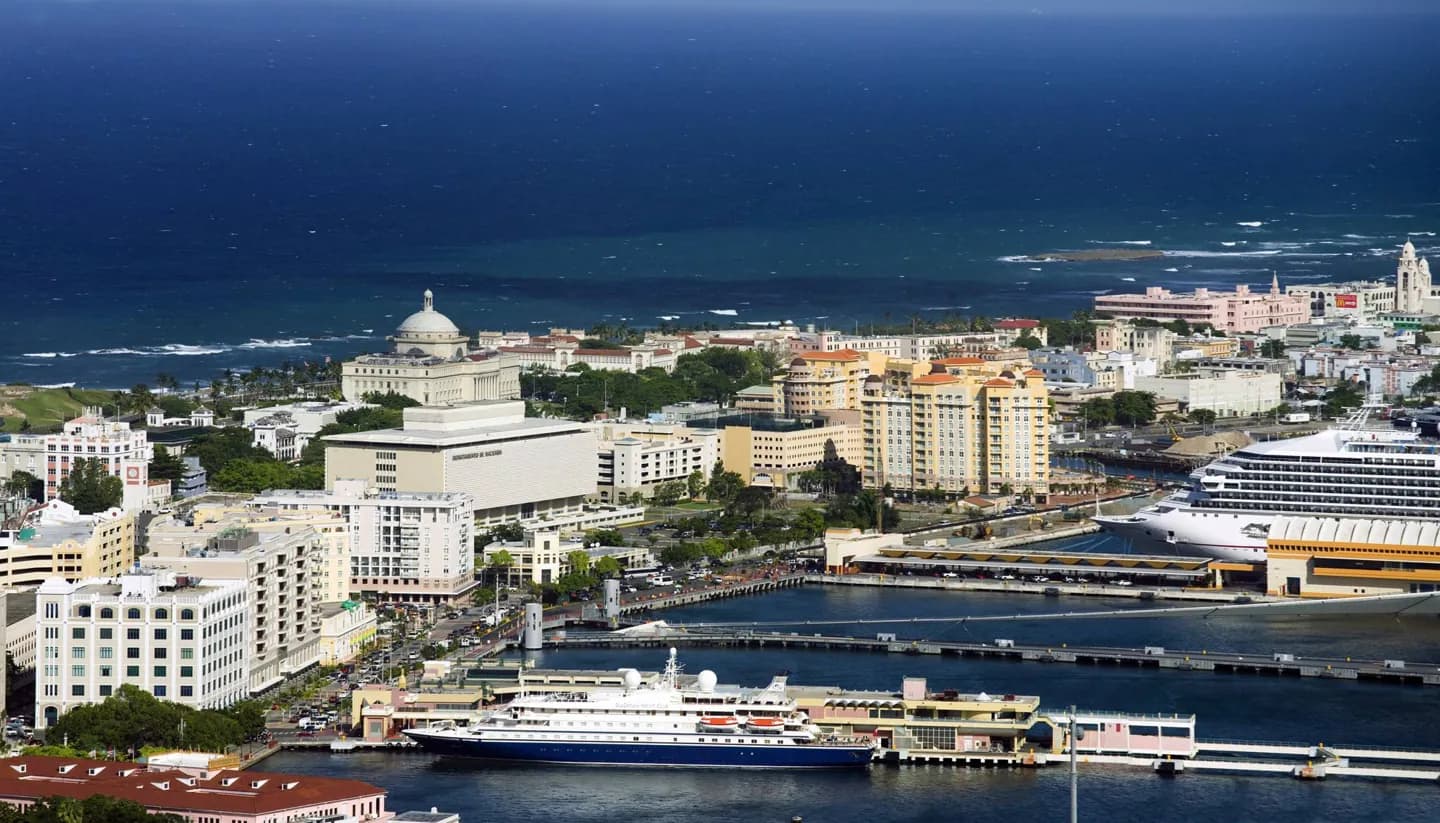
A walk from the old city's streets to its walls shows how domestic buildings, civic squares and military works fit together. Plaza de Armas, the Cathedral of San Juan Bautista and the Ballajá Barracks each show a different public role. Santurce's Art Deco and Hato Rey's modern buildings widen the picture.
What to look for
- Plaza de Armas sits by San Juan City Hall in the old city's street grid.
- The Ballajá Barracks is a large historic structure near the western forts.
- Santurce's Art Deco buildings contrast with Old San Juan's older masonry houses.
The full story
The oldest part of San Juan grew on the western end of a rocky islet at the mouth of the bay. Its tightly spaced streets, stone and brick buildings, plazas and churches sit inside a defensive setting that includes walls and forts. Some old civic and military buildings later took on cultural uses; the Ballajá Barracks is one example. La Fortaleza also changed function, from early defense to government residence. The city expanded beyond those walls. In the twentieth century, its population centers spread across the rest of the islet and onto Puerto Rico's main island. The annexation of Río Piedras in 1951 greatly enlarged the municipality. That growth makes San Juan an architectural sequence rather than a single colonial scene. Santurce offers Art Deco examples, and Hato Rey has more modern structures. These differences are easiest to read by district. In Old San Juan, follow the relationship between the narrow streets and the harbor-facing walls. Elsewhere, look for the different scale and materials of later urban growth.