
Why go
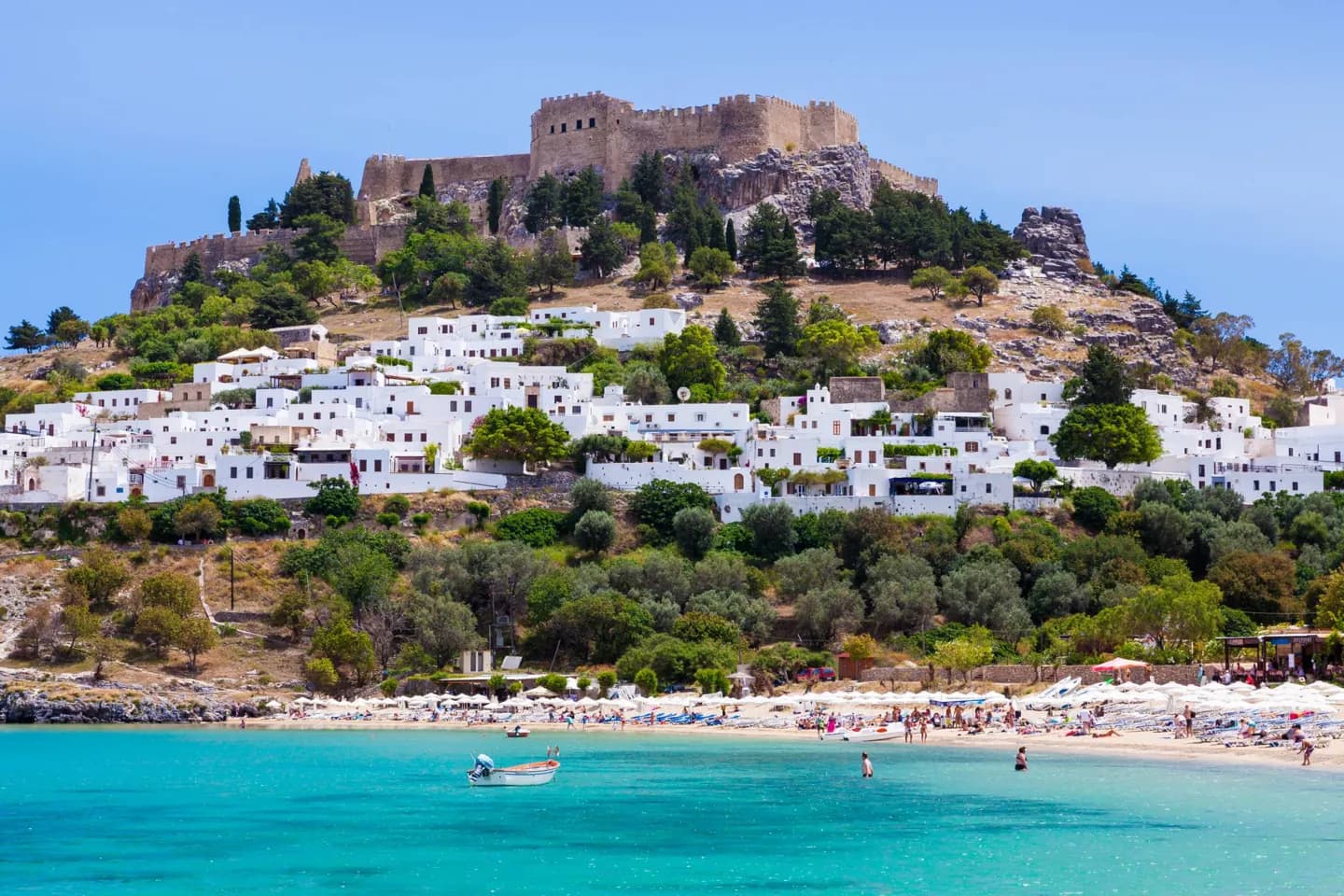
Lindos rewards time at street level as well as on the hill. Look for pebble mosaic courtyards and old captains’ houses among the narrow lanes, then decide separately whether to climb to the Acropolis of Lindos for its ancient sanctuary and fortified skyline.
What to look for
- Whitewashed houses crowd the narrow cobbled lanes.
- Pebble mosaics and captains’ houses recall the settlement’s seafaring past.
- The acropolis rises above the village as a distinct archaeological site.
The full story
Lindos was one of ancient Rhodes’s three leading cities and a maritime trading centre. Its hilltop sanctuary of Athena Lindia later gained fortifications built by the Knights of St John. Below that monument, the village developed its own architectural character: white houses, narrow streets, captains’ houses and pebble mosaic courtyards. Seeing the settlement before or after the acropolis separates the lived village from the succession of ancient and medieval structures above it. Lindos retained its maritime identity in later centuries, reflected in houses built for ship captains. Their enclosed courtyards and pebble floors are quieter evidence of prosperity than the monumental remains above. The acropolis itself was reused through several eras, so its silhouette combines a Greek sanctuary with later defensive works. From the lanes, that history appears as a constant backdrop; from the hill, the village becomes a distinct settlement rather than merely the approach to a ruin.
Useful to know
- Allow time for the village lanes even if the acropolis is your main aim.
- Check the acropolis’s own access and ticket details; they do not apply to the village.
Your next visit
Estimated · Declared scenario and planning estimates; no live opening, weather, queue or booking service.
Outdoor visit · 30–45 min
World planning estimate; admission, opening, visit duration and access need checking.