
Why go
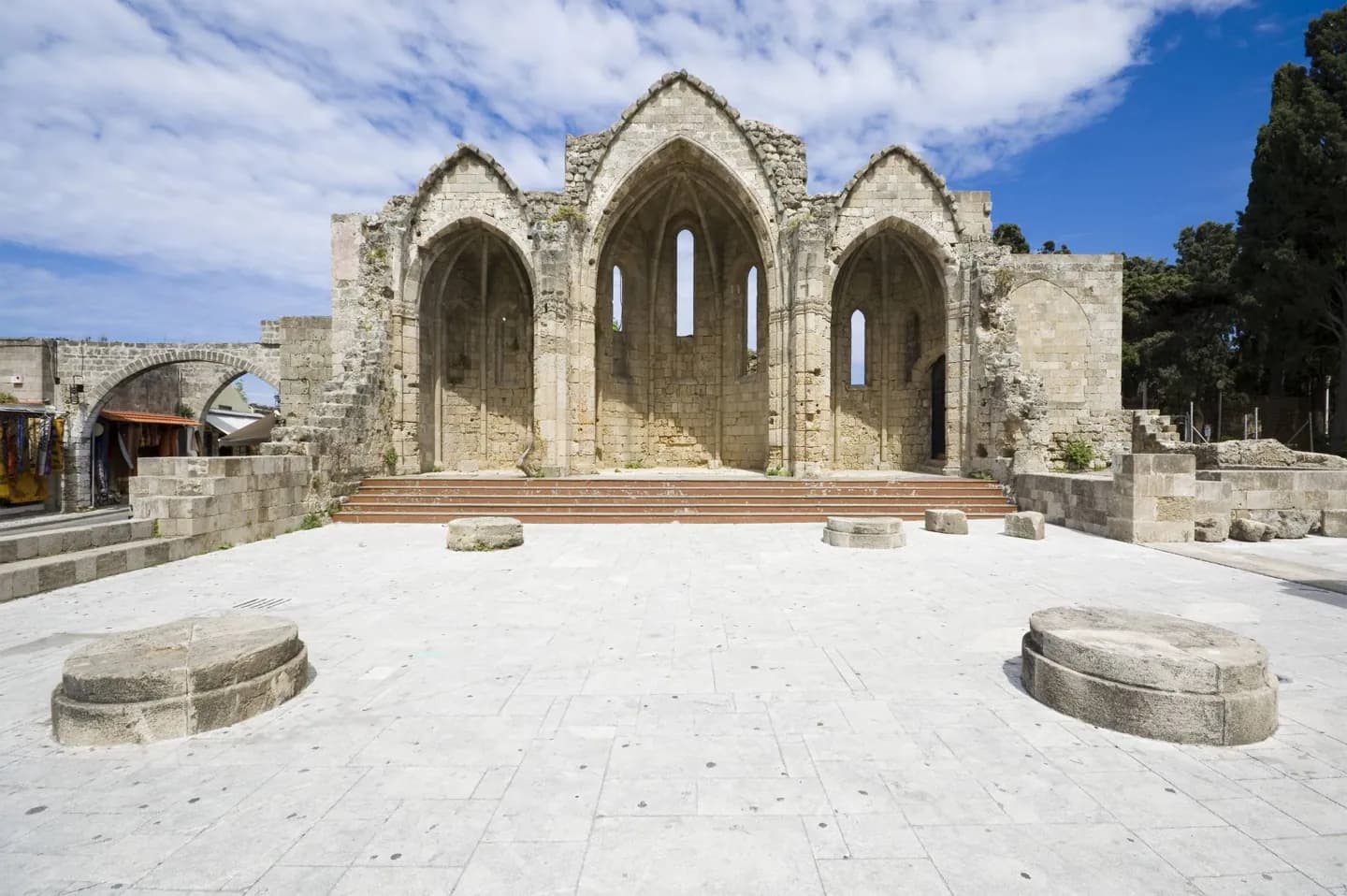
This is the history most directly legible in Rhodes city. The Palace of the Grand Master and defensive walls reflect the Knights' long occupation, while the Ottoman period explains a later layer of the same streets. Reading both together prevents the Old Town from becoming a single-period postcard.
The full story
The Knights Hospitaller took Rhodes in 1309 and made the island a base for their order. In Rhodes city they rebuilt and fortified the urban centre, creating the walls and major buildings that still shape the Old Town. The Palace of the Grand Master is a prominent reminder of that period. The fortifications resisted an Egyptian attack in 1444 and an Ottoman siege in 1480. Those victories did not make the island secure forever. Suleiman the Magnificent's forces besieged Rhodes in 1522, and the surviving Hospitallers withdrew after the city fell. They later established a base in Malta. Rhodes then remained under Ottoman rule for nearly four centuries. On a city walk, it helps to look at the walls as a response to repeated attacks, rather than just as a picturesque boundary. The Ottoman chapter followed in the same urban space, so later religious and civic landmarks belong to the city's continuing story rather than to a separate, vanished Rhodes.