
Why go
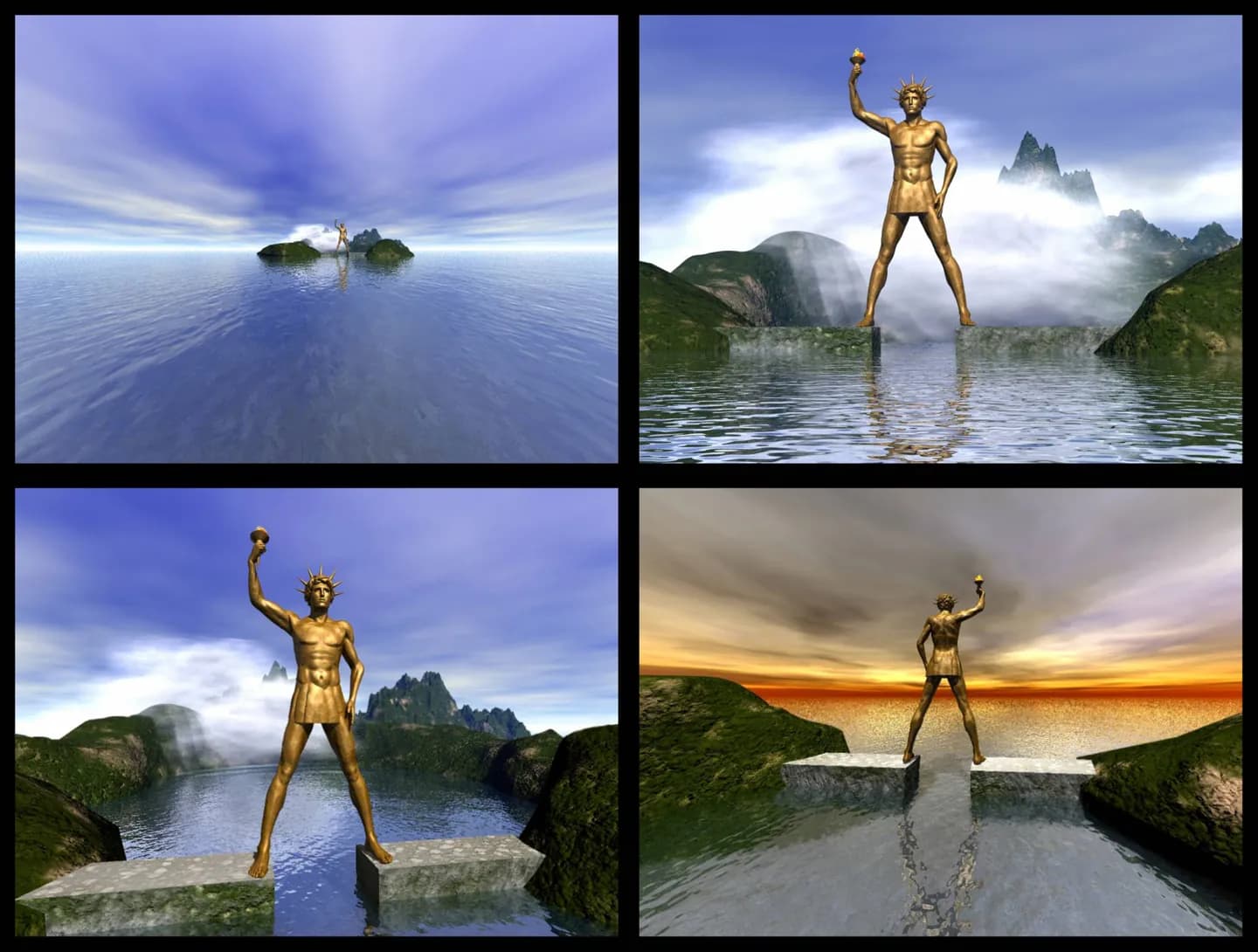
This ancient wonder reveals how the Rhodians celebrated political independence and maritime strength. Its exact appearance and position remain uncertain, despite familiar images of a figure straddling the harbour. Read the story before visiting Mandraki, but do not expect a surviving statue or a confirmed footprint.
The full story
In 305 BC Demetrius besieged Rhodes in an attempt to break its alliance with Ptolemaic Egypt. His forces withdrew the following year. According to the island's historical account, the Rhodians sold equipment left by the besiegers and used the proceeds to honour their patron sun god, Helios. Chares of Lindos directed the colossal bronze statue, completed in the early third century BC. Standing more than 30 metres high, it became one of the Seven Wonders of the Ancient World. An earthquake in 226 BC brought it down, and the statue has not survived. Later pictures often place its legs on opposite sides of a harbour entrance, but the ancient evidence does not establish that pose or a precise site. The sources also do not establish the familiar raised torch. Those uncertainties matter when looking at Mandraki: the harbour gives a sense of the city's sea-facing ambition, while the Colossus itself remains a subject of history rather than a monument that can be visited.