
Why go
This overview connects the river and Old Town with the later boulevard district and the Freedom Monument. It gives a useful frame for separate visits to medieval streets, nineteenth-century buildings and places associated with Latvia’s independence, without treating the whole centre as one historical period.
The full story
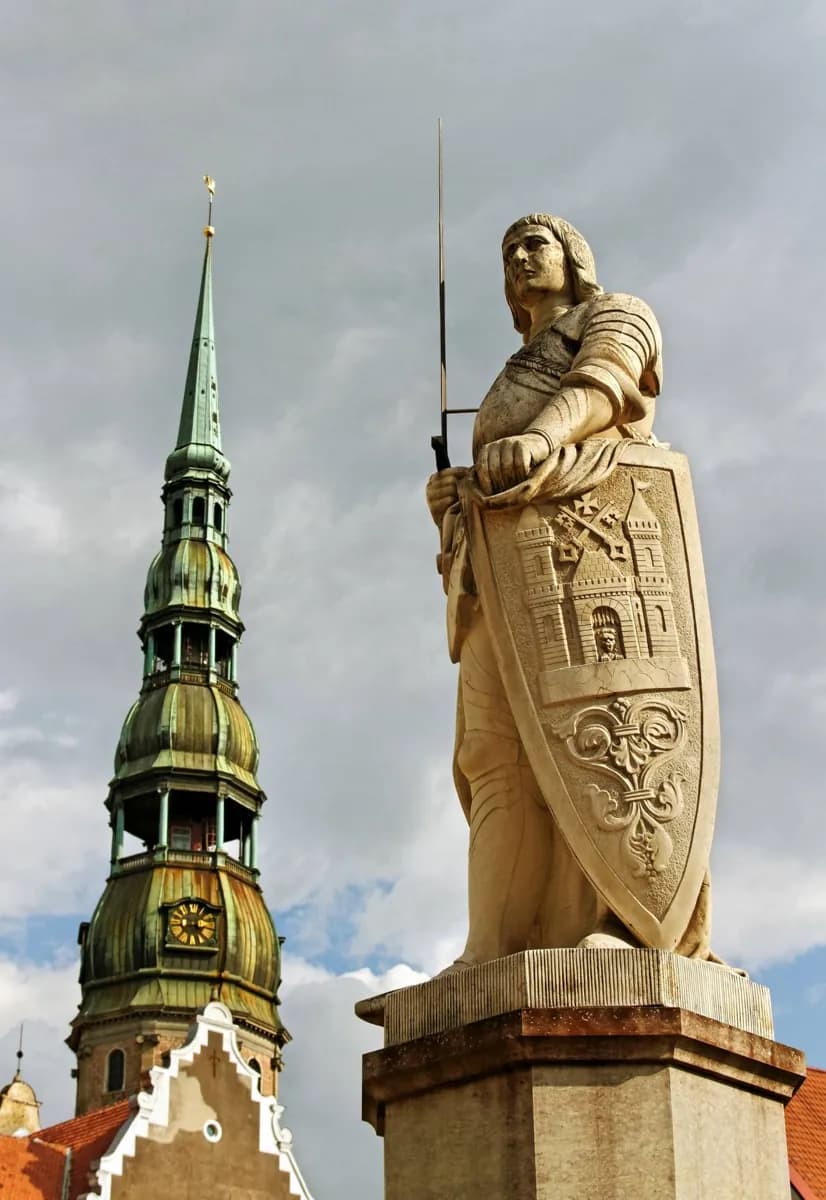
The Daugava gave Riga a route between inland trading networks and the Baltic Sea. Local communities lived and traded near its banks before Bishop Albert’s arrival in 1201, the conventional date of the city’s founding. German merchants and church authorities then shaped a fortified trading town that became part of the Hanseatic network. Riga passed through Polish-Lithuanian, Swedish and Russian rule. Under the Russian Empire it expanded as an industrial port. The wider centre developed beyond the old fortifications, while Latvian civic and cultural movements gathered force. The historic centre now brings different layers close together: older streets, later buildings in wood and Art Nouveau architecture. Latvia declared independence in 1918, lost it during Soviet and Nazi occupations, and restored it in 1991. The Freedom Monument and the nearby streets give that history a visible place in the city. A walk from the Daugava through Old Town to the monument follows part of Riga’s changing civic geography.