
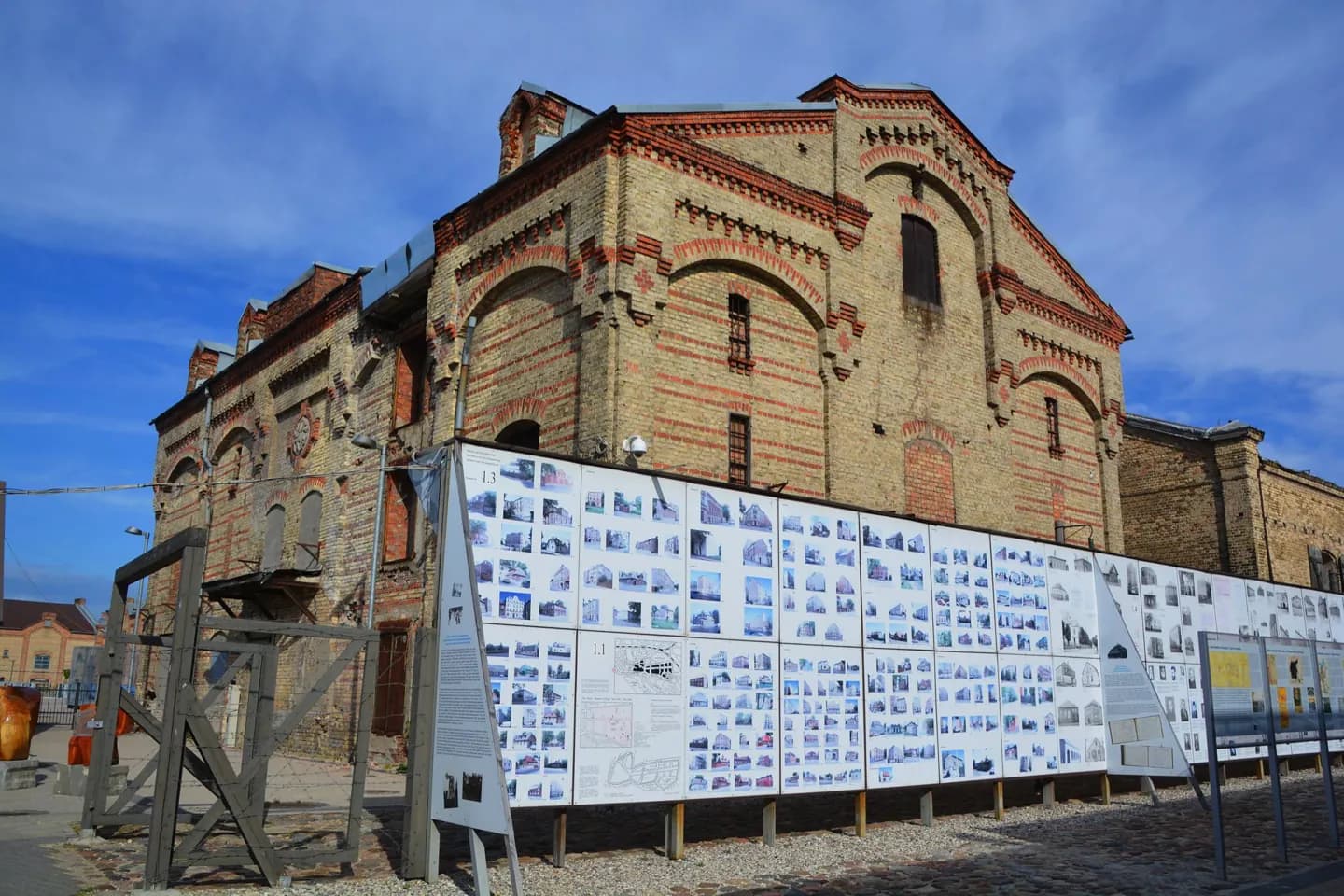
Why go
Read this alongside the Riga Ghetto and Latvian Holocaust Museum to understand the difference between the German and Latvian sections of the ghetto. The street names chosen by deportees and the separate chains of control reveal how people tried to retain a sense of community within a system designed to destroy it.
The full story
After the mass murder of many Latvian Jews in late 1941, deported Jews from Germany were confined in a section of the Riga ghetto. They formed groups based on their cities of origin, and each group had a representative on a Jewish Council headed by Max Leiser of Cologne. Many found Latvian street names difficult to pronounce and used the names of their home cities instead. Those informal names are a reminder that the deportees had arrived from many different communities. The German and Latvian sections had separate Jewish administrations, but neither was free to govern itself. The German section was under direct Gestapo authority, with an office on Ludzas Street. A ghetto police force operated inside it, while the occupation labor authority drew workers from both sections. Kurt Krause became commandant in December 1941. This structure divided people who faced the same persecution and made every part of daily life—food, work and movement—subject to Nazi control.