
Why go
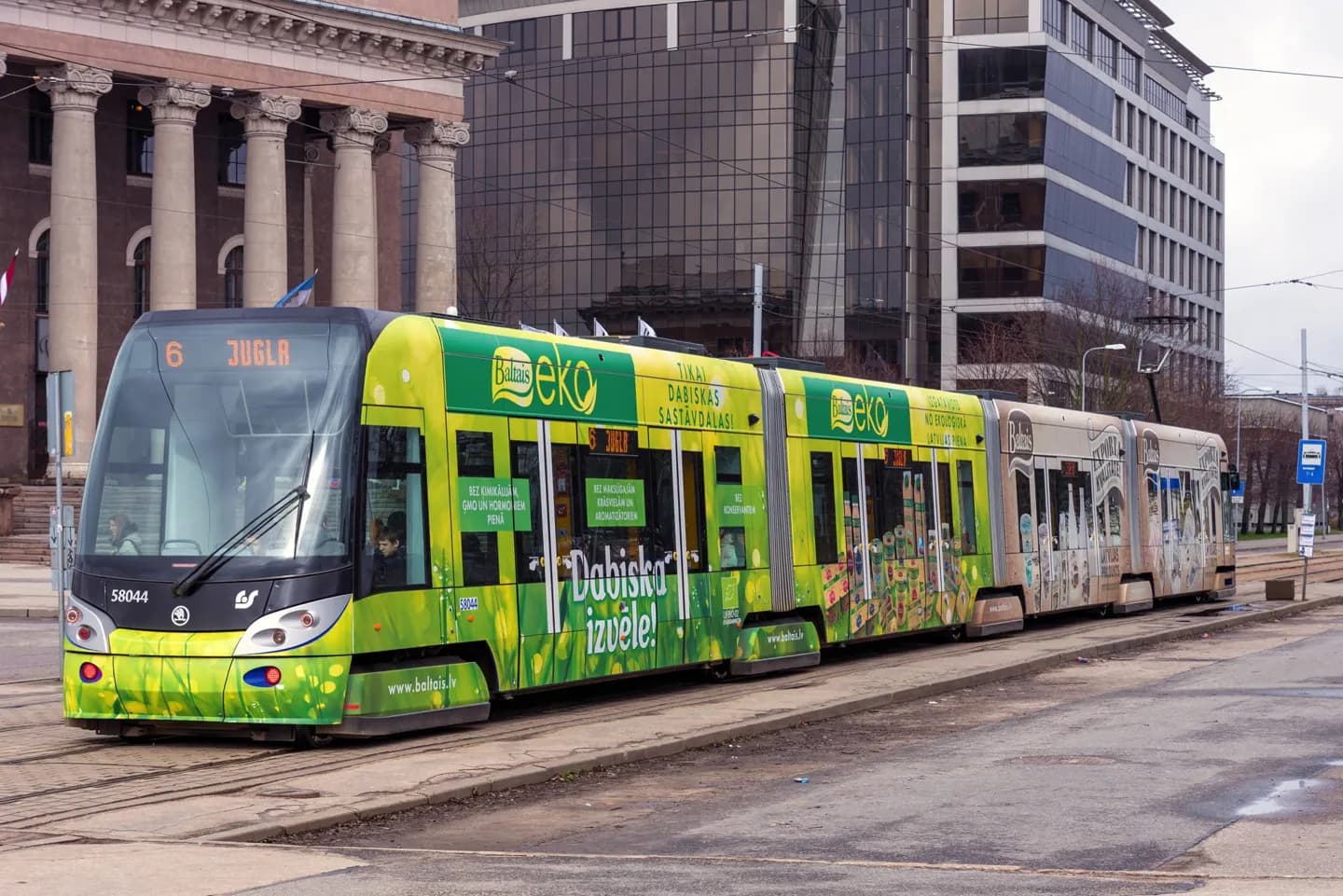
The Daugava is the useful planning divide: Akmens Bridge and Vanšu Bridge connect the historic centre with different parts of Pārdaugava. Rail and coach hubs serve trips beyond the city, while trams, buses and trolleybuses link districts that are less convenient on foot.
The full story
Riga grew as a river and port city, so movement across the Daugava still matters when planning a day. Akmens Bridge links the Old Town side with Pārdaugava, while Vanšu Bridge crosses toward Ķīpsala. The Railway Bridge carries trains, and Salu Bridge crosses by way of Zaķusala. These are useful geographic anchors even if a visitor never needs to name every bridge. A day concentrated in Old Town can be walked, but a visit across the river calls for a deliberate crossing. For travel farther afield, Riga has an international airport as well as rail and coach connections to other Latvian destinations. Within the city, trams, buses and trolleybuses serve a wider area than a central walking route. Routes, tickets and timetables should be checked with current operators. The durable lesson is spatial: choose the river crossing and transport hub that matches the part of Riga you want to reach.
Useful to know
- Group Old Town stops on foot, then plan a separate crossing for sights west of the Daugava.
- Check current tram, bus or trolleybus routes for longer moves; the historic network description is not a timetable.