
Why go
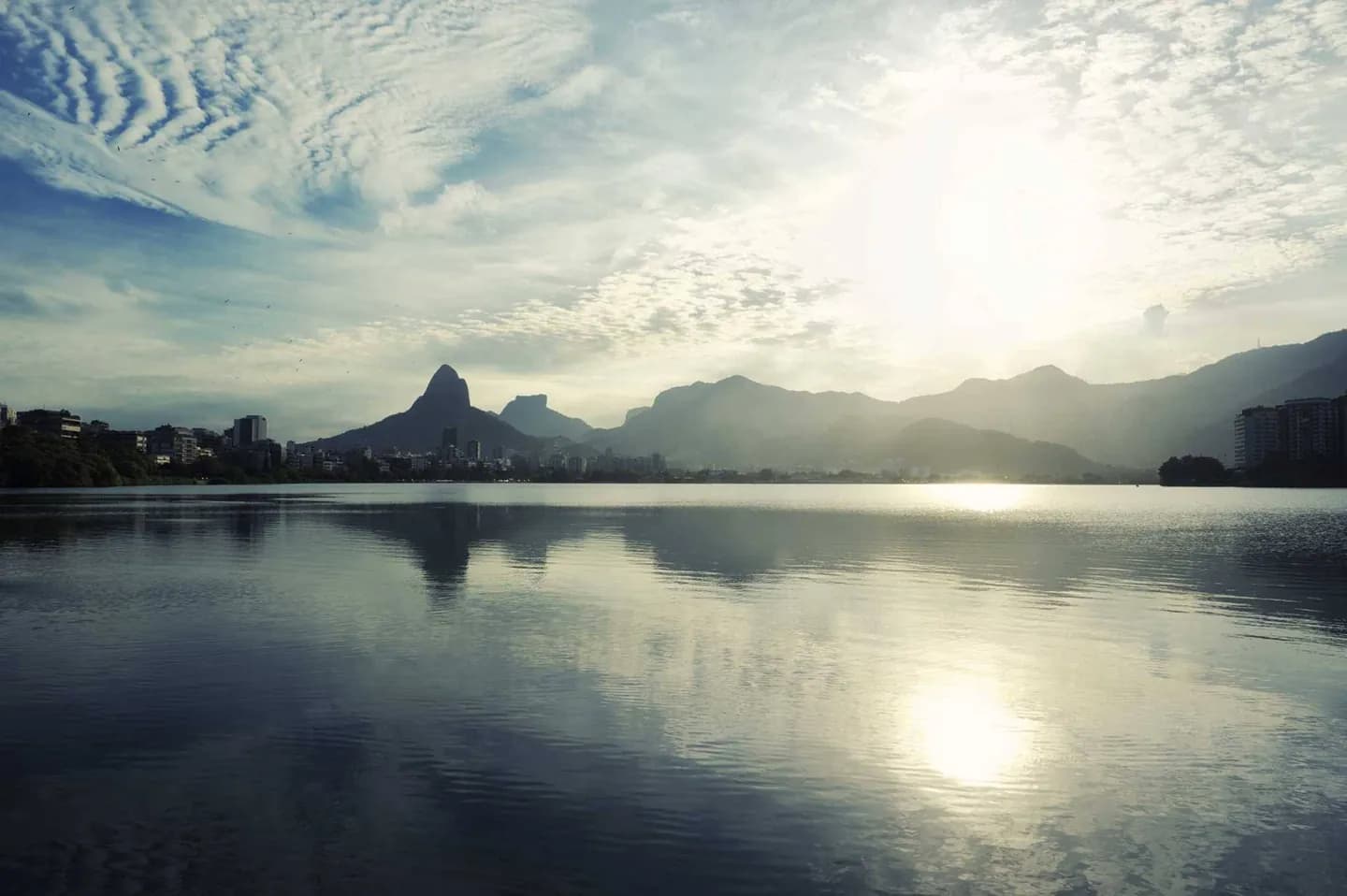
Lagoa is useful for understanding how Rio's famous districts fit together. From its edge, the city opens toward Jardim Botânico, Pedra da Gávea and Dois Irmãos rather than facing only the ocean. The long shoreline favours a chosen segment or connecting walk more than a hurried full circuit.
What to look for
- Look across the water toward the split summit of Dois Irmãos and the bulk of Pedra da Gávea.
- The Jardim de Alá canal forms the lagoon's narrow connection toward the Atlantic.
- Two small islands interrupt the otherwise broad sheet of water.
The full story
The lagoon is separated from the Atlantic by accumulated sand and earth, with the Jardim de Alá canal maintaining a narrow connection to the sea. Its names changed as colonial estates passed between owners; the present one recalls Rodrigo de Freitas de Carvalho, who married into a family holding land around the water in 1702. The landscape was altered repeatedly as Rio expanded. When the Portuguese royal court arrived in 1808, land associated with the former Engenho da Lagoa helped accommodate a gunpowder factory and the Royal Botanical Garden. Major sanitation and reshaping works followed in the early twentieth century, including dredging and canal construction. Soil from that intervention helped form one of the lagoon's islands. These layers explain why Lagoa feels natural and urban at once. Mountains define the basin, but canals, embankments, roads and parks have continually remade its edge.
Useful to know
- Choose the shore nearest your next stop, since the lagoon works best as a connector between South Zone sights.
- Pair a lagoon segment with Jardim Botânico or the Ipanema–Leblon coast instead of forcing a complete circuit.
Your next visit
Estimated · Declared scenario and planning estimates; no live opening, weather, queue or booking service.
Outdoor visit · 30–45 min
World planning estimate; admission, opening, visit duration and access need checking.