
Why go
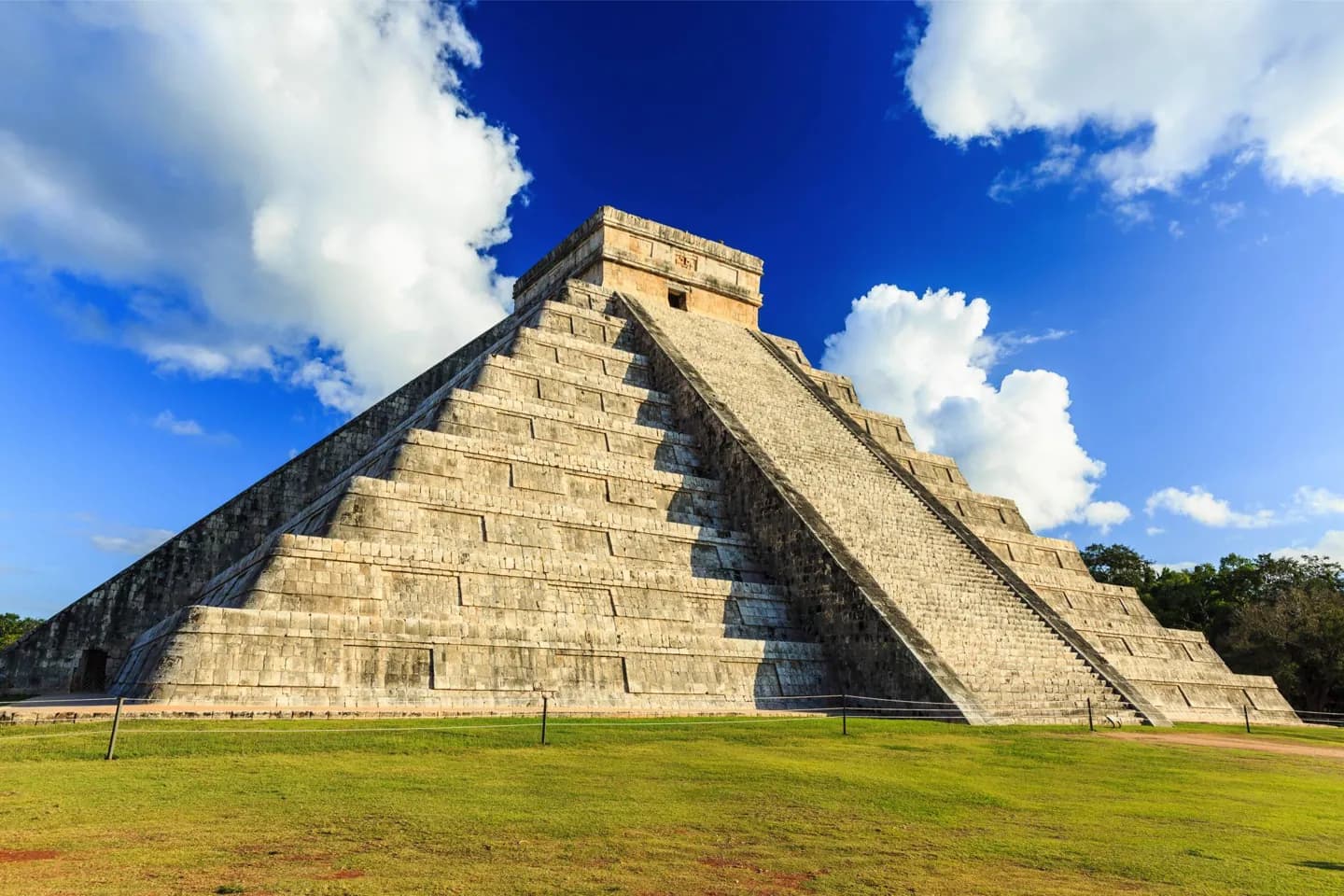
Chichén Itzá rewards time beyond its best-known pyramid because its ceremonial groups show more than one building form. Move from El Castillo to the Temple of the Warriors and Observatory to see how varied the site is. The spread of the archaeological zone makes a deliberate walk more useful than a brief photo stop.
What to look for
- El Castillo is the site's defining stepped pyramid.
- The Temple of the Warriors is another major ceremonial group.
- The Observatory adds a markedly different building form to the visit.
The full story
Chichén Itzá was a major centre in the northern Maya lowlands from the Late Classic into the early Postclassic period. This span matters because Maya political life changed across the wider lowlands: some older central lowland cities lost prominence while northern centres gained importance. Chichén Itzá belongs to that changing landscape, rather than to one fixed picture of Maya history. Its range of architectural forms points to connections beyond a single local tradition. That variety should not be flattened into a simple account of outsiders conquering the city. As you move between El Castillo, the Temple of the Warriors and the Observatory, notice how different forms share one extensive archaeological zone. The distance between major groups also helps show why the site asks for more than a look at its best-known pyramid.
Useful to know
- Allow time to walk beyond El Castillo; the major buildings are spread across the archaeological zone.
- Check current admission details before leaving, including the separate Yucatán state charge.
Your next visit
Estimated · Declared scenario and planning estimates; no live opening, weather, queue or booking service.
Outdoor visit · 30–45 min
World planning estimate; admission, opening, visit duration and access need checking.