
Why go
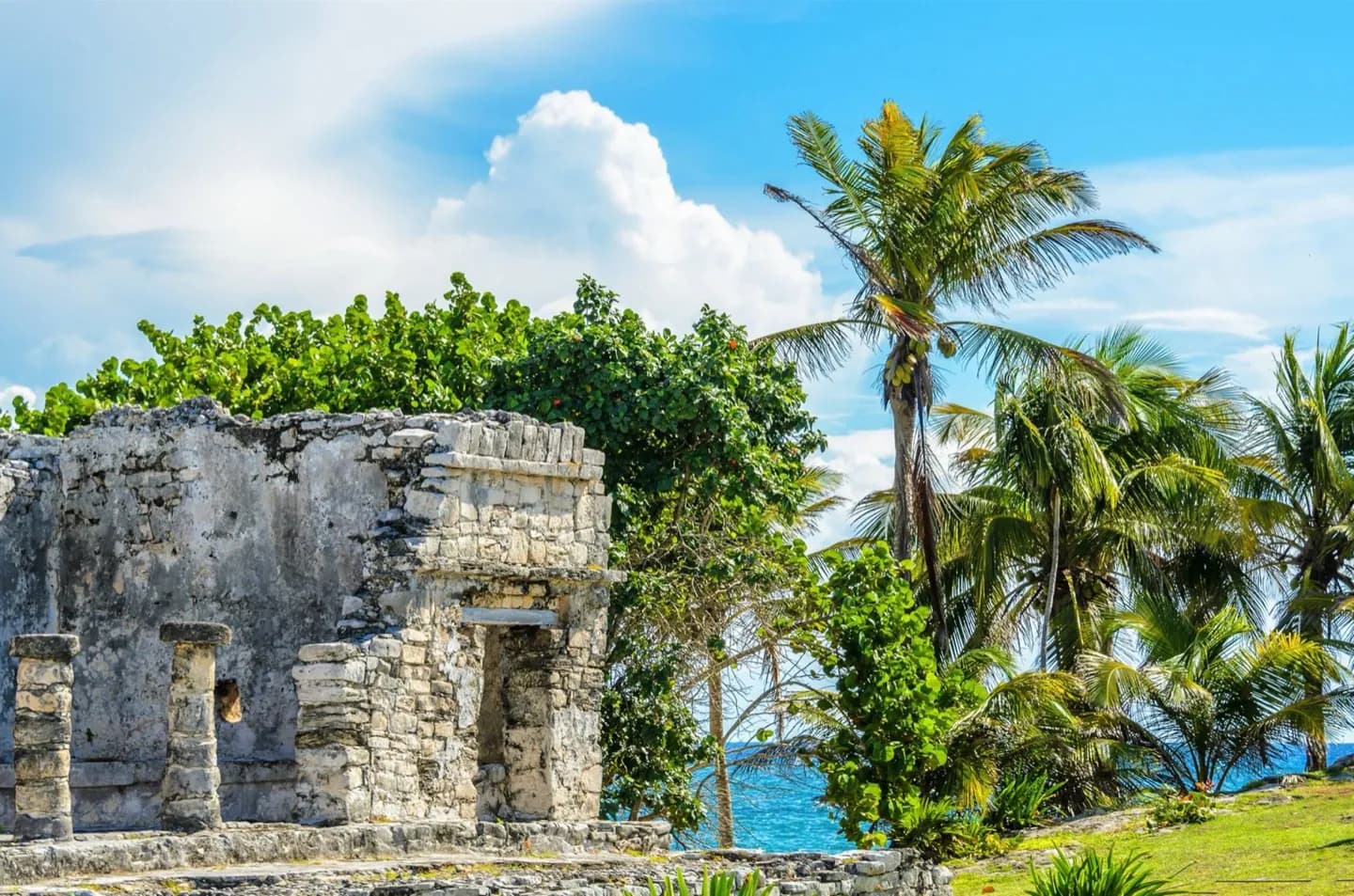
At Tulum, the coastal setting is part of the archaeology rather than just a backdrop. The wall, sea-facing El Castillo and painted Templo de los Frescos help you read the site as a defended Maya port. Its compact layout suits a focused visit, though the exposed ground makes sun protection important.
What to look for
- The coastal wall frames the old Maya settlement above the sea.
- El Castillo faces the Caribbean from the cliff edge.
- The Templo de los Frescos retains Maya mural paintings.
The full story
Tulum served as a Maya coastal port linked to inland Cobá. Its position above the Caribbean helps explain both the settlement's defenses and its connection to travel by sea. The surviving wall frames a town that faced the water rather than turning away from it. El Castillo's seaward position makes more sense when viewed as part of that coastal setting, not only as a dramatic lookout. The Templo de los Frescos adds painted evidence of Maya life to a visit that can otherwise become dominated by the cliff view. Together, the buildings and setting show a place connected to a wider network of Maya communities. Walk the site with that relationship in mind: the sea, wall and structures each tell part of the same story.
Useful to know
- Expect an exposed outdoor visit and bring protection from the sun.
- Check the full admission arrangement before travel; the archaeological site and surrounding protected area can carry separate charges.
Your next visit
Estimated · Declared scenario and planning estimates; no live opening, weather, queue or booking service.
Outdoor visit · 30–45 min
World planning estimate; admission, opening, visit duration and access need checking.