
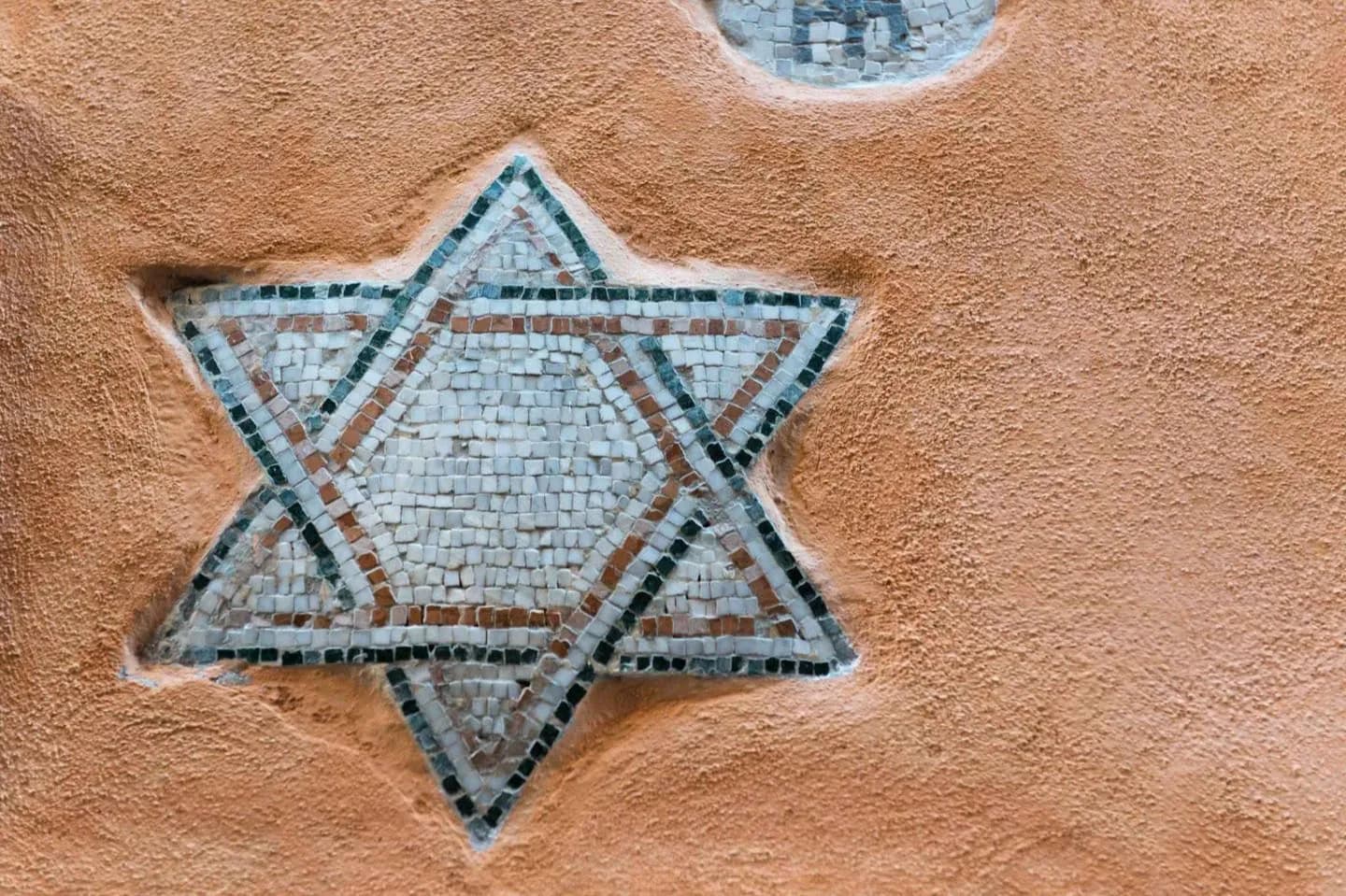
Why go
The compact district reveals both deep continuity and enforced confinement. Rome’s Jewish community predates Christianity, yet from 1555 it was restricted to a flood-prone walled quarter under papal rule. Today ancient porticoes, narrow streets and the Great Synagogue make that history spatially legible.
What to look for
- Use the Portico d’Ottavia as the ancient anchor of the district and the entrance to its tight street network.
- Look toward the Great Synagogue, whose distinctive dome marks the Tiber edge.
- Notice how the neighborhood sits between the Theatre of Marcellus, river and former ghetto boundaries.
Useful to know
- Allow 60–90 minutes for a respectful walk, longer for the Jewish Museum or synagogue access.
- Combine the quarter with the Theatre of Marcellus and Tiber Island rather than rushing through as a food stop.
- Confirm access directly with religious and museum venues because the public neighborhood has no single timetable.
Your next visit
Estimated · Declared scenario and planning estimates; no live opening, weather, queue or booking service.
Outdoor visit · 30–45 min
World planning estimate; admission, opening, visit duration and access need checking.