
Why go
The city’s history changes how its streets and skyline read. The surviving Stadhuis, the Witte Huis and Zadkine’s Stad zonder hart stand against post-war rebuilding, while the port’s growth explains the southern waterfront and the long industrial reach westwards. It is a useful lens for anyone wondering why Rotterdam feels more open and modern than many Dutch city centres.
The full story
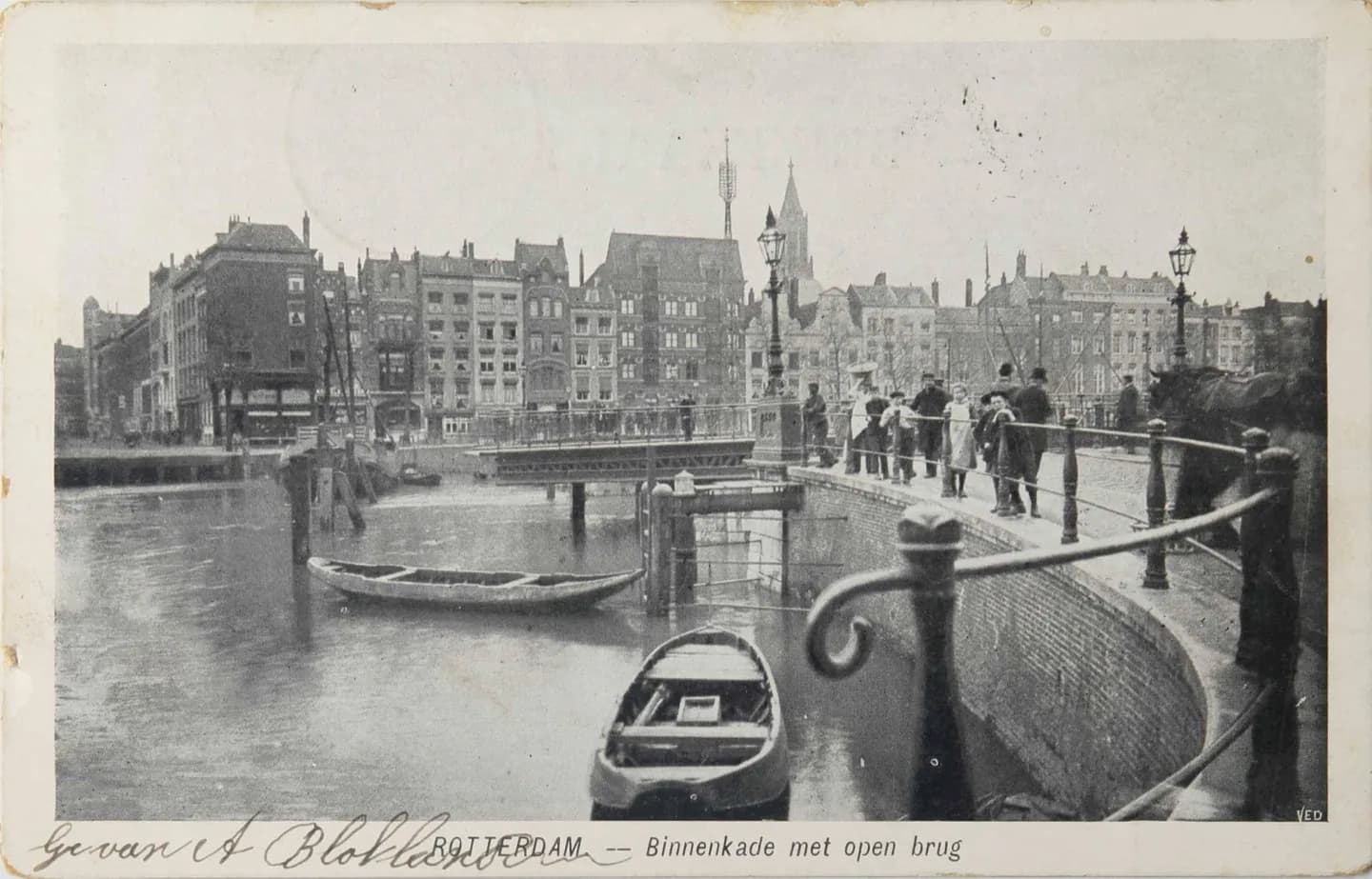
Settlement near the lower Rotte dates to at least 900 CE. Floods later prompted the construction of dikes and dams, including Schielands Hoge Zeedijk along the northern bank of today’s Nieuwe Maas. A dam on the Rotte was built in the 1260s near present-day Hoogstraat, and Rotterdam gradually became a port of importance. Its role expanded sharply after the Nieuwe Waterweg opened in 1872, giving shipping a direct route to the North Sea. The Witte Huis, completed in 1898, still records that period of commercial confidence. On 14 May 1940, the German bombing destroyed most of the city centre. Stadhuis survived, while Ossip Zadkine’s Stad zonder hart near Leuvehaven memorialises the loss. Reconstruction from the 1950s onwards created broad streets and new building types; later development at Kop van Zuid extended the city’s business skyline across the river.