
Why go
A short history makes the building’s contrasting faces legible: the interior recalls the medieval pilgrimage church, while the west front presents a later Baroque image to arriving walkers. Look at the building as layered work rather than a single style.
The full story
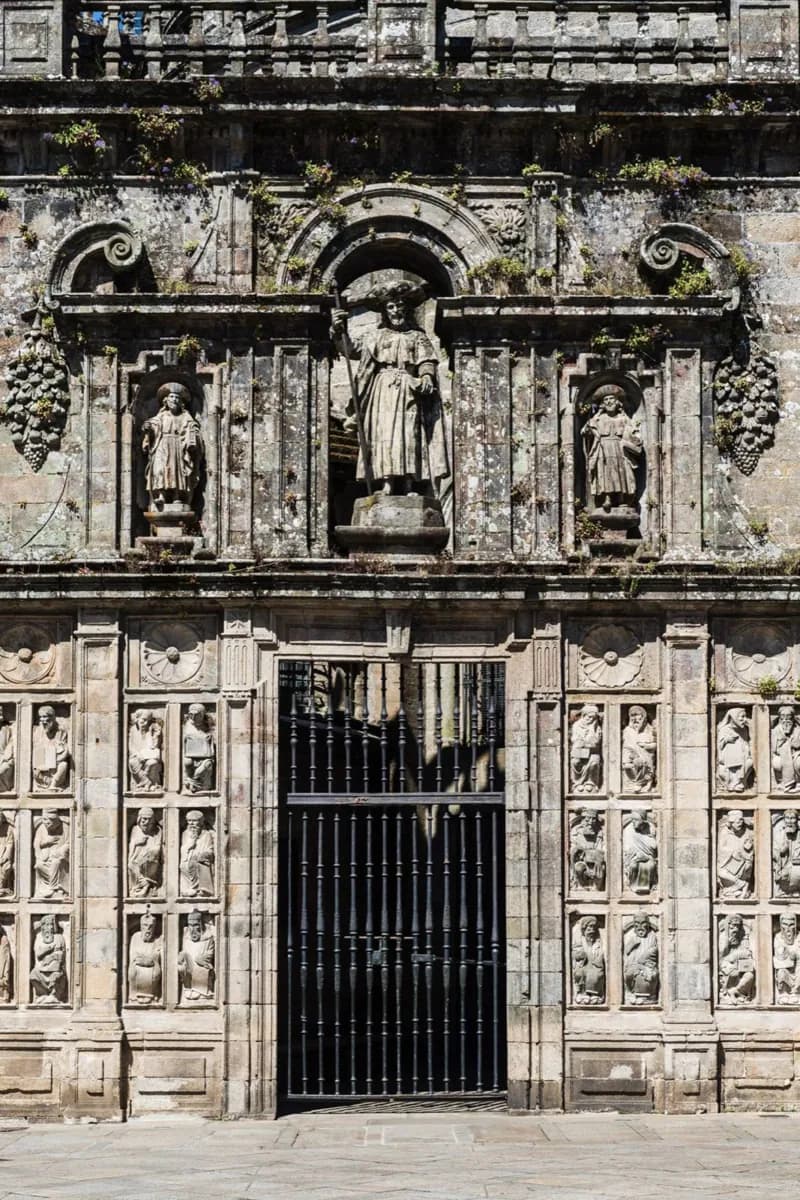
The cathedral stands at the shrine associated by tradition with Saint James. Earlier churches occupied the site before the current building took shape. The raid of 997 damaged the early church, but later rebuilding and the growth of pilgrimage created the much larger cathedral visitors know today. Construction of the present Romanesque church began in the late eleventh century, and work continued across generations. Its later history is visible without a chronology in hand. The Romanesque plan survives inside, while additions from subsequent centuries altered chapels and entrances. Most strikingly, the Baroque west façade changed the arrival view from Praza do Obradoiro. The Pórtico da Gloria, created by Master Mateo and his workshop, belongs to the medieval sculpture tradition even though the exterior seen from the square is later. Moving from square to nave therefore reveals two different periods in one short visit.