
Why go
Italian is universal in public life, while Sardinian varieties remain important across much of the island. This context makes individual sites easier to compare and helps each regional day follow a coherent historical or geographic thread. For Sardinia, this culture context helps decide what deserves time, which Sardinia stops belong together and which Sardinia details would otherwise pass without explanation.
The full story
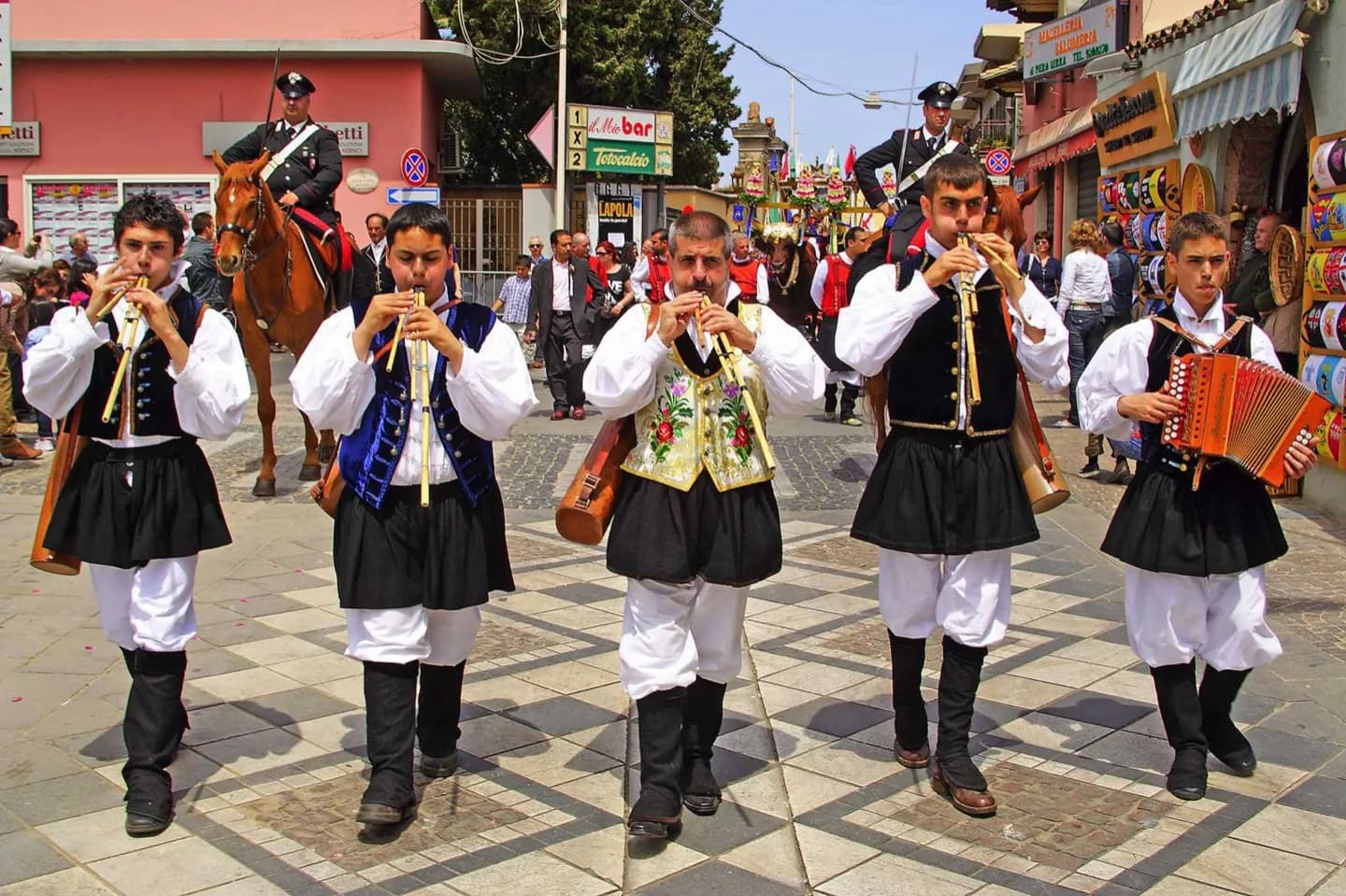
Italian is universal in public life, while Sardinian varieties remain important across much of the island. Alghero preserves a Catalan variety, and northern areas add Corsican-related speech. Processions such as Sant'Efisio, Sassari's Candelieri and Oristano's Sartiglia show how civic and religious identities overlap. Polyphonic singing, weaving, bread, cheese and regional dress are living practices, not museum decoration. For visitors, the useful approach is to connect a museum or ritual with the streets and communities that sustain it. In Sardinia, public traditions still carry local memory, while food, language and craft vary from other parts of Sardinia. Attend as a guest, leave working spaces unobstructed and avoid treating living customs as costume alone. Keep the comparison grounded in Sardinia: notice how materials, routes and the surrounding terrain shape what survives. That approach preserves the useful legacy context without turning a visit into a list of names or dates.